
Starting the day with a tight neck and locked shoulders is a common trigger for migraine-prone home athletes. Long hours at the desk, poor sleep posture and intense workouts can all load extra tension into the upper body. A gentle, structured morning neck and shoulder reset can calm your nervous system, improve blood flow and prepare you to train safely in your home gym without provoking symptoms. This 15-minute routine focuses on mindful breathing, mobility and light activation rather than intensity, so you can respect your migraine thresholds while still moving with purpose.
Set up your safe, low-stimulus morning environment
Before you start your neck and shoulder reset, create a migraine-friendly environment. Dim bright overhead lights and use softer, indirect lighting if possible. Keep noise low and avoid loud music at this stage; soft background sounds are fine if they relax you. Lay out a comfortable exercise mat and, if you have one, a small cushion or folded towel to support your head. Many home athletes benefit from using a simple yoga block or a folded blanket to slightly elevate the chest in supine positions, which can open the upper back without forcing the neck into extreme extension. Have a glass of water nearby, and if morning dehydration is a trigger for you, sip a little before and after the routine.
Start with breath and gentle cervical mobility
Begin by lying on your back with knees bent, feet flat on the floor, or sit tall on the edge of a chair if lying down increases symptoms. Place one hand on your chest and one on your belly. Inhale gently through the nose, aiming to let the belly rise first, then the chest, and exhale slowly through pursed lips. Spend 2–3 minutes on this diaphragmatic breathing to down-regulate tension. Then move into very small neck mobility drills: perform slow nods as if saying “yes,” only a few degrees of motion, keeping your jaw relaxed. Follow with tiny rotations as if saying “no,” staying well short of any dizziness or pain. The goal is not to stretch hard but to lubricate the cervical joints and reassure your nervous system that these ranges are safe.
Open the upper back to offload the neck
A stiff, rounded upper back often forces the neck into awkward angles that can aggravate migraines. Spend 3–4 minutes on gentle thoracic mobility. From a hands-and-knees position, perform “thread the needle”: slide one arm under your body, palm up, and let your shoulder and side of the head rest lightly toward the floor, then return and switch sides. Keep pressure minimal around the head; if it feels too intense, support your head with a cushion instead of the floor. Next, try seated or kneeling cat–cow movements, smoothly alternating between rounding and gently arching your spine while keeping the neck long and neutral rather than thrown back. These moves help the upper back take more of the movement load, so your neck doesn’t have to compensate all day.
Release shoulder and chest tension with controlled stretches
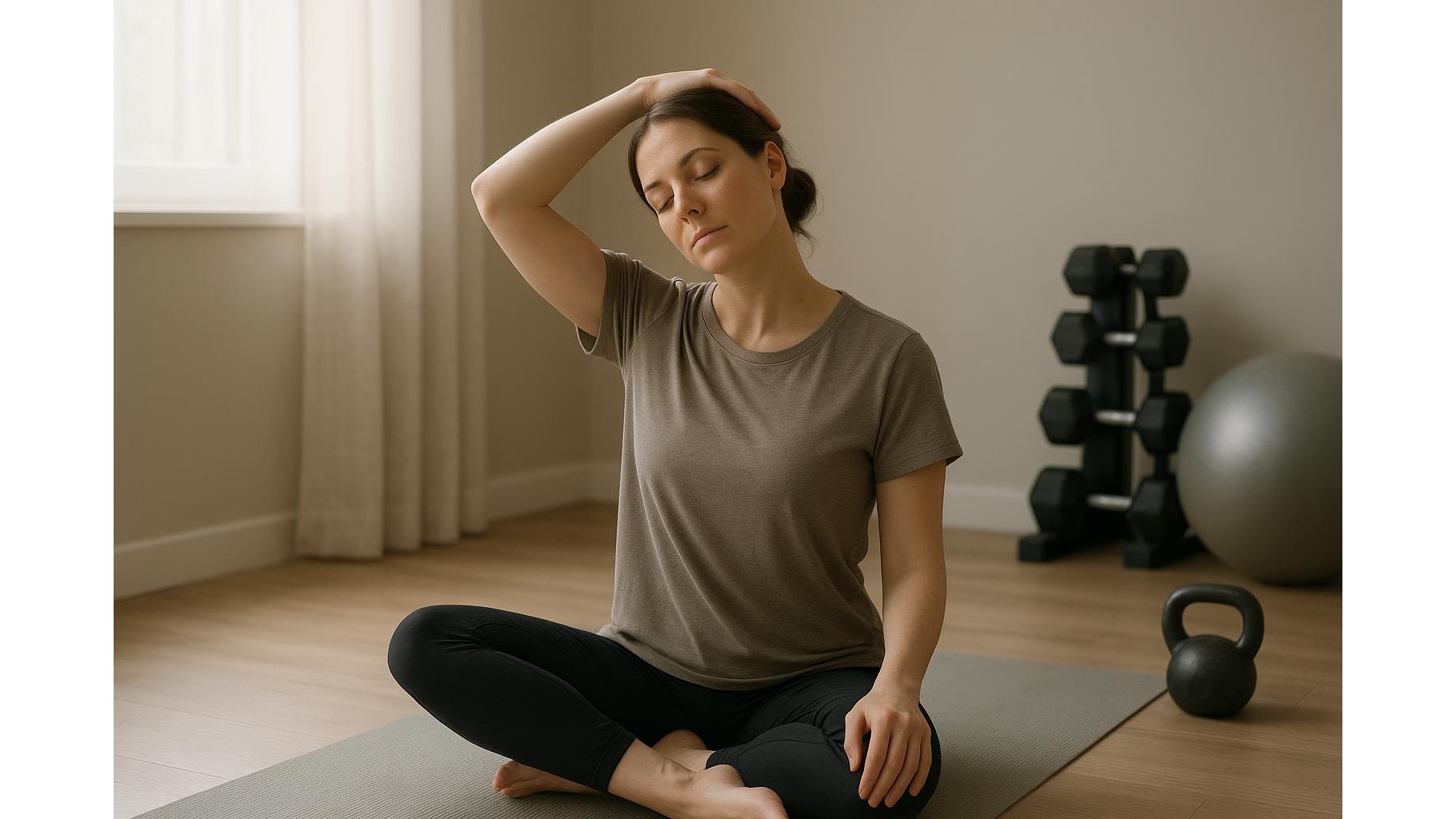
Once the spine feels a bit more mobile, focus on easing shoulder and chest tightness, common in people who work at a computer and then train at home. In a doorway, gently place your forearms on the frame and step through just enough to feel a light stretch across the chest, holding for 20–30 seconds while breathing slowly. Avoid forcing range; intensity should stay at a mild, relaxing level. Follow with seated upper trapezius and levator scapulae stretches: sit tall, gently tilt your ear toward your shoulder, and lightly guide with your hand if needed, then repeat on the other side, making sure not to yank the head. Finally, perform slow arm circles and scapular retractions (pulling shoulder blades slightly together and down) to wake up postural muscles that support the neck.
Activate stabilising muscles to support pain-free training
To make the relief last into your home workout, finish with low-load activation exercises for deep neck flexors and shoulder stabilisers. In a supine position with your head on the floor or a thin cushion, perform small chin tucks: imagine making a double chin without lifting your head, holding for 5 seconds and repeating 6–8 times. This subtly strengthens the muscles that help align your cervical spine. Then move to wall slides: stand with your back, head and hips lightly against a wall, elbows bent at 90 degrees. Slowly slide your arms up and down while keeping the neck long and shoulders away from your ears. These gentle drills prepare your upper body for pressing, pulling or cycling sessions in your home gym while keeping neck load controlled.
Integrate your reset into a sustainable routine
Consistency is more important than intensity for migraine-prone athletes. Aim to perform this 15-minute morning neck and shoulder reset at least 4–5 days per week, ideally before you check your phone or open your laptop. Track how your symptoms respond over several weeks: you may notice fewer tension spikes before training and improved tolerance to your regular home gym programme. On higher-risk days—poor sleep, extra screen time, or known triggers—consider keeping your workout shorter and leaning more on low-impact conditioning or mobility. By respecting your nervous system and prioritising calm, controlled movement, you can continue to train at home, support long-term neck and shoulder health, and reduce the likelihood that your sessions will tip over into a migraine episode.









