
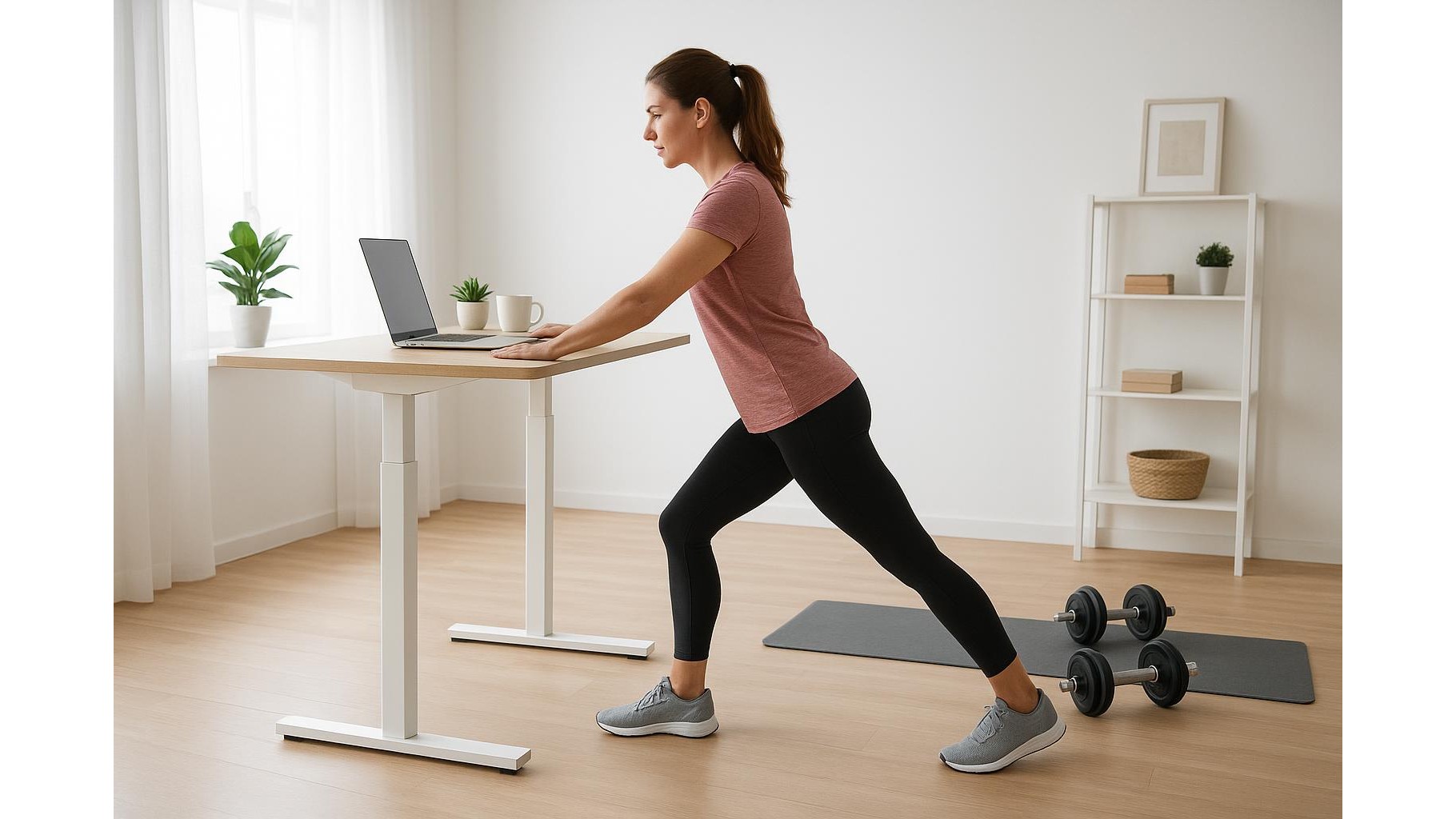
Using a standing desk between your home workouts can be a powerful ally for health, but only if you manage the extra time on your feet. Long static standing often leads to tight calves, tired hips and a nagging lower back. The good news: you can turn mini breaks at your desk into recovery micro‑sessions that keep your joints moving, circulation flowing and muscles ready for your next training block – no equipment required.
Why your calves and hips get tight at a standing desk
Even though standing feels more “active” than sitting, it’s still a static position. Your calves work constantly to stop you from tipping forward, while your hip flexors and glutes fight to keep you upright. Over a few hours, this low‑grade tension builds up as stiffness and fatigue. Add heavy squats, deadlifts or home HIIT sessions on top, and your tissues never really switch off. Short, frequent standing desk resets break this cycle. Think of them as movement “snacks” that restore length to tight muscles, gently load the joints and improve blood flow so waste products from training are cleared more efficiently.
Simple calf resets: ankle rocks and wall stretches
Start by freeing your ankles and calves, which take the brunt of both standing and plyometric or running work. Every 30–45 minutes, do 60 seconds of ankle rocks: stand facing your desk, lightly hold the edge for balance, step one foot back and gently bend your front knee forward until you feel a mild stretch in the back calf. Rock in and out of that stretch 10–15 times, then switch legs. Follow with a straight‑leg wall calf stretch: place your hands on the wall, step one leg back, keep the heel down and knee straight, and lean forward for 20–30 seconds per side. These micro‑stretches reduce calf tightness, help your Achilles tendon recover and support better ankle mobility for squats and lunges in your next home workout.
Hip openers to ease fatigue and protect your lower back
When hips stiffen up, your lower back often compensates, which can show up as a dull ache by the afternoon. A few hip opener drills at your standing desk can offload the spine and keep your glutes engaged. Try standing hip circles: feet hip‑width apart, soften your knees and draw slow circles with your hips 8–10 times each direction. Then move to standing figure‑four sits: hold the desk, cross your right ankle over your left knee, sit your hips back into a mini squat until you feel a stretch in the outer hip, then stand up again for 8–10 reps each side. These resets target the glute medius and deep rotators, crucial for knee tracking and stable squats, while giving your lumbar spine a break from constant loading.
Micro core breaks: pelvis tilts and marching holds
Your core acts as the bridge between your upper and lower body both in training and while standing. Letting it “switch off” encourages a sway‑back posture that irritates the lumbar region. Every hour, perform a short set of pelvis tilts: stand tall, exhale and gently tuck your tailbone under, feeling your lower abs engage; inhale and return to neutral. Repeat for 10–15 controlled reps. Then add standing marching holds: lightly hold the desk, lift one knee to hip height and pause for 3 seconds while keeping your pelvis level, alternating for 10–12 reps. These quick drills reinforce postural alignment, improve balance and keep your trunk muscles active so they can better support loaded movements in your home gym.
How to structure resets around your home workouts
To make these recovery routines stick, pair them with habits you already have at your workstation. After each email batch or video call, choose a 60–90 second combination: calves, hips and core. Across an 8‑hour day you might accumulate 10–15 minutes of high‑quality mobility without ever “doing a workout”. On days with intense lower‑body sessions, prioritise calf and hip resets to offset soreness and maintain range of motion. On upper‑body‑focused days, lean more into core and hip alignment to support shoulder positioning. This consistent, low‑dose movement improves recovery, reduces perceived stiffness and helps you show up fresher and more stable for each home training session.
Used thoughtfully, your standing desk becomes more than a workspace – it turns into a quiet recovery station that keeps your calves, hips and lower back happy between workouts. By sprinkling in these simple resets throughout the day, you counter the hidden downsides of static standing, enhance circulation and preserve the mobility you build in your training. Commit to just a few movement “snacks” every hour, and you’ll notice smoother squats, lighter steps and a body that feels ready – not wrecked – when it’s time to train again.









