
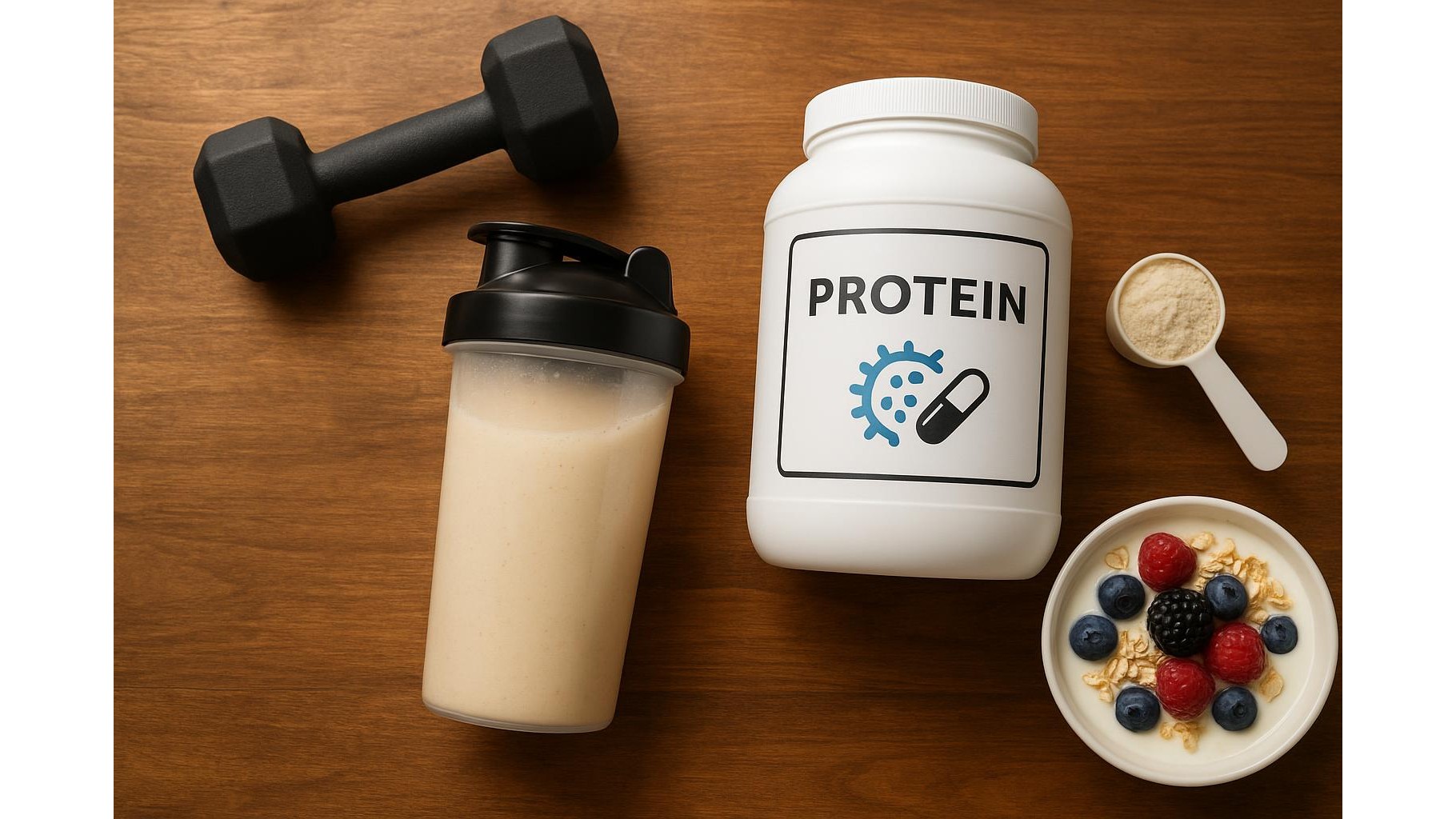
Balancing protein intake and gut health is a growing priority for many home athletes. Hybrid powders that combine protein plus probiotics promise muscle recovery and digestive support in a single scoop, often marketed as a smarter upgrade over standard whey. But do they really make sense for your home gym routine, or are they just a premium upsell? This guide breaks down the evidence, the practical pros and cons, and how to slot these products into a simple at-home nutrition plan.
What are protein–probiotic hybrid powders?
Hybrid powders combine a traditional protein supplement (usually whey, casein or a plant-based blend) with added probiotic strains such as Lactobacillus or Bifidobacterium. The protein side is designed to support muscle repair, performance and satiety, while the probiotics are meant to help maintain a healthier gut microbiome, potentially improving digestion, immune support and even how comfortably you tolerate the protein itself. Labels typically list colony-forming units (CFU) and the specific strains used; these details matter, because benefits are strain-specific and dose-dependent. In practice, a hybrid powder is a convenience product: it aims to replace taking a separate protein powder and a standalone probiotic capsule.
Potential benefits for home athletes
For lifters and cardio enthusiasts training at home, the primary appeal is convenience. One scoop after a session can cover both your post-workout protein target and a daily probiotic serving. Some athletes who experience bloating or discomfort from whey report better tolerance when certain probiotic strains are included; a healthier gut environment may help with lactose digestion and overall GI comfort. There is also emerging evidence that gut health can influence immune function, which matters if you are training consistently and want to avoid losing progress to frequent colds. For people with otherwise solid diets who simply struggle to eat enough protein, a hybrid powder can be a low-effort way to support muscle maintenance while nudging gut health in the right direction.
Limitations, caveats and who actually needs them
Despite the promises, hybrid powders are not magic. Many products contain relatively low CFU counts compared to dedicated probiotic supplements, and some use generic or poorly documented strains. Survival of probiotics through manufacturing, storage and stomach acid is another limitation: without stability data, you cannot assume all the bacteria in a scoop remain viable. For most healthy people eating a varied diet rich in fiber, fermented foods and adequate protein from whole foods, a premium hybrid powder is not essential. They may be more useful if you (1) struggle with digestive discomfort when using regular protein, (2) have a low intake of probiotic foods like yogurt, kefir and kimchi, or (3) value minimalist, quick supplementation as part of a tight home training schedule.
How to integrate hybrid powders into a simple home plan
Start by setting clear protein goals based on body weight and activity, then decide where a hybrid powder fits in. Many home athletes do well aiming for roughly 1.6–2.2 g of protein per kg body weight per day, with most coming from whole foods such as eggs, dairy, lean meat, fish and legumes. A hybrid powder can fill the gaps: one scoop post-workout, or as a quick breakfast shake when you are rushed. Keep the rest of your diet focused on whole-food fiber sources (oats, beans, fruit, vegetables) to feed the very bacteria the powder supplies. Avoid stacking multiple probiotic products at random; pick one hybrid powder, test it consistently for at least 2–4 weeks, and monitor digestion, energy, recovery and any changes in regularity or bloating.
How to choose a protein plus probiotics powder
When evaluating a hybrid, look first at the protein quality and dose per serving; aim for around 20–30 g of complete protein, with minimal added sugar. Then examine the probiotic panel: are strains fully named (for example Lactobacillus rhamnosus GG rather than just “Lactobacillus”)? Is the total CFU count clearly listed, and does the product give a “CFU at expiry” rather than just at manufacture? Check for third-party testing or quality certifications and consider whether you need dairy-free, vegan or gluten-free options. Finally, be realistic about price: you are paying for convenience. If the CFU count is low or the strain information is vague, it may be more cost-effective to buy a solid standalone protein powder plus a proven probiotic supplement separately.
Bottom line: are hybrid powders worth it?
Protein–probiotic hybrid powders can make sense for home athletes who value simplicity, have limited time and want to streamline their recovery and gut support into one product. The science behind both adequate protein and targeted probiotics is generally solid, but the real-world impact of combining them depends on product quality and your individual needs. For many people, a balanced, fiber-rich diet plus a standard protein powder will be more than enough. If you do choose a hybrid, treat it as a practical tool, not a shortcut: prioritise total daily protein intake, consistent training, sleep and whole-food nutrition first, then use the powder as a supportive add-on rather than a foundation.









