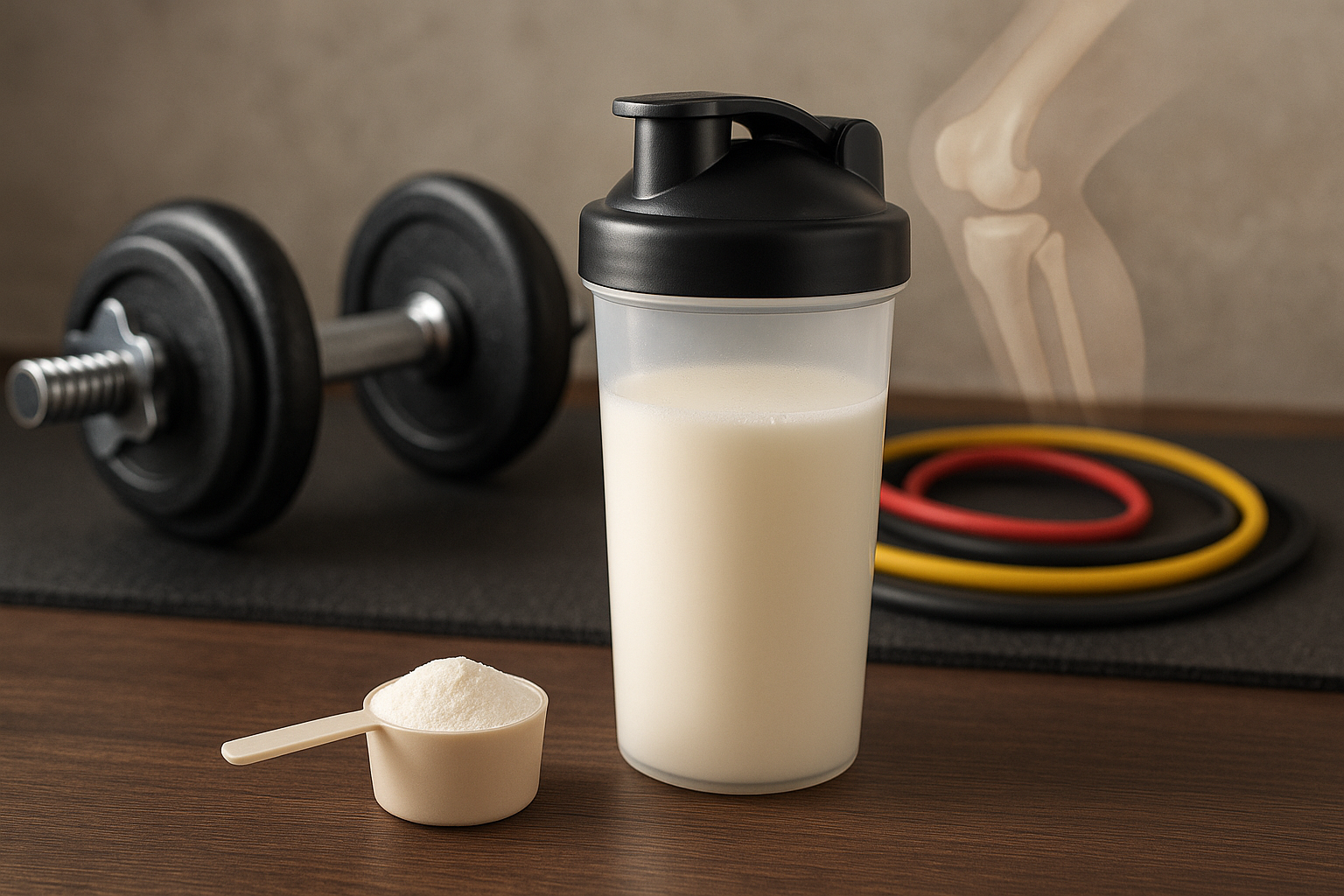
Home training can be deceptively demanding on your body. From high-rep dumbbell squats to long treadmill or bike sessions, your joints, cartilage and connective tissues take repeated stress. This is why many home lifters and cardio fans look at collagen supplements as a way to support joint comfort and recovery. The science is still evolving, but there is enough evidence to outline when collagen might be worth considering – and when expectations should stay modest.
What collagen actually does in your body
Collagen is the main structural protein in tendons, ligaments, cartilage, skin and bone. Your body makes it from amino acids (glycine, proline and hydroxyproline) plus vitamin C. As we age, natural collagen production drops, which can contribute to joint stiffness, slower recovery and changes in skin elasticity. Collagen powders provide pre-digested (hydrolysed) peptides that are easily absorbed, but they are still just amino acids and small peptides. That means they support the raw materials for tissue repair; they do not “magically rebuild” a damaged knee. For home gym users, collagen is best seen as a supportive nutrient alongside smart programming, load management and good sleep.
Types of collagen: bovine vs marine for joint support
Different sources provide different collagen types. Bovine powders usually provide Type I and III, which are common in bone, ligaments and tendons, while chicken and some blends add Type II for cartilage. A multi-source product such as Multi Collagen Peptides Powder 454g includes Types I, II, V and X, targeting skin, bone and joint tissue in one mix. Marine products like SuperSelf Marine Collagen Powder focus on Type I, which is abundant in connective tissue and can still support overall joint structures. For most people doing home strength or cardio training, the bigger issue is consistent daily intake rather than obsessing over tiny differences between collagen types.
Evidence-based benefits for joints and home workouts
Human studies suggest regular collagen supplementation (typically 5–15 g per day) may reduce joint discomfort in people with exercise-related pain and improve function over several months. Some research combining collagen with light loading showed positive changes in tendon properties, which is directly relevant for lifters doing squats, presses and pulling work in a home gym. Products that also include vitamin C and supportive actives, like the Multi Collagen Peptides Powder 454g with vitamin C, biotin, hyaluronic acid, keratin and elastin, provide cofactors needed for collagen synthesis and may help skin and joint health together. Still, effects are gradual, not dramatic, and they work best alongside progressive but joint-friendly programming rather than maximal loads every day.
How and when to take collagen around your training
For home athletes, the best collagen supplement is one you can take every day without effort. The Multi Collagen Peptides Powder 454g is unflavoured and designed to mix easily with lukewarm water, coffee or smoothies, delivering a suggested two scoops per day (41 servings per pouch). The SuperSelf Marine Collagen Powder is praised by users for being odourless, tasteless and easy to dissolve in coffee, tea or shakes, which fits seamlessly into a busy morning routine before or after a home workout. Some experts recommend taking collagen 30–60 minutes before joint-loading exercise, especially when combined with vitamin C, to supply amino acids while blood flow to tendons and ligaments is elevated.
Who collagen is for – and realistic expectations
Collagen can make sense if you are a home trainee with mild joint discomfort, high weekly training volume, or if you are over 30 and want long-term connective tissue support. It may also appeal if you care about skin, hair and nail health alongside performance, since both products reviewed highlight these cosmetic benefits. However, collagen is not suitable for vegans, and some lifters simply prefer to get protein from whey or plant blends. Reviews of the Multi Collagen Peptides Powder 454g note that unflavoured collagen can have a detectable taste in plain water, so mixing it into coffee, yoghurt or smoothies is often better. For the SuperSelf Marine Collagen Powder, most users report smoother skin and stronger nails after a few months, but recognise that collagen is not a quick fix and requires consistent use for 8–12 weeks.
Collagen as one piece of your home training puzzle
For lifters and cardio lovers training at home, collagen supplements like the Multi Collagen Peptides Powder 454g and the SuperSelf Marine Collagen Powder can be a convenient way to support connective tissues, skin and overall recovery. The current evidence suggests modest but meaningful benefits when doses are adequate and taken consistently. Used alongside structured programming, good sleep, enough total protein and sensible progression, collagen can help keep your joints feeling ready for the next home session. Used alone, it will not rescue poor training habits. Consider it a useful adjunct in a broader, evidence-based strategy to keep you lifting and moving pain-free for the long term.