
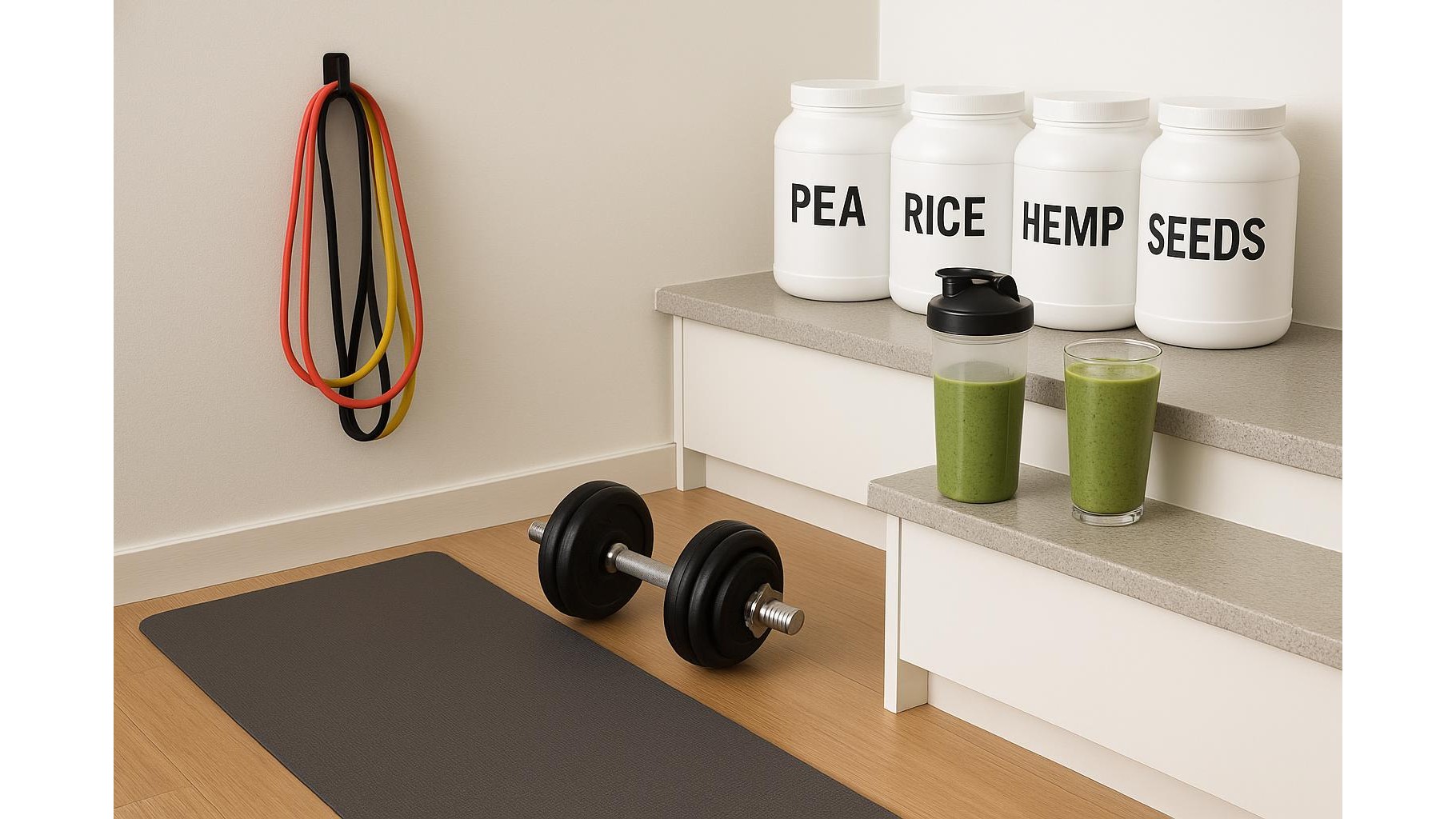
Building a strong home gym routine when you have a soy allergy can feel tricky, especially if you rely on plant-based protein instead of whey. The good news is that a smart mix of pea, rice, hemp and seed proteins can cover your needs safely, support muscle growth and recovery, and fit easily around your home workouts. In this guide we’ll look at how these powders work, what to watch out for on labels, and practical ways to use them before and after training.
Understanding soy-free plant protein blends
For home athletes training with limited time and equipment, a convenient soy-free protein powder can make hitting daily protein targets much easier. Pea and rice proteins are the backbone of most blends because together they provide a more complete amino acid profile than either alone. Hemp and seed proteins (from pumpkin, sunflower, chia or flax) add extra fibre, minerals and healthy fats, which can support overall recovery and joint health. When choosing a blend, look for clear labelling that states “soy free” and read the allergen statement carefully to avoid traces or cross-contamination if your allergy is severe. Also check the protein per serving – aim for around 20–25 g per scoop for effective muscle support.
Pea protein: the workhorse for home workouts
Pea protein is one of the best options for anyone avoiding soy and dairy. It is naturally free from common allergens like gluten and lactose and is typically gentle on digestion. Nutritionally, pea protein is rich in branched-chain amino acids (BCAAs), particularly leucine, which is crucial for triggering muscle protein synthesis after strength sessions. Pea-based powders mix well into shakes and oat bowls, and the neutral flavour works with cocoa, berries or nut butters. For home athletes, a simple strategy is to take one scoop 30–60 minutes after resistance training, and another between meals if daily protein intake is low. Just make sure the product is labelled as unsweetened or uses sweeteners you tolerate well, since excess sugar alcohols can cause bloating.
Rice and hemp proteins to balance amino acids
Brown rice protein on its own is slightly low in lysine, while pea protein is lower in methionine. When combined, they form a more complete essential amino acid spectrum similar to whey. Hemp protein brings extra benefits: it contains omega‑3 and omega‑6 fatty acids and a good amount of fibre, which can support heart health and digestion when you are training hard at home. The trade-off is that hemp protein is usually less concentrated in total protein per scoop and has a slightly earthy taste. A smart approach is to choose a blend where pea is the primary ingredient, supported by rice and hemp, so you get high protein, better taste and extra micronutrients. This balance is ideal for home athletes doing regular resistance training and cardio sessions.
Seed-based proteins and digestion tips
Seed proteins from pumpkin, sunflower, flax or chia can be valuable additions to a soy-free plant-based protein routine. They often deliver minerals like magnesium, iron and zinc, which are important for energy production and recovery. However, seed protein powders can be higher in fibre and fat, which some people find heavy before intense workouts. To improve digestion, start with half servings and build up gradually, and drink enough water throughout the day. If you are prone to bloating, choose blends that minimise added gums and artificial sweeteners. Using seed proteins in post-workout smoothies or evening snacks rather than pre-workout can help keep your stomach comfortable while you train in your home gym.
How to use soy-free plant proteins around home training
To cover your daily protein needs as a home athlete, first estimate your target intake – many active people aim for 1.6–2.2 g of protein per kilogram of body weight, ideally spread over 3–4 meals or snacks. Use soy-free plant protein powders to top up meals that are low in protein: add a scoop to breakfast oats, blend with fruit after a session, or stir into yoghurt alternatives. Before longer workouts, focus on an easily digestible snack with a moderate amount of protein and some carbs, like a small shake with oats and banana. After training, aim for 20–30 g of protein within a couple of hours to support recovery. Consistency matters more than perfection: using these blends daily, combined with whole foods like lentils, beans, quinoa and nuts, will help you maintain muscle and train confidently at home without relying on soy.
Choosing the right plant-based protein blends when you have a soy allergy is about combining safety, nutrition and practicality. By focusing on high‑quality pea and rice proteins, complemented by hemp and seed options, you can build a complete amino acid profile, support muscle recovery and keep digestion on track. Read labels carefully, test how your body responds, and slot your shakes or protein-enriched meals around your home workouts. With a little planning, you can fully cover your protein needs, progress in your home gym and stay completely soy‑free.









