
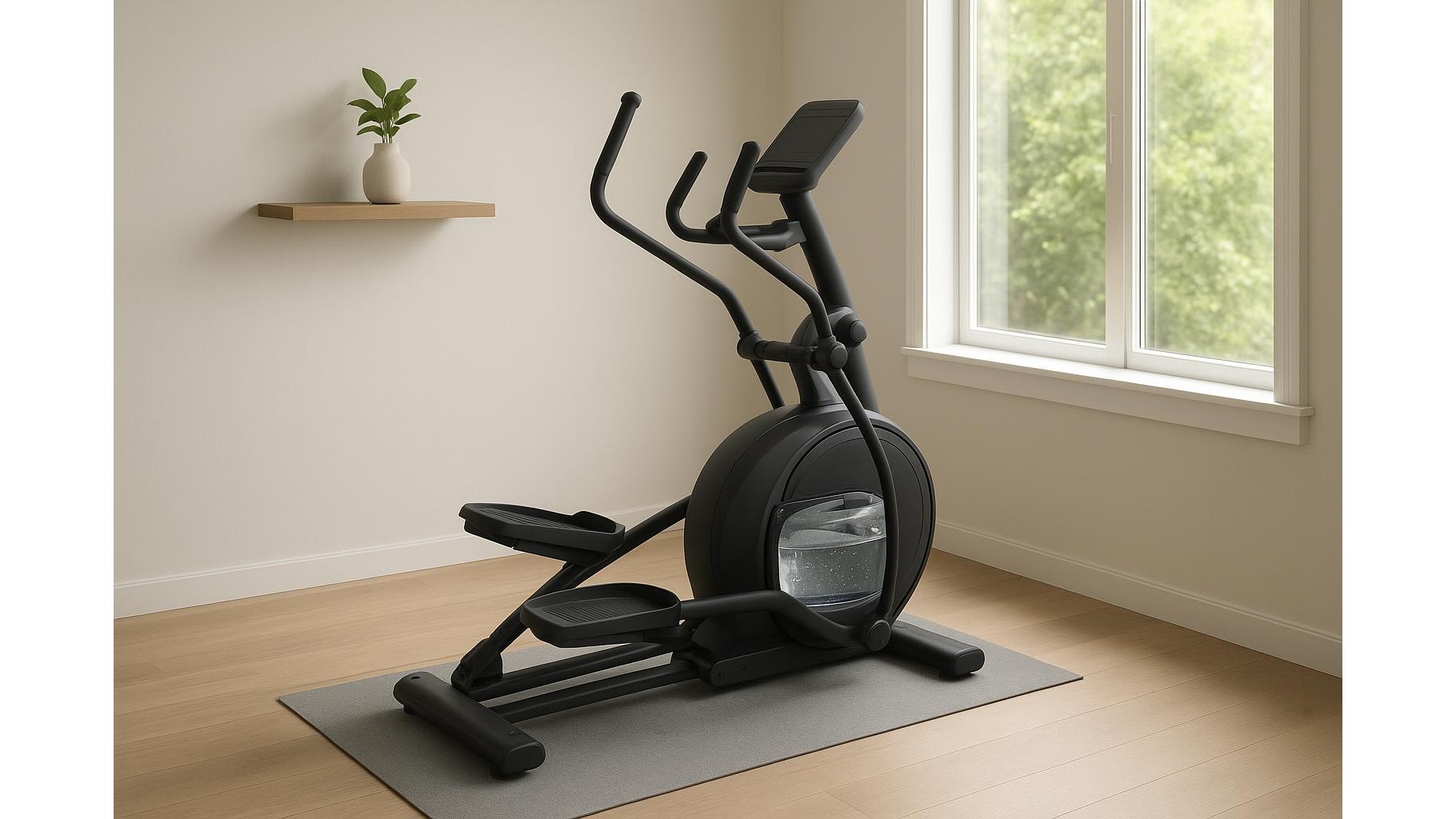
Water-resistance elliptical trainers are a niche but fascinating option for the home gym. Inspired by the feel of rowing tanks and swimming against current, they swap magnets and fans for a water flywheel that your strides drive through a sealed tank. The result is a distinctive, fluid resistance curve that can feel closer to natural movement than some budget magnetic models. Before you hunt one down for your spare room, it’s worth understanding who they suit, how they compare with magnetic and fan-based ellipticals, and what to check in terms of noise, maintenance and space.
How water-resistance ellipticals work
In a water-resistance elliptical, your pedalling powers blades inside a water-filled tank. The faster you move, the more the water resists you, creating a progressive resistance feel. Unlike magnetic ellipticals, where you typically adjust resistance with a dial or console-controlled brake, the intensity on a water system is primarily speed-dependent: push harder, get more resistance. This can feel intuitive for interval and athletic-style training, but less so if you like very precise, low-intensity settings for rehab. Compared with fan ellipticals, water offers a smoother, less jerky stroke because water is denser and damps sudden accelerations, which many users find kinder on the joints for longer sessions.
Who water-resistance ellipticals suit best
Because of their smooth, fluid motion and speed-linked load, water-resistance ellipticals tend to suit intermediate and advanced home users who enjoy performance-style training. If you are a runner looking for low-impact cross-training that still rewards powerful efforts, the rising resistance with cadence can feel very natural. They are also appealing if you like the idea of a “live” resistance that changes instantly with your effort, instead of waiting for a magnetic brake to adjust. However, if you are a beginner who needs very light resistance, someone in rehab who must maintain strict intensity zones, or a user who mostly walks at a steady pace, a magnetic elliptical may be more practical and easier to fine-tune. Families sharing one machine might also prefer clearly stepped magnetic levels that are simpler to reproduce from session to session.
Noise and home environment: water vs magnetic vs fan
Noise is a key factor in a home gym, especially in flats or shared spaces. Water-resistance ellipticals create a distinctive slosh and whoosh as the blades churn the water. The sound is usually deeper and less harsh than a fan elliptical, whose exposed blades can produce a louder, wind-like roar at higher speeds. Many people find the water sound pleasant, but it is not silent. In contrast, a quality magnetic elliptical is typically the quietest option, because resistance is generated without direct contact and there is no air or water being displaced. If you train late at night, live above neighbours, or plan to watch TV at a low volume while you work out, a magnetic model is generally safer. Water systems sit in the middle: quieter and less piercing than fans, but clearly more audible than top-tier magnetic units.
Maintenance, durability and space considerations
A water-resistance system adds some maintenance tasks you will not find on magnetic ellipticals. The tank must be filled correctly, occasionally treated with purification tablets, and monitored so the water does not become cloudy or develop odours. You must also be comfortable with the idea, however small the risk, of potential leaks. Magnetic systems, by comparison, are mostly maintenance-light: keep the rails clean, check bolts, and you are done. Space-wise, water tanks add bulk and weight, making the machine harder to move and less suitable for folding designs. If your home gym is a permanent corner with solid flooring, that may be fine; if you rely on compact storage, a traditional magnetic or even a smaller fan elliptical will usually fit better. Finally, consider that the added weight of the water may demand a more robust floor or protective mat if you train on upper levels.
Budget, availability and realistic expectations
Water-resistance ellipticals are still relatively rare compared with mainstream magnetic cross trainers. That can mean higher prices and fewer choices, especially if you shop primarily online and need reliable delivery and support. Replacement parts for water tanks, seals and blades may also be harder to source than generic belts or magnetic components. When setting a budget, remember that you are often paying for a niche feel rather than a clear performance advantage over a good magnetic model. For many home users, a mid-range magnetic elliptical that is quiet, compact and low-maintenance will deliver more day-to-day value. Water systems make sense if you specifically want that immersive, fluid resistance experience, accept some extra upkeep, and have a stable, permanent space for a heavier frame. Go in with realistic expectations and you are more likely to enjoy the differences rather than be surprised by them.
Ultimately, water-resistance ellipticals bring a unique, smooth and engaging feel that can be very rewarding in a home gym, particularly for more experienced users who enjoy pushing hard against progressive resistance. However, they also come with trade-offs in noise, maintenance, weight and cost when compared with magnetic and fan-based ellipticals. If you have the space, appreciate the sound and sensation of water, and do not mind occasional tank upkeep, a water model can become a standout centrepiece of your home setup. If your priorities are near-silent operation, minimal maintenance and compact footprint, a well-built magnetic elliptical remains the safest and most versatile choice for most households.









