
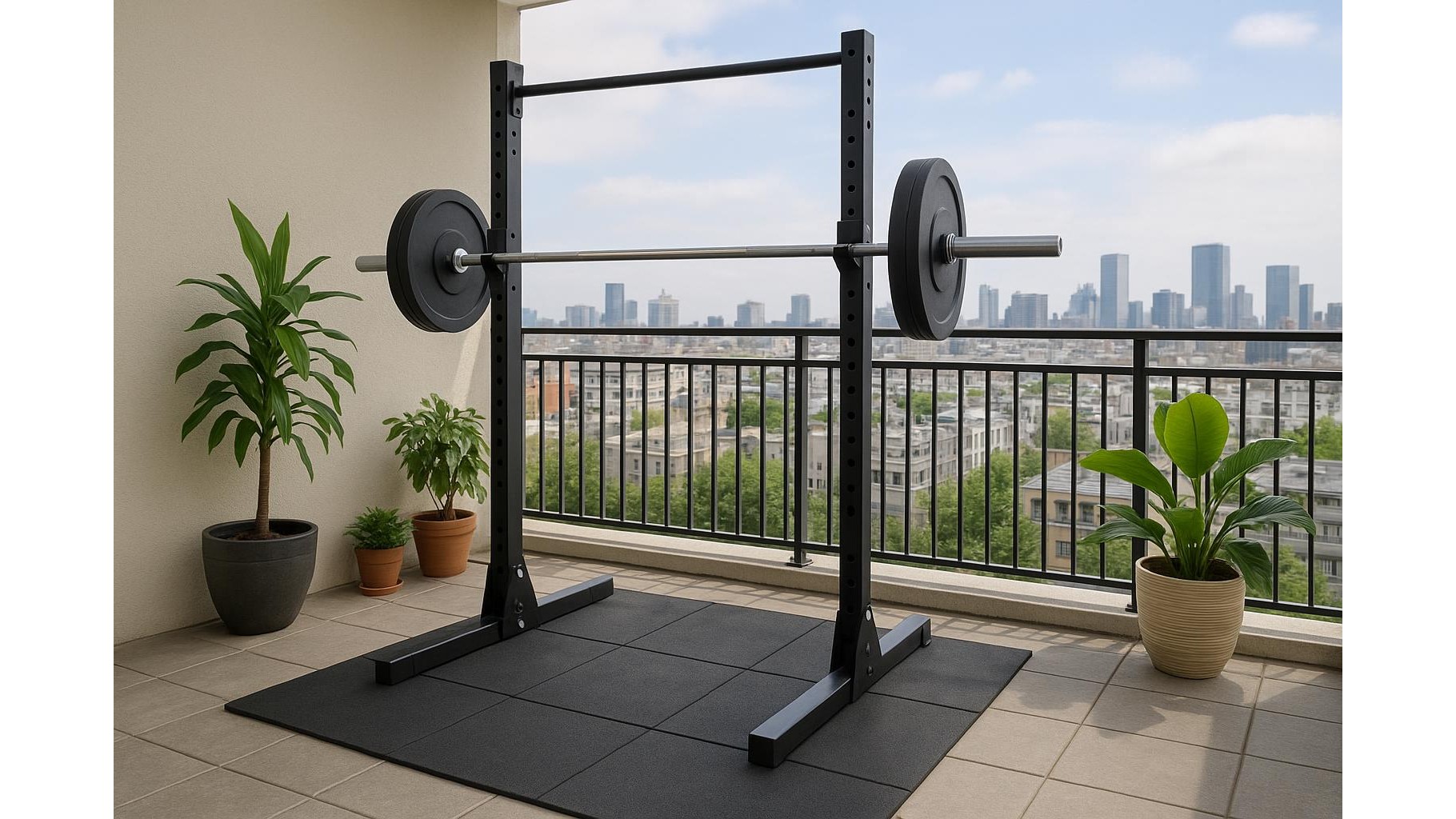
Creating a versatile home gym that can move between indoor and outdoor spaces is increasingly popular, especially for those with a balcony, patio or small garden. A portable outdoor half rack offers the structure you need for safe barbell training while remaining compact and easy to store. In this guide, we’ll look at what matters most when choosing a fold-away rack for outdoor use, with a focus on stability, anchoring options and protection against the elements.
Key features of portable outdoor half racks
When evaluating a portable half rack for balconies and gardens, start with the basics: frame material, load capacity and footprint. Look for sturdy steel construction with a clear stated maximum load that comfortably exceeds the weights you plan to use. Compact depth is vital on balconies, but make sure there is enough space for safe movement under the bar. Prioritise racks with folding uprights or detachable crossmembers so the unit can be stored flatter against a wall or moved indoors after training. Adjustable J-hooks and safety spotters are essential for bench press and squats, especially when you train alone.
Indoor–outdoor portability and storage
True portability means more than just being light. Check whether the half rack has wheels or built-in handles to make it easier to roll across tiles or decking without damage. A rack that breaks down into a few large pieces can be stored in a cupboard or along a wall when not in use, freeing outdoor space for everyday living. Make sure the folded dimensions fit your balcony or storage room, and consider where you will keep the barbell and plates so they can also be moved indoors quickly during bad weather. The easier it is to move and store, the more consistently you will use your outdoor home gym.
Stability and anchoring on balconies and patios
Stability is the most critical safety factor for any half rack, and it becomes even more important on small balconies or uneven patios. Choose a rack with a wide base and crossbars that resist tipping in all directions. Some models allow floor anchoring into concrete or decking; others offer ballast options, where you can add weight plates or sandbags to stabilise the base. On balconies where drilling is not allowed, look for racks with rubber feet and a low centre of gravity, and plan to position the rack close to a structural wall. Always test stability with lighter loads first and avoid dynamic movements (like rack pulls with bouncing) if the surface feels at all flexible.
Weather resistance and corrosion protection
Because many standard gym racks are designed mainly for indoor use, you need to pay special attention to corrosion resistance when setting up an outdoor station. Prefer racks finished with powder coating rather than basic paint, and inspect welds and joints for gaps where water can collect. Even with a robust coating, aim to keep your half rack under some shelter, such as a balcony overhang or garden canopy, and use a fitted protective cover when not training. Regularly dry off moisture, especially around adjustment holes and bolts, and apply light oil to moving parts so J-hooks and spotter arms do not seize up over time.
Planning a safe balcony or garden training layout
Before buying a fold-away half rack, measure your space carefully and sketch a simple layout. You must allow room not only for the rack itself, but also for the barbell length, your stance and any bench you plan to use. On balconies, check the load rating of the structure and keep total system weight (rack, bar, plates and your bodyweight) comfortably below the limit. Position plates low and close to the main building wall to minimise leverage forces. In gardens, try to place the rack on level ground or use rubber gym tiles to create a stable platform. Add simple accessories like resistance bands, dip handles and chalk storage to create a compact yet complete outdoor home gym that remains safe, adaptable and easy to pack away.
In summary, choosing a portable outdoor half rack for balconies and gardens means balancing compact design with serious safety. Focus on a solid steel frame, reliable stability, suitable anchoring or ballast solutions, and practical weather protection so your investment lasts. Plan how you will move, store and maintain the rack between indoor and outdoor areas, and verify that your space can safely handle the loads involved. With a thoughtful approach, you can enjoy barbell training in the fresh air without sacrificing security or everyday living space.









