
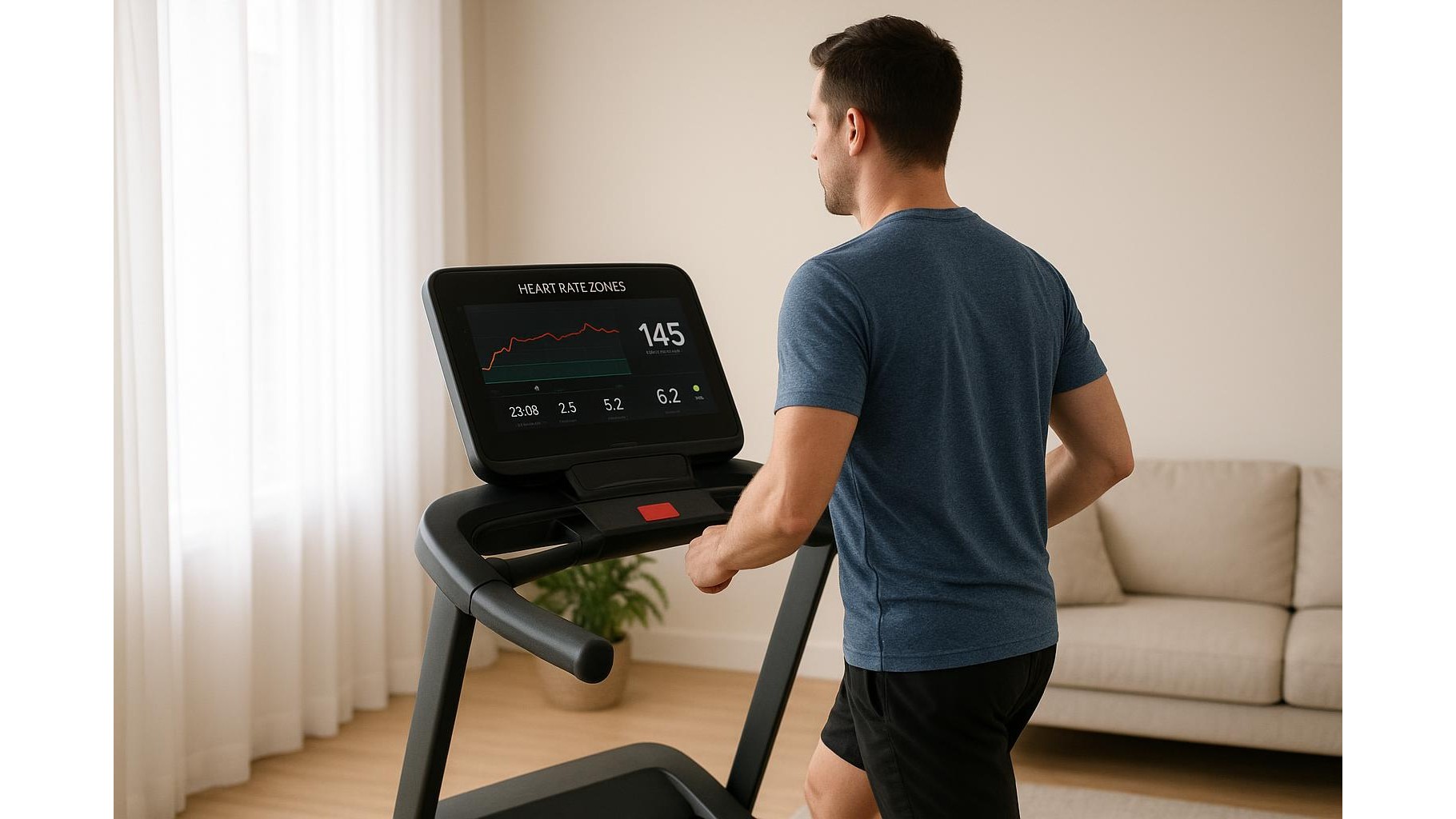
Using heart rate control programs on your home treadmill can turn random workouts into structured training, but only if you avoid the trap of overtraining. Instead of chasing speed or distance, you let your heart rate dictate the intensity, keeping you in the right training zone for fat loss, base endurance or recovery. This guide explains how to set up heart-rate-driven sessions on a typical home treadmill, how to interpret the numbers you see on the console, and how to stay within safe limits so you improve fitness without burning out.
Understanding heart rate zones and treadmill programs
Before pressing start, you need a basic grasp of heart rate zones. The simplest way to estimate your maximum heart rate is 220 minus your age (not perfect, but usable). From there, you can define zones: around 50–60% of max for easy recovery, 60–70% for fat loss and basic endurance, 70–80% for tempo work, and anything higher mainly for short intervals. Most home treadmills with heart rate control ask you to enter your age, sometimes weight, then they auto-calculate a target zone. The treadmill will then adjust speed and sometimes incline to keep your pulse near that target. Your job is to choose the right zone for the day and resist the temptation to manually crank it up just because you “feel good”.
Setting up a fat loss session by heart rate
For fat loss and general weight management, aim for a long, steady session in the 60–70% of max heart rate range. On most consoles, this corresponds to a program labelled “fat burn” or “weight loss”. After entering age and weight, select the fat-burn profile and confirm a moderate workout duration, such as 30–45 minutes. The treadmill will start at an easy walking pace and gradually adjust speed (and sometimes incline) so your heart rate stabilises in the chosen zone. If the belt pace feels too fast but your heart rate is still low, gently hold the handrail sensors only long enough for the treadmill to read your pulse, then slow the speed slightly. The goal is a light sweat and steady breathing, not gasping. If you finish feeling like you could have gone another 10–15 minutes, you are right where you want to be.
Building base endurance safely at home
Base endurance training is about time on your feet at a sustainable heart rate, usually 65–75% of max. Instead of chasing higher speed every week, you use a heart rate control program to cap intensity and gradually increase duration. Select a manual or heart rate program and set a modest target, such as 70% of max. Start with 25–30 minutes and add 5 minutes each week, keeping the same heart rate cap. Your treadmill may raise incline instead of speed to reach the target heart rate; accept small increases but avoid very steep grades that stress your calves and lower back. Over a few weeks, you will notice you can cover more distance at the same heart rate. That is a sign of improved aerobic fitness without drifting into overtraining territory.
Designing heart-rate-based recovery days
Recovery days are where many home athletes go wrong: they still push too hard. Use your treadmill to enforce a genuine easy effort at 50–60% of max heart rate. Choose the lowest-intensity program or manual mode with a strict heart rate ceiling. Walk at a comfortable pace with minimal incline, and glance at your heart rate every few minutes: if it creeps above the top of your recovery zone, reduce speed immediately. These sessions might last 20–30 minutes and should feel almost too easy. Their purpose is to promote blood flow, reduce stiffness and support your nervous system, not to burn maximum calories. By protecting recovery days with heart-rate limits, you reduce cumulative fatigue and dramatically lower the risk of overtraining.
How to avoid overtraining with heart rate data
Heart rate feedback is also a powerful early-warning system against overtraining. Watch for trends: if your usual pace now produces a higher heart rate than normal, or if your heart rate stays elevated for longer after the workout, it may signal fatigue. Build at least one recovery day into your weekly treadmill plan and limit hard, high-zone sessions (above 80% of max) to one or two per week. Use heart rate, not ego, to choose today’s intensity: if your resting pulse is unusually high in the morning, opt for a recovery or fat-loss zone session instead of intervals. Over time, consistent use of heart rate control programs teaches you how different efforts feel, so you can back off before exhaustion, sleep issues and nagging injuries appear.
In summary, using heart-rate-driven programs on your home treadmill is a smart way to structure fat loss, base endurance and recovery days while protecting yourself from overtraining. Define your heart rate zones, pick the right program for the day, and let the console control speed and incline instead of chasing numbers on the screen. Respect low-intensity days as much as harder ones, track how your heart responds over weeks, and adjust when you see signs of fatigue. With a simple chest strap or built-in sensors and a bit of discipline, your home treadmill becomes a precise training partner that guides you toward sustainable, long-term fitness.









