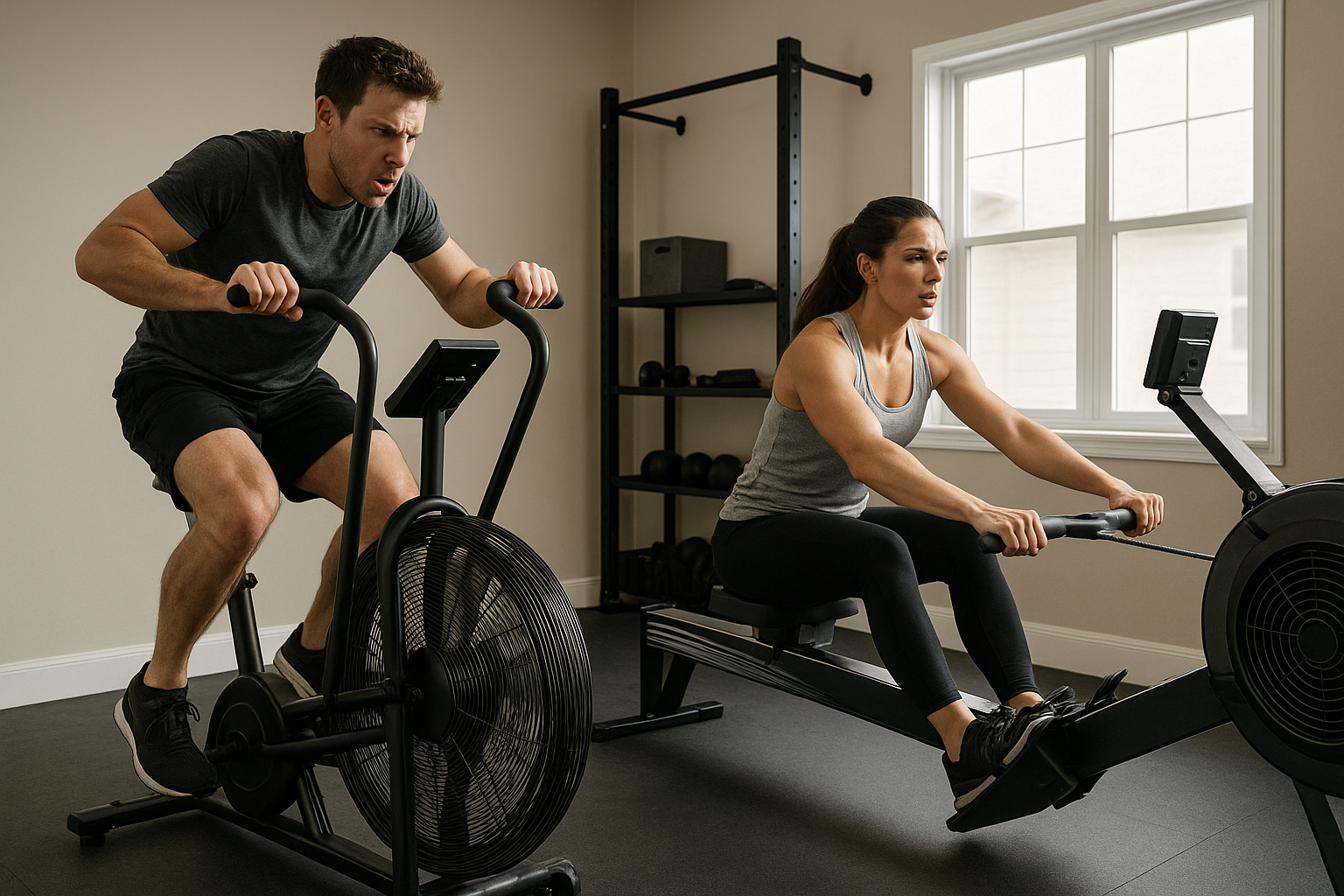
When you want serious conditioning in a compact home gym, two machines stand out: the air bike and the fan rower. Both use air resistance, meaning the harder you push, the tougher the workout becomes. Yet they feel completely different in practice, from body mechanics and noise profile to how brutally they tax your lungs. This comparison breaks down how each option fits into a home gym cardio setup and which is better for your specific goals and space.
How air resistance changes your home cardio
Both air bikes and fan rowers use a large fan flywheel that spins faster as you work harder, automatically increasing resistance. There are no fixed levels to click through: you create the intensity with your own effort. This makes both machines ideal for HIIT, interval training and metcon-style workouts. On an air bike such as a typical assault-style bike, every surge on the pedals and handles whips the fan faster. On a fan rower, every powerful drive with the legs and pull through the handle adds resistance. For home users this means you can go from gentle warm-up to all‑out sprint without touching a button—perfect when you want short, efficient sessions.
Footprint, storage and home gym practicality
For small home gyms, footprint and storage are decisive. An air bike usually has a relatively compact footprint and a fixed, upright position. You roll it into a corner and it is always ready. A fan rowing machine is longer, taking up more floor space when in use, but many models fold or store vertically to reduce their footprint between sessions. If you have a narrow garage or spare room, a rower that tips up against the wall can actually be easier to live with. If you want a dedicated cardio corner that is always set up, a compact air bike can be the more space‑efficient solution.
Noise levels and home environment
Because both machines rely on a fan, neither is truly quiet. At higher intensities, the air rushing through the fan housing can be loud enough to disturb light sleepers or drown out a TV. In general, a large‑fan air rower runs with a steady whooshing sound that increases with stroke power, while an air bike can feel more aggressive because of faster cadence and constant fan spin. If you live in a flat with neighbours above or below, a rower’s horizontal movement typically transmits less vibration through the floor than hard standing sprints on an air bike. However, both will be noticeably louder than magnetic or friction‑based cardio equipment, so consider closed doors, mats and workout times.
Intensity profile, muscle groups and calorie burn
Both options excel at high‑intensity conditioning and calorie burning, but the way they stress your body differs. An air bike is a full‑body grind that heavily taxes your quads, glutes, shoulders and arms, with continuous tension and almost no built‑in recovery. Short, savage sprints are where air bikes shine. A fan rower spreads the work through the posterior chain (glutes, hamstrings, back) and demands strong core engagement, but offers a slight rhythm of drive and recovery in each stroke, making it more sustainable for longer intervals. For many users, this leads to higher total calorie burn over 20–30 minute sessions on the rower, while the air bike is unrivalled for all‑out efforts under 10 minutes.
Which machine suits which type of user?
If your priority is brutal conditioning, short HIIT, CrossFit‑style finishers and you have healthy knees and shoulders, an air bike may be your best home gym weapon. It is simple to step on, easy to adjust and punishingly effective. If you want a more technical, low‑impact full‑body exercise that rewards pacing, a fan rower is ideal, especially for those with running‑related joint issues. Rowers also suit users who enjoy tracking distance, split times and stroke rate for structured workouts. Beginners often find the seated position and smoother intensity curve of a rower more approachable, while very advanced trainees tend to appreciate the raw power demands of an air bike.
In summary, both air bikes and fan rowers are outstanding air‑resistance cardio tools for a home gym, but they deliver different experiences. Choose an air bike if you want compact, always‑ready equipment for savage sprints and metabolic conditioning. Opt for a fan rower if you value a technical, rhythm‑based full‑body workout that suits longer sessions and joint‑friendly conditioning. Either way, integrating one of these machines into your home setup will significantly elevate your cardiovascular fitness and calorie‑burning potential.