
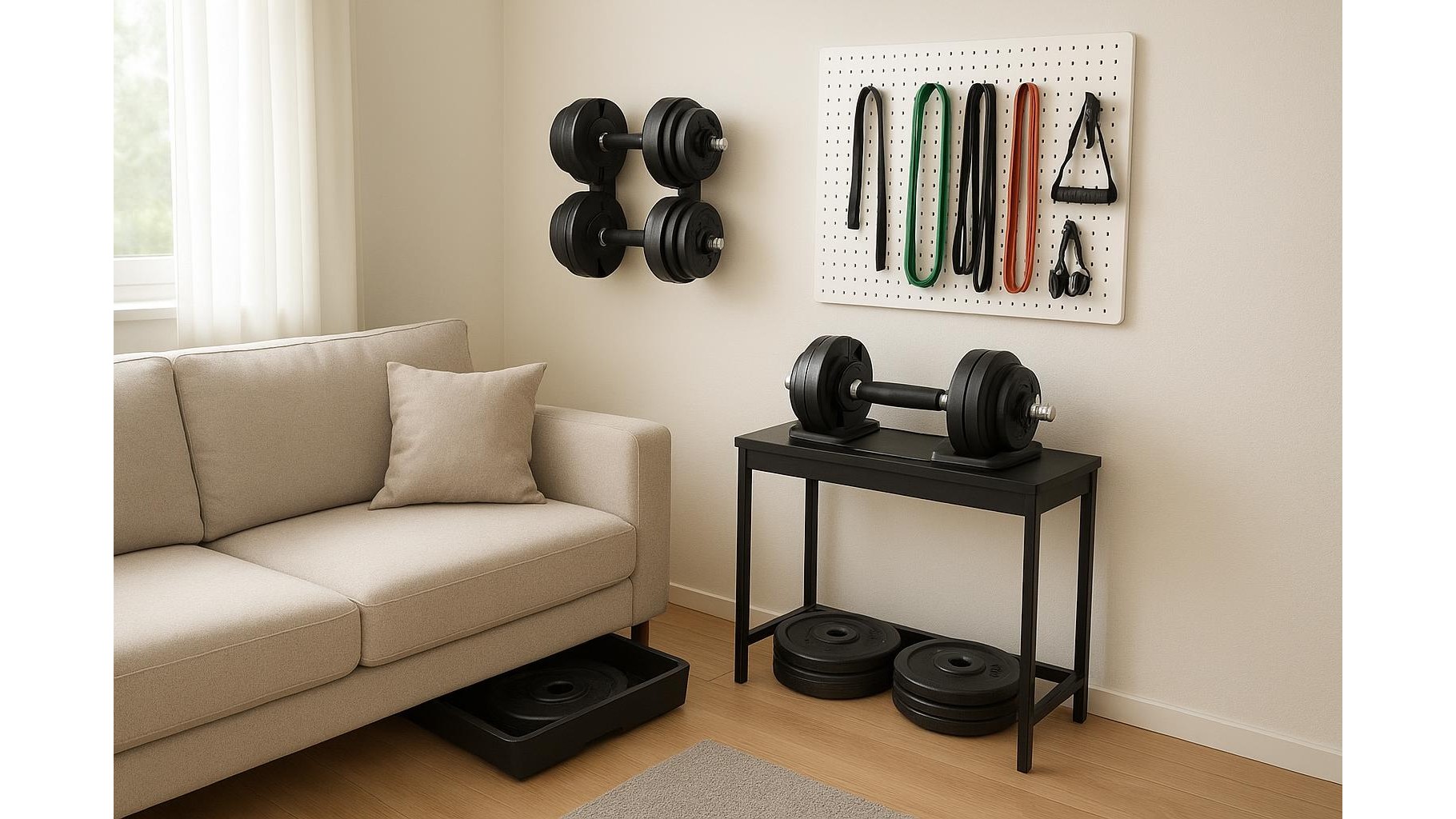
Creating a tiny home gym around a pair of adjustable dumbbells is a smart way to train, but floor clutter quickly becomes a problem. Thoughtful storage solutions keep your weights safe, easy to access and out of the way, even in the smallest studio or spare‑room setup. Below you’ll find practical ideas that use walls, under‑sofa space and multi‑purpose furniture to tame your gear without sacrificing precious square footage.
Why adjustable dumbbell storage matters in a tiny space
In a compact gym corner, leaving adjustable dumbbells on the floor is more than just untidy: it’s a trip hazard, it exposes the mechanism to dust and accidental knocks, and it makes every workout start with a frustrating hunt for space. Proper storage means your handles, plates and pins live in a defined spot, at a comfortable height for loading and unloading, and with enough ventilation to avoid moisture build‑up. Thinking vertically – using wall‑mounted racks, the gap under a sofa or bed, and furniture that doubles as a weight stand – lets you reclaim floor area for lunges, yoga or mobility work instead of turning your living room into a permanent kit graveyard.
Wall‑mounted brackets to lift weights off the floor
If you can drill into your walls, a pair of heavy‑duty wall brackets is one of the cleanest ways to store adjustable dumbbells. Look for compact, powder‑coated steel hooks rated well above the combined weight of your heaviest settings, with a lip or cradle wide enough for the dumbbell base. Mounted at hip height, they allow you to rack and unrack without bending, while keeping the handles locked against the wall when not in use. This setup works especially well behind a door or in a hallway niche, where there’s depth for the dumbbells to sit sideways. Add a small wall‑mounted shelf above the brackets and you gain a place for collars, spare pins or a timer, turning a forgotten corner into a tidy vertical storage station.
Under‑sofa and under‑bed solutions for ultra‑small rooms
For renters or anyone avoiding wall drilling, the dead space under your sofa or bed is prime home gym storage. Low‑profile under‑bed trolleys or sliding metal trays can easily take a pair of adjustable dumbbells plus change plates, then disappear out of sight between sessions. Prioritise models with smooth‑rolling wheels and a raised lip so plates do not slide off when moved. If your adjustable set includes a docking base, measure the total height to ensure it fits comfortably under your furniture. This approach keeps your weights protected from accidental bumps and foot traffic but still close enough that you can roll them out in seconds when it’s time to train, preserving the clean look of a living room that doubles as a gym.
Multi‑purpose furniture that doubles as a dumbbell stand
In a very small apartment, every object needs a job – sometimes two. A narrow, sturdy console table, short storage bench or solid TV unit can act as both decor and a docking station for adjustable dumbbells. The key is stability and load capacity: choose furniture built from solid wood or metal, with a stated max load comfortably above your full dumbbell weight. Open shelving beneath the top surface is ideal for storing extra plates, resistance bands and yoga blocks in baskets, while the top becomes your dedicated loading surface. Position this piece along a wall where you already have circulation room; you create a visually integrated storage point that doesn’t scream “gym”, yet keeps your gear at arm’s reach for quick sets between work calls.
Using vertical racks and corner stands to reclaim floor space
Dedicated dumbbell racks are not just for commercial gyms. Slim, vertical designs and triangular corner stands fit neatly into unused corners, allowing adjustable dumbbells and a few fixed‑weight pairs to live on separate tiers. Look for racks with rubberised saddles or flat shelves rather than round cradles, so adjustable handles sit securely. A corner stand beside your squat rack or in the angle of a wardrobe is ideal for tiny home gyms where straight wall space is limited. This solution keeps heavier weights low and lighter accessories higher up, reducing the risk of dropping loads from awkward heights and making it obvious where every piece of kit belongs the moment you finish a set.
Organising accessories around your adjustable dumbbells
Smart storage is not only about the dumbbells themselves; it’s also about everything that lives with them. Attach a compact pegboard or rail system above your main storage area to hang bands, jump ropes and lifting straps, keeping them untangled and visible. Use shallow stackable bins or labelled boxes on nearby shelves for small items like wrist wraps, fractional plates and collars. Grouping accessories by use – strength, mobility, conditioning – prevents gear creep across your tiny space and turns your storage zone into a mini command centre. The goal is a clear flow: roll out a mat, pull your weights from their fixed home, grab any accessories from the same spot, and start training without moving furniture or hunting under piles of clothes.
Even in the smallest home gym, a bit of planning turns chaos into a streamlined training corner. By lifting adjustable dumbbells onto wall‑mounted brackets, sliding them under furniture, or integrating them into multi‑purpose storage furniture, you protect your investment, reduce clutter and make workouts easier to start. Add vertical racks for extra sets and organise accessories around the same zone, and your tiny space begins to feel like a deliberate, efficient gym rather than an afterthought.









