
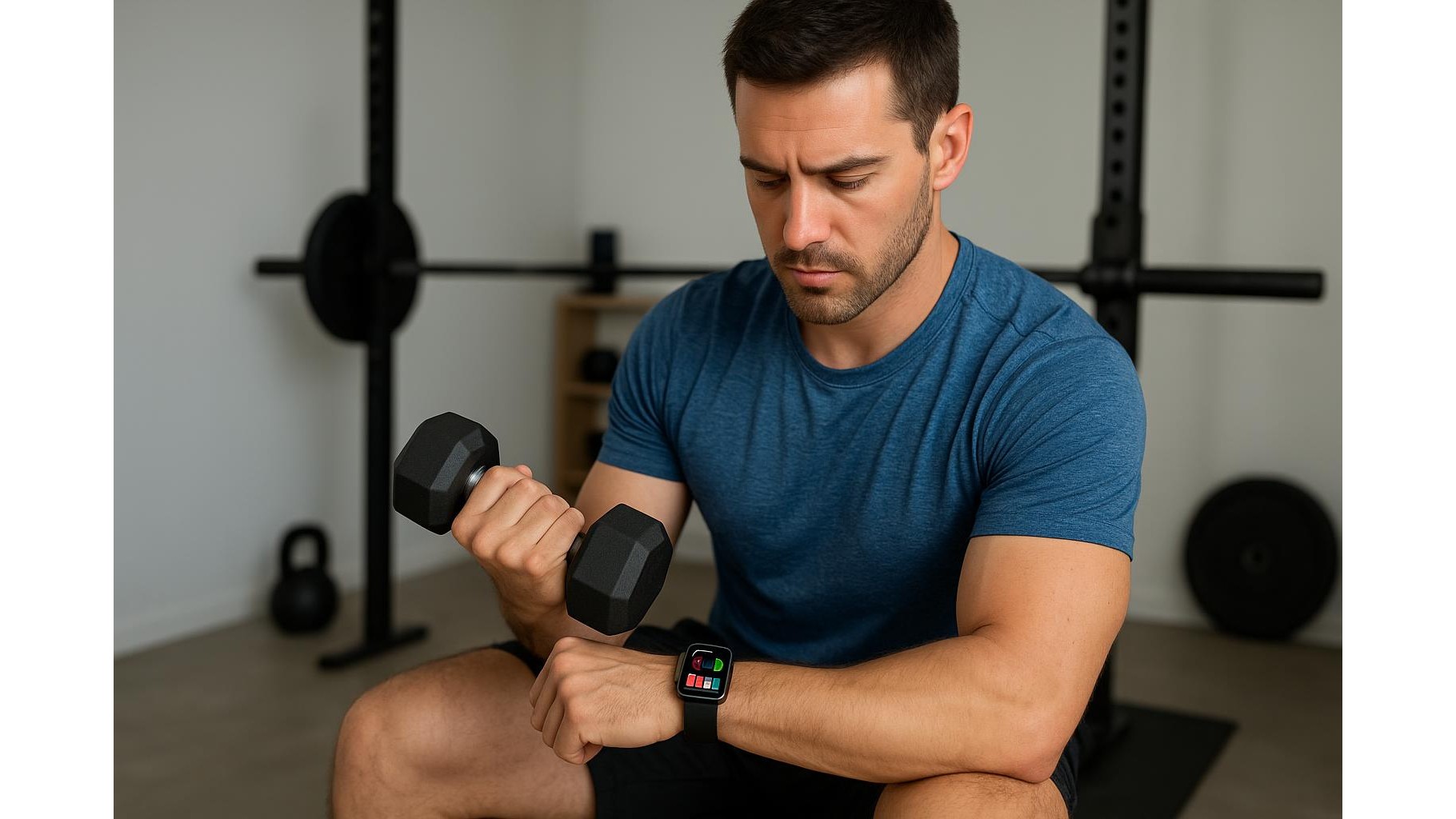
Turning your everyday smartwatch into a personal pacing coach can transform your home workouts. With a few simple settings, you can use interval timers, vibration alerts and heart rate zones to control your tempo, manage rest periods and keep your cardio intensity on target. Instead of guessing when to speed up, slow down or rack the weights, your watch can quietly guide every rep and every step.
Why pace and tempo matter in a home gym
At home it is easy to rush your sets or take endlessly long breaks while checking your phone. Structured tempo and rest control keep your sessions efficient and safer. A steady lifting tempo improves time under tension, helping you build strength and muscle even with lighter weights. In cardio, consistent pacing prevents you from burning out too early or coasting without challenge. Your smartwatch fills the role of a quiet coach, ensuring you follow a plan instead of training by random effort and mood.
Using interval timers for strength training at home
Most modern watches include a basic interval timer you can customise. For home strength workouts, set intervals to manage both set duration and rest periods. For example, you might choose 40 seconds of work and 20 seconds of rest for full-body circuits, or 30 seconds of slow controlled reps and 60 to 90 seconds of rest for heavier moves like squats or push-ups. Instead of keeping one eye on a wall clock, you simply start the interval session and lift until the vibration tells you to stop. This keeps your training density high and your workout focused.
Let vibration alerts control your reps and tempo
Silent vibration alerts are perfect for controlling tempo without staring at the screen. Many watches allow you to set repeating vibrations every few seconds. For tempo lifting, you might use a three-beat pattern: one vibration to start the eccentric phase, one to hold at the bottom, and one to drive up. For example, in a squat or dumbbell press you could follow a 3–1–1 tempo: three seconds down, one second pause, one second up. This deliberate rhythm increases muscle activation and reduces cheating with momentum, especially when using limited home gym equipment.
Heart rate zones for targeted home cardio
The heart rate sensor on your smartwatch helps you dial in the right intensity for cardio at home, whether you are skipping rope, using a stationary bike or doing step-ups. Set personalised heart rate zones in the companion app, then use the watch to stay within the band that matches your goal. For fat-loss focused steady-state, aim to sit in a moderate zone where conversation is possible but not effortless. For conditioning, alternate intervals in a higher zone with recovery periods in a lower zone. Many watches show zone graphs and colour codes, so after each session you can review whether you actually trained as planned.
Designing simple smartwatch-guided home sessions
You can combine intervals, vibrations and heart rate zones into simple, effective home workouts. For a 30-minute strength session, set up 45 seconds of work and 30 seconds of rest for six exercises, repeated three times. Let vibrations signal when to change exercise, and maintain a controlled tempo throughout. For a hybrid cardio and strength circuit, alternate a higher-intensity cardio move (like burpees or fast marches in place) with a strength move (like lunges or rows), watching your heart rate to avoid redlining too early. The watch becomes your timer, metronome and effort gauge in one compact tool.
With just the default features on most smartwatches, you can build structure into every home session. Interval timers keep your rest honest, vibration alerts shape your tempo, and heart rate zones fine-tune your cardio intensity. Instead of relying on guesswork, you follow clear signals from your wrist, making even short home workouts more focused, efficient and rewarding.









