
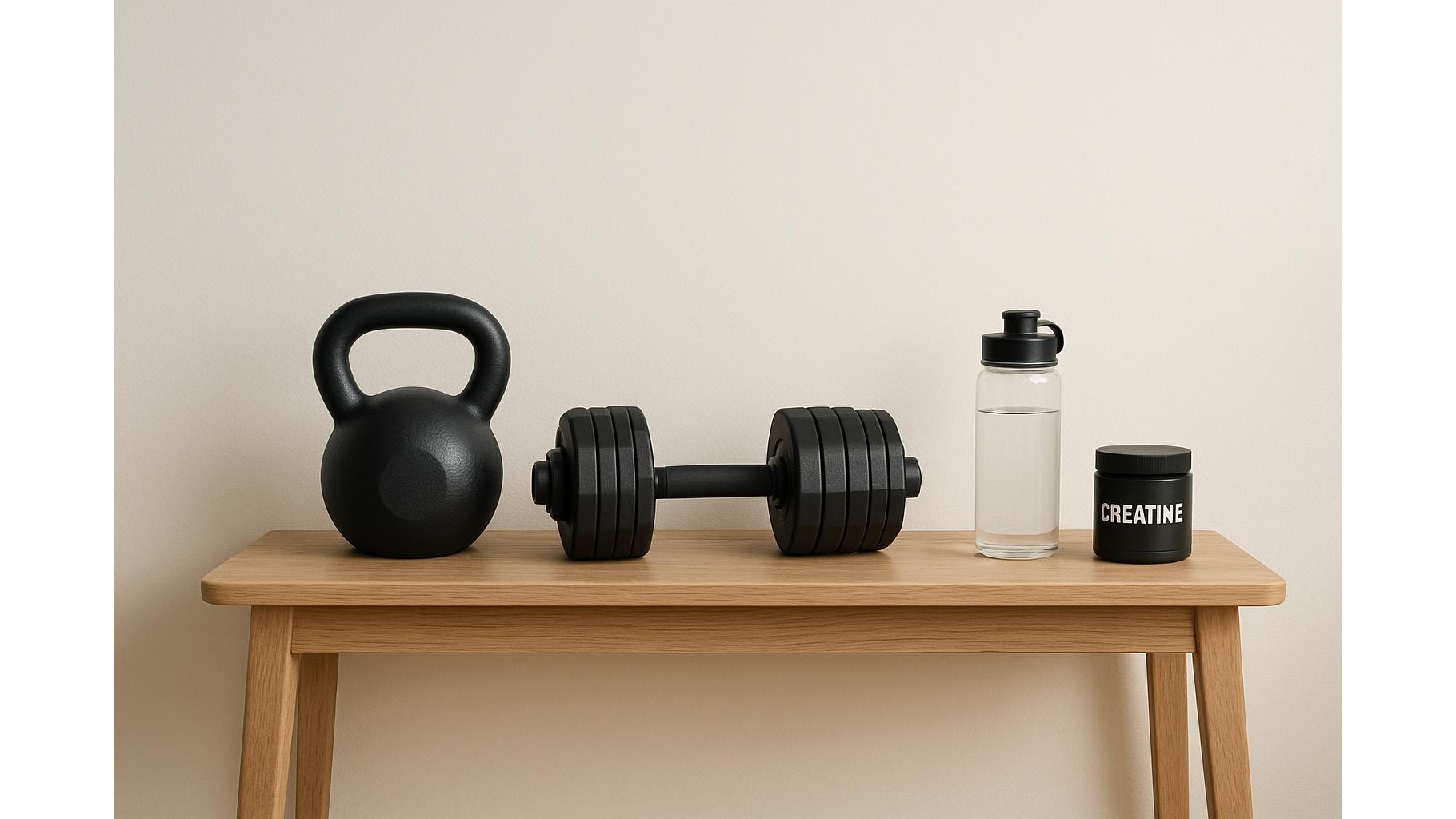
Training in a home gym usually means shorter, less intense sessions and far less sweating than a heavy barbell day in a crowded commercial gym. If you are using creatine, it can be confusing to know whether you also need extra electrolyte supplements on these low-sweat days. This guide explains how to keep your plan simple: how to dose and time creatine, when electrolytes are genuinely useful, and when you can skip the extra products without compromising strength, muscle or recovery.
Why creatine works even without extra electrolytes
Creatine monohydrate is one of the most researched sports supplements and it works by increasing your muscles’ stored phosphocreatine, helping you regenerate ATP for short, intense efforts like squats, presses and sprints. This mechanism does not depend on high sweat loss or special electrolyte blends; it primarily depends on daily consistency and an adequate dose over time. For most home gym users who do 20–45 minute strength or kettlebell sessions, creatine will still saturate muscle stores as long as you take it every day with fluids and enough calories. In other words, low sweat does not mean low effectiveness—so you can keep your routine focused on creatine itself.
How to dose creatine on low‑sweat home workout days
On days when you barely sweat, you can use a simple, evidence-based protocol: take 3–5 g of creatine monohydrate once per day. You do not need a loading phase if you prefer simplicity; muscle saturation will still occur after a few weeks. Choose a plain powder with no added sugars or stimulants and mix it into water, juice, or a protein shake. Because you are not losing much fluid, there is usually no need to pair it with extra electrolyte mixes—just make sure you drink enough water across the day (your urine should be pale yellow). This minimal approach keeps your supplement stack lean while still supporting strength and muscle gains.
Timing creatine around short home sessions
For creatine timing, the big picture is simple: total daily intake matters more than the exact minute you take it. On short home workouts, many lifters like to take creatine with their pre-workout snack or right after training with a protein shake, because it ties the habit to the workout and improves consistency. If you train early and have a sensitive stomach, you can move your dose later in the day with a bigger meal. You do not need to stack creatine into a complex pre-workout formula loaded with stimulants and electrolytes; a small glass of water or milk is fine. As long as you hit that consistent 3–5 g daily, you will get the benefits.
When electrolyte products are unnecessary
Electrolytes—mainly sodium, potassium, and magnesium—are crucial for nerve conduction and muscle contraction, but many home gym sessions do not deplete them enough to justify dedicated supplements. If your training is under an hour, in a climate-controlled room, and your clothes are only lightly damp afterward, your usual food and normal hydration likely cover your needs. In this scenario, extra electrolyte powders, tablets and drinks often add cost and complexity without measurable benefit. Provided you season your meals with salt, eat fruit, vegetables and dairy or alternatives, and drink water regularly, you can pair creatine-only days with simple hydration, not a full sports drink protocol.
When you might actually need electrolytes
There are still situations where pairing creatine and electrolytes makes sense, even in a home gym. Examples include training in a very hot loft or garage, long sessions over 60 minutes, or high‑sweat cardio like indoor cycling intervals or circuits with minimal rest. Signs you might benefit from extra electrolytes include persistent muscle cramps, dizziness when standing up, very salty sweat stains, or headaches after training despite drinking water. In those cases, a basic low‑sugar electrolyte drink or tablet taken before or during your workout can help you retain fluid better and feel more stable. Importantly, this is a situational tool, not a daily requirement, especially on light or moderate strength days.
Building a simple, sustainable supplement routine
The most effective supplement routines for home training are usually the least complicated. Make creatine monohydrate your foundation with a consistent daily dose, add a quality protein source to hit your intake targets, and focus on whole foods for electrolytes most days. Reserve dedicated electrolyte supplements for genuinely sweaty or long sessions, hot environments or when specific symptoms suggest you need more than your diet provides. By stripping away unnecessary products, you save money, reduce decision fatigue and keep your focus where it matters: progressive training, good sleep and a diet that supports your goals.
In summary, low‑sweat home workouts are the perfect scenario for electrolyte‑free creatine days. Stick to 3–5 g of creatine daily, drink to thirst plus a bit extra around training, salt your meals and eat potassium‑rich foods like fruit and vegetables. Introduce targeted electrolytes only when your environment, session length or symptoms truly call for them. This simplified approach keeps your supplement plan lean while still giving you the full strength and performance benefits of creatine.









