
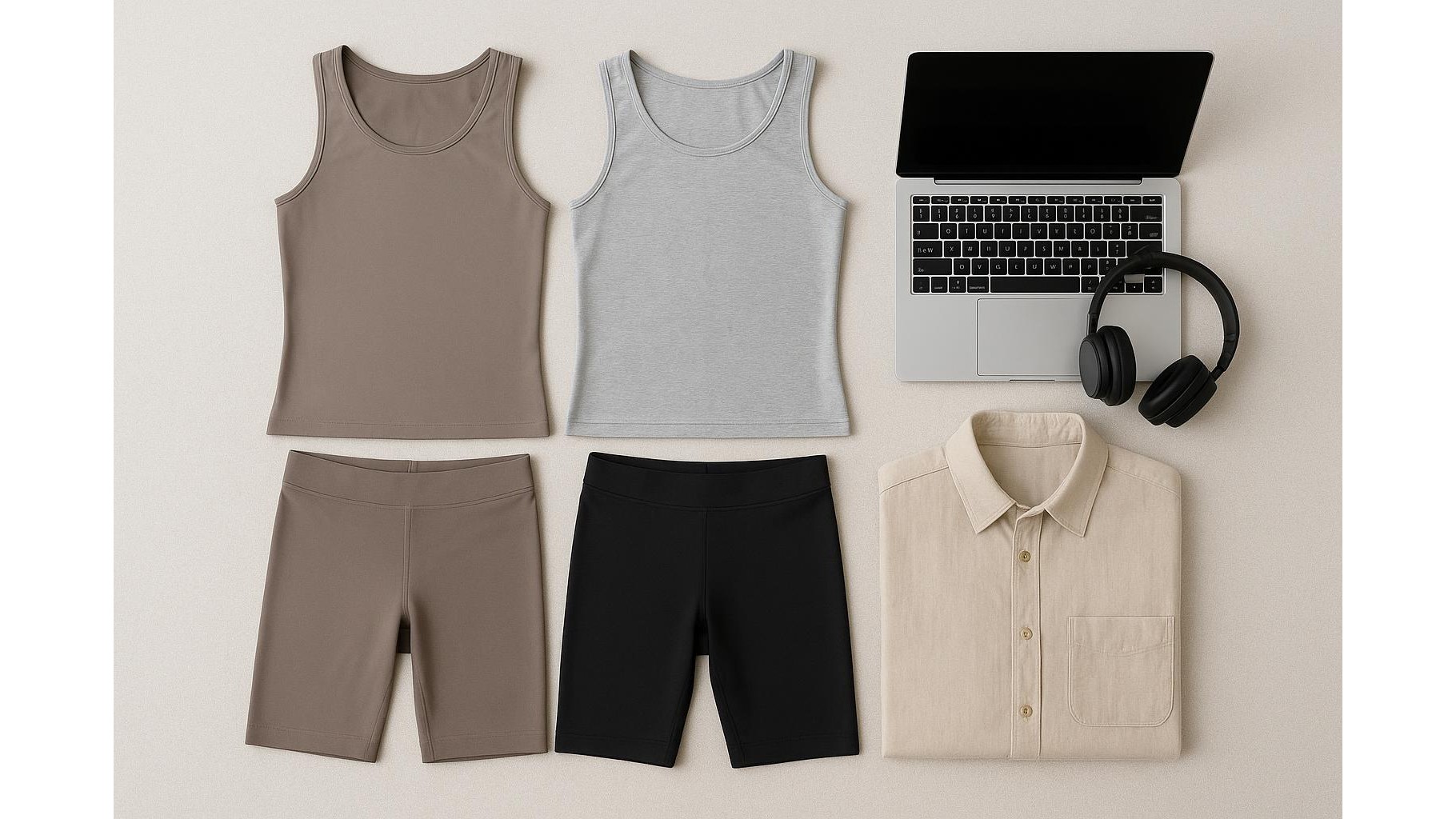
Building a reliable set of home workout base layers can make the difference between skipping a session and squeezing in a quick circuit between calls. The right breathable tops and training shorts disappear under loungewear or office outfits, manage sweat, and move with you when you drop to the floor for push-ups. This guide walks through fabrics, seams, fits and practical tips to help you create a small, high-performing base-layer wardrobe that works with almost anything you already own.
Why base layers matter for home workouts
When you train at home, you often switch quickly from desk mode to workout mode. A good base layer lets you do that without a full outfit change. Lightweight, close-fitting technical tops and compression shorts wick sweat away from your skin, reducing chills when you sit back down and helping you stay fresh through the day. Because they are designed to sit smoothly under joggers, chinos or even a casual shirt, you can keep them on before, during and after training. This removes friction from your routine and makes it easier to turn short breaks into movement sessions.
Fabric choices: breathable, quick-drying and skin-friendly
For base layers, the fabric is everything. Look for moisture-wicking blends that pull sweat away and dry fast, such as polyester or nylon with some elastane for stretch. Many modern base layers use mesh panels or mapped ventilation zones to boost breathability in high-heat areas like the back and underarms. If your skin is sensitive, seek out soft-touch finishes or blended fabrics that feel smooth, avoiding coarse seams that can rub during longer sessions. While merino wool is excellent for odour control, it can be warmer than you need for indoor training; lightweight merino-blend tops are a good compromise when you want natural fibres that still work under everyday clothes.
Seams and construction: comfort under any outfit
Even the best fabric will feel wrong if the seams are bulky. Prioritise base layers with flatlock stitching or bonded seams, which lie flush against the skin and reduce chafing where backpack straps, waistbands or bra bands sit. A close but not suffocating fit stops the fabric from bunching under shirts or hoodies, keeping your outline clean whether you are in joggers or smart-casual trousers. Look for soft, low-profile necklines that do not dig in when you layer a collared shirt or crew-neck jumper over the top, and avoid raised logos or prints that can show through lighter outer fabrics.
Choosing lengths and fits for tops
The best base layer tops for home workouts are those you forget you are wearing. A fitted short-sleeve or sleeveless top works well under almost anything, from oversized hoodies to relaxed office shirts. Aim for a length that reaches just below the waistband of your everyday trousers or leggings, so it stays tucked in during squats or stretches. If you run cold or train in a cooler room, a lightweight long-sleeve base layer offers extra warmth without bulk, provided the sleeves fit snugly enough to disappear under jumpers. Pay attention to underarm cut and shoulder shape: raglan or set-in sleeves with some stretch allow full overhead movement without pulling at the hem.
Shorts and bottom layers that stay put
Under joggers, leggings or even relaxed-fit chinos, compression shorts or fitted training shorts are extremely versatile. Choose a mid-thigh length that provides coverage without peeking below your outer layer; this helps them stay in place during lunges and hip hinges, and also looks cleaner under casual wear. A wide, elastic waistband that lies flat will be more comfortable when sitting at a desk and less likely to roll during core work. Look for breathable panels in the gusset and inner thighs for better airflow, and avoid bulky pockets that might print through or twist under slim trousers. The right bottom layer supports your muscles, manages sweat and keeps everything secure, whether you are on a yoga mat or standing at the kitchen counter.
Building a small, smart base-layer rotation
To create an effective home workout wardrobe, you only need a few high-quality base layers. Start with two or three tops and two pairs of compression shorts or fitted bottoms in neutral colours like black, navy or charcoal so they vanish under most outfits. This gives you enough rotation to let pieces dry between sessions without constant washing. Prioritise garments that balance performance and everyday comfort: they should feel as acceptable for a video call as for a quick HIIT circuit. Over time, you can add lighter or heavier options for seasonal changes, but keeping your core set small and intentional makes it easier to grab a clean base layer, train hard, and go straight back to whatever your day demands.
Thoughtful choices in breathable base layers, from fabrics and seams to length and fit, can transform your home training routine. When your tops and shorts slide easily under any outfit, manage sweat effectively and stay comfortable at your desk, you remove excuses and add flexibility. With a compact rotation of technical pieces that feel good to wear all day, you can turn ordinary gaps in your schedule into consistent, effective workouts.









