
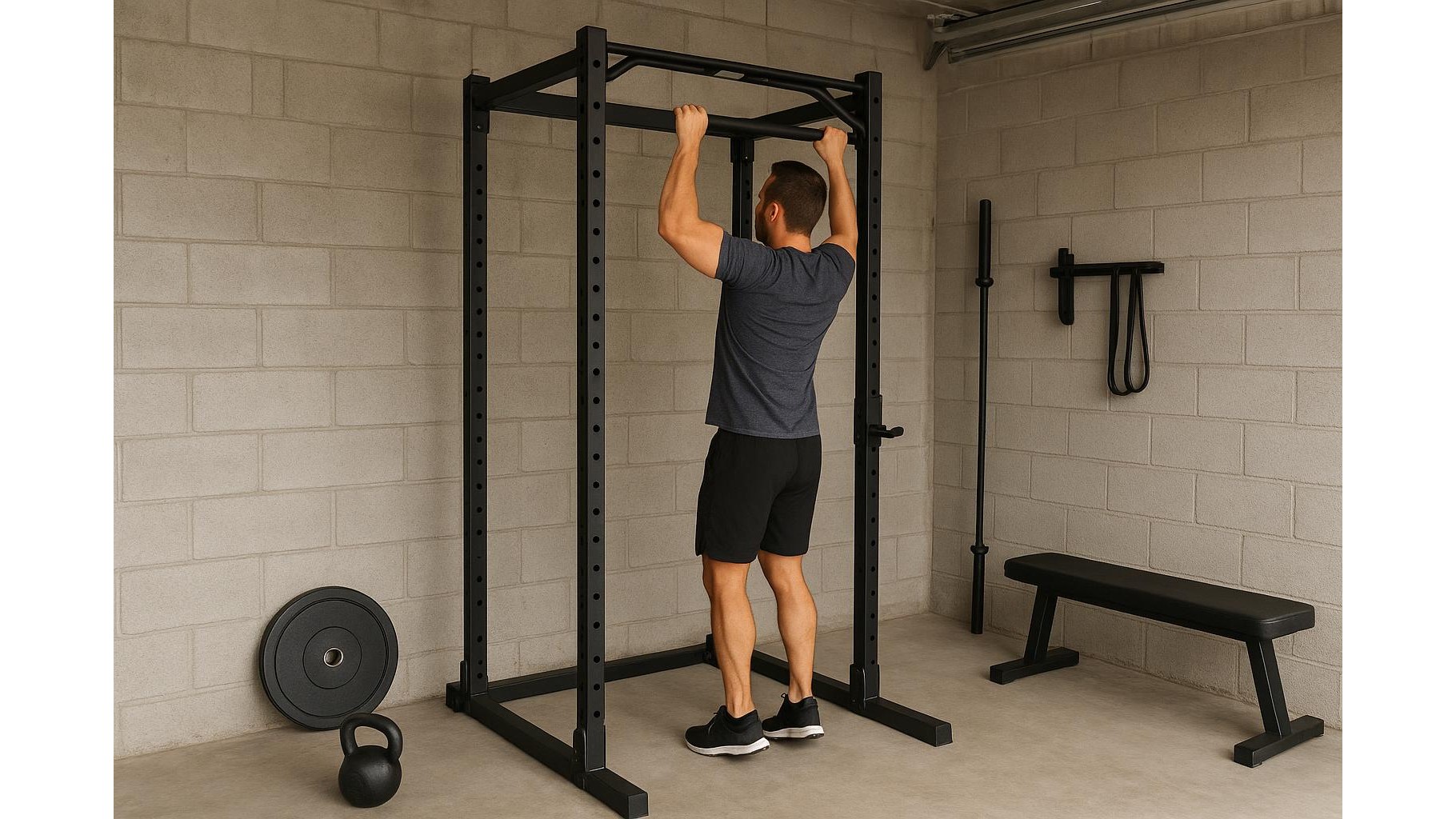
If you already own a squat rack or half rack at home, adding a compact multi‑grip pull‑up attachment is one of the most space‑efficient upgrades you can make. Instead of buying a separate bulky chin‑up station, these bolt‑on solutions give you multiple neutral, angled and wide handles on a single crossmember. In this guide we’ll look at what to check before buying, which shapes and widths make sense for most lifters, how to deal with ceiling height and clearance, and some practical workout ideas you can unlock with just one add‑on.
Why a compact multi‑grip pull‑up attachment is worth it
A well‑designed compact multi‑grip pull‑up bar turns the top of your rack into a full upper‑body station without increasing the footprint of your home gym. Models like the multi‑grip pull up bar attachment feature close, medium and wider handles that let you target lats, upper back and biceps with different joint angles. Because the attachment bolts directly to existing uprights or crossmembers, you save floor space compared with standalone towers. The key benefit is versatility: you can perform pronated, supinated and neutral‑grip pull‑ups, chin‑ups and hanging core work from the same compact bar, making it ideal for small garage gyms, spare rooms and even living‑room setups where space is at a premium.
Key handle shapes and grip widths to look for
When choosing a multi‑grip pull‑up attachment, pay close attention to the layout of the handles. Look for at least one set of neutral‑grip bars (palms facing each other) to reduce shoulder stress, especially if you have a history of shoulder discomfort. Angled or offset handles are useful for finding a comfortable wrist position and varying emphasis between lats and upper back. Compact designs tend to prioritise close and medium‑width grips; that’s not a drawback, as these are the strongest and most joint‑friendly positions for most people. Ideally, you want diameters around 28–32 mm for a good balance of grip challenge and comfort. If you like grip training, consider adding simple accessories like fat grips or hanging rings to further expand the options without enlarging the attachment itself.
Rack compatibility, clearance and ceiling height
Before ordering, check that your chosen pull‑up attachment is compatible with your rack’s upright size, hole spacing and bolt diameter. Many compact units are designed for 50 x 50 mm or 60 x 60 mm steel uprights with standard hole patterns; adapters or extra washers can sometimes solve small mismatches, but it’s better to confirm dimensions first. In low‑ceiling rooms, the overall height is critical: measure from the floor to the top of your rack and add the thickness of the attachment to see if you’ll have enough headroom for full range‑of‑motion pull‑ups. Also consider wall clearance: some multi‑grip designs extend forward, which is great for avoiding the rack, but in a tight room you must ensure you can hang without your knees or feet hitting a wall, door or garage door rails.
Installation tips for a safe and solid setup
Most compact pull‑up bar rack attachments bolt on with a few high‑tensile bolts, making installation straightforward if you have basic tools. Always follow the manufacturer’s torque and hardware recommendations, and use all the supplied bolts rather than just two corners. After mounting, test the bar at low load: perform controlled hangs and gentle swings to check for flex or movement. If the attachment offers multiple mounting positions, choose the one that balances headroom and stability while keeping the bar roughly above the rack’s centre for even loading. Finally, keep a clear zone around and above the bar: remove any nearby ceiling lamps or shelves and avoid storing plates or accessories on the top of the rack where they could interfere with your grip.
Workouts you can unlock with one compact attachment
Once your multi‑grip pull‑up bar is installed, you can build full upper‑body and core sessions without adding more equipment. Use close neutral grips for heavy sets of pull‑ups or assisted variations with bands, then switch to medium angled grips for higher‑rep back‑off work. Combine pull‑ups with hanging knee raises, leg raises and windshield wipers to challenge your core without needing extra floor space. For grip training, perform timed dead hangs or towel hangs from the bar. You can even attach suspension trainers or gymnastic rings to the pull‑up attachment for inverted rows and face pulls. With a little planning, a single compact unit on your rack becomes a complete pull, core and grip station that fits perfectly into even the smallest home gym.
Upgrading your existing rack with a compact multi‑grip pull‑up attachment is a smart way to expand your back and core training while keeping your home gym footprint unchanged. By paying attention to handle shapes, grip widths, compatibility with your rack and room, and by installing it securely, you unlock a wide range of pull‑up, chin‑up, hanging core and grip variations in a single, space‑saving upgrade that will keep delivering value for years.









