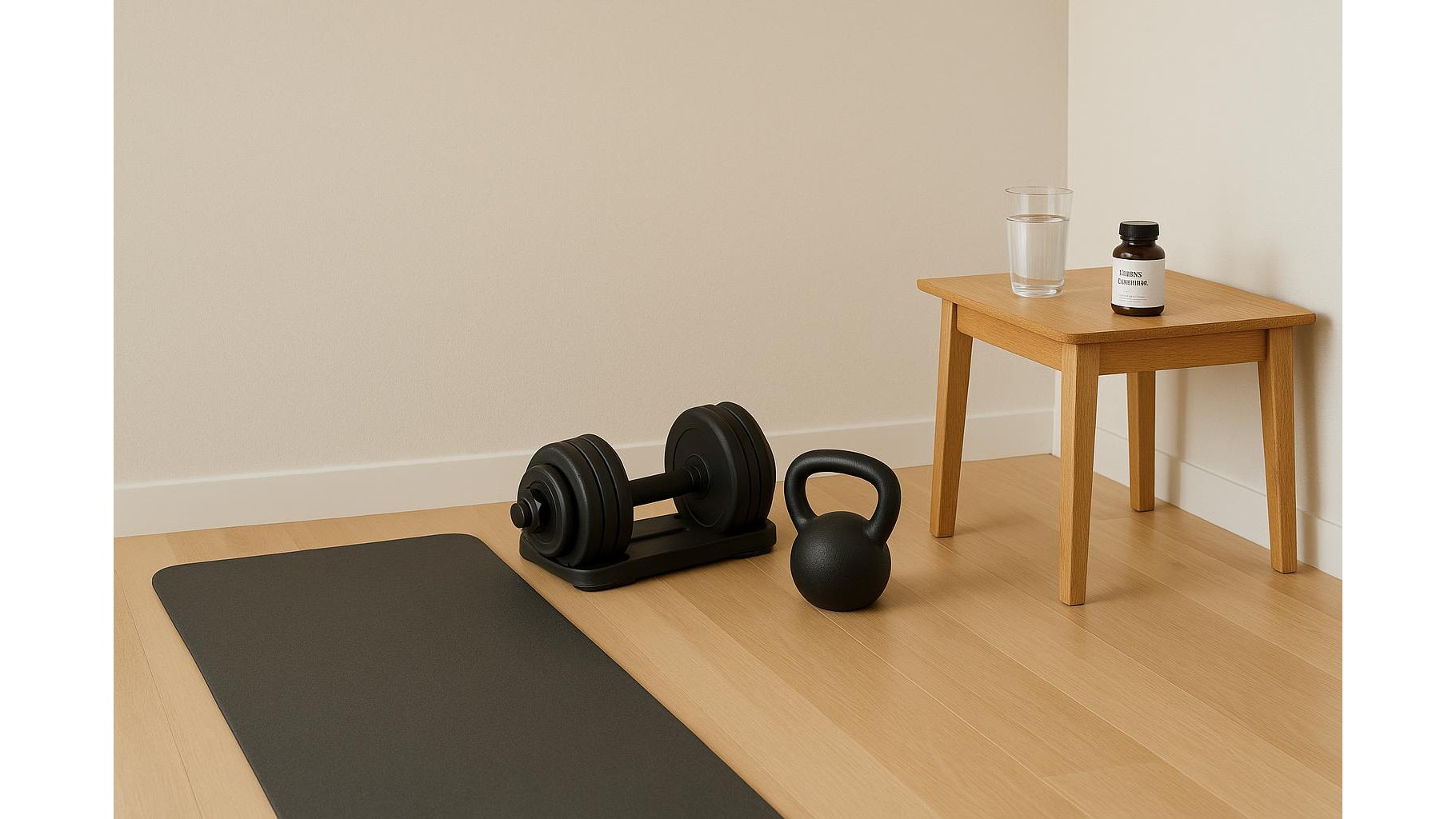
Training at home makes it easier to stay consistent, but it also blurs the line between work, family and recovery. Many home athletes are curious about ashwagandha, a traditional adaptogenic herb, for managing stress, improving sleep quality and supporting training performance. This article offers an evidence-based overview of what ashwagandha can and cannot do, how to use it realistically, and what safety points you should know before adding it to your home gym routine.
Table of contents
What is ashwagandha and how might it help home athletes?
Ashwagandha (Withania somnifera) is an Ayurvedic herb classified as an adaptogen – a substance thought to help the body adapt to physical and mental stress. Modern research suggests standardised ashwagandha extracts may modestly lower cortisol, support anxiety reduction and improve perceived well‑being. For home athletes, this matters because chronic stress can undermine recovery, disturb sleep and limit strength or endurance gains. While ashwagandha is not a miracle supplement, it may be a useful adjunct when combined with solid fundamentals: a structured training plan, adequate sleep, and balanced nutrition with sufficient protein and calories.
Ashwagandha, stress and recovery for home training
Home lifters often train after work, when mental fatigue and stress are highest. Human studies on standardised ashwagandha extracts (typically 240–600 mg per day of high‑concentration root extract) report modest reductions in perceived stress and improvements in mood over 6–8 weeks. Lower stress and slightly reduced cortisol may indirectly enhance recovery by improving sleep and reducing emotional exhaustion, making it easier to stick to your home programme. However, the effects are generally small to moderate, not dramatic. Think of ashwagandha as a recovery “nudge” rather than a substitute for active stress management strategies such as breathwork, short walks between meetings, or keeping your evening training sessions realistic in duration and intensity.
Ashwagandha and sleep quality: what the evidence shows
Good sleep quality is one of the most powerful performance enhancers for home athletes, and it is also where ashwagandha shows some of its clearest benefits. Several trials have found that standardised extracts can improve sleep onset (how quickly you fall asleep), reduce nocturnal awakenings, and enhance overall sleep efficiency, especially in people with insomnia or high stress. For the home trainee who squeezes in a workout in the evening and then struggles to wind down, a regular ashwagandha supplement taken earlier in the day may support more restful nights. Nevertheless, you still need basic sleep hygiene: a consistent bedtime, a dark, cool bedroom, and avoiding bright screens immediately before bed. Ashwagandha appears most useful when it supports, not replaces, these core habits.
Training performance: strength, endurance and realistic expectations
Some small studies suggest that ashwagandha may enhance strength gains, increase VO₂max and support better muscle recovery in resistance and endurance training. Participants taking ashwagandha, combined with structured training, sometimes gained more strength or muscle mass than placebo groups over 8–12 weeks. For home athletes using adjustable dumbbells, kettlebells or bodyweight circuits, this could translate to slightly better progress, assuming your programme already includes progressive overload and adequate rest. However, sample sizes are small, products and dosages differ, and not all studies are positive. Realistically, any performance benefits will be modest and only visible over time. You should treat ashwagandha as a supportive tool layered on top of smart training, not as a shortcut to faster hypertrophy or cardio improvements.
Practical dosing, timing and safety considerations
Most research on ashwagandha supplementation uses 240–600 mg per day of a standardised root extract, often split into one or two doses with food. Starting on the lower end (for example, 250–300 mg once daily) allows you to assess tolerance before considering a higher dose. Benefits, when present, typically appear after several weeks of consistent use, not after a single capsule. As with any supplement, there are safety considerations: potential side effects include gastrointestinal discomfort, drowsiness or headache in some users. Ashwagandha may not be suitable for people with certain thyroid disorders, autoimmune conditions, or those who are pregnant, breastfeeding, or taking specific medications such as sedatives or thyroid drugs. Always discuss supplementation with a healthcare professional first, especially if you have existing health issues or use prescription medicines.
For home athletes, ashwagandha can be a reasonably well‑researched option to support stress management, sleep quality and potentially training performance, provided expectations are realistic. Its effects are best understood as incremental and supportive, not transformative. If you already have a solid foundation—regular home workouts, thoughtful programming, adequate protein and calories, and consistent sleep—adding a standardised ashwagandha supplement at evidence‑based doses may offer a small but meaningful boost to recovery and adherence. Approach it with the same discipline you bring to your training: track your response over several weeks, pay attention to side effects, and prioritise sustainable habits over quick fixes.