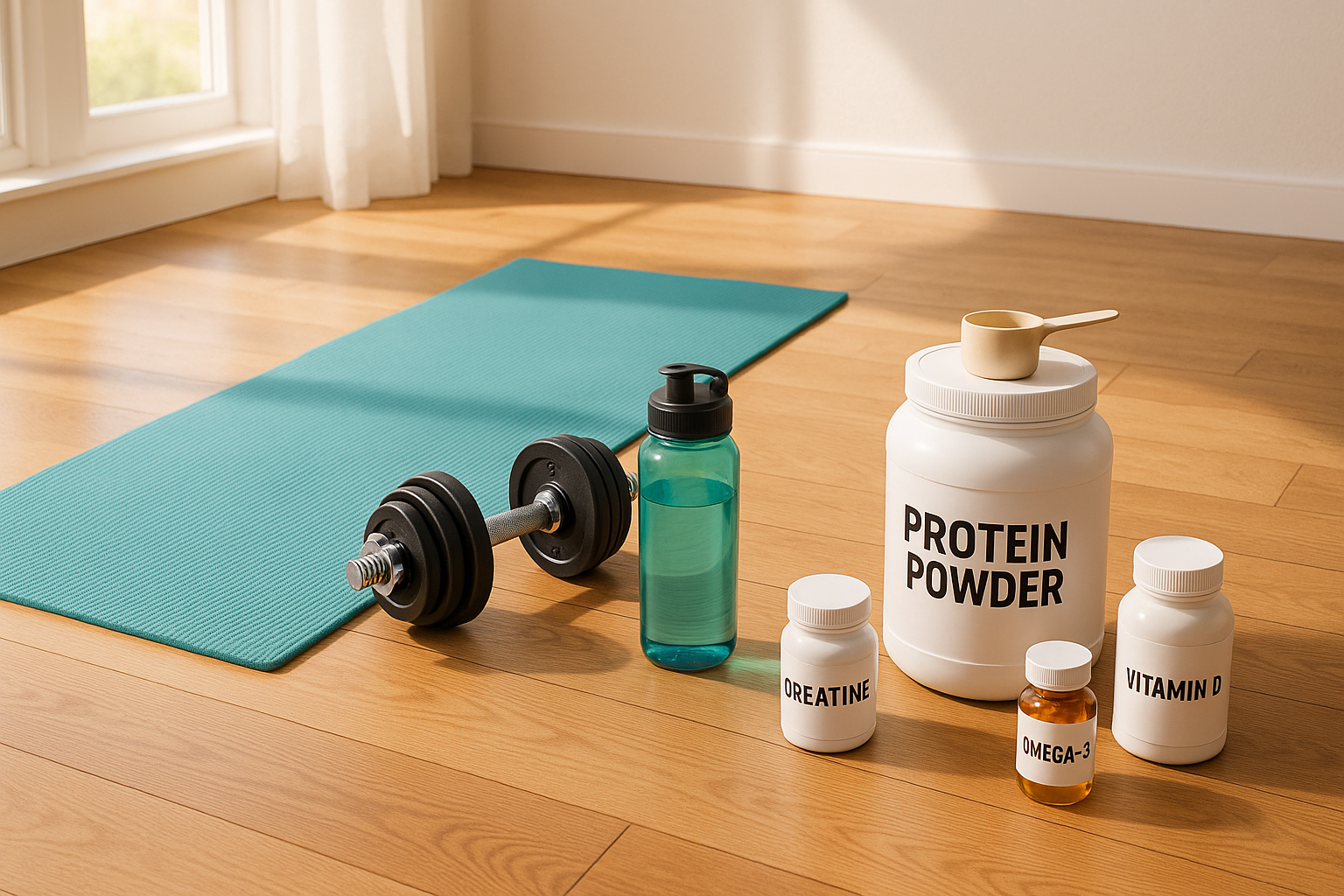
Training in a home gym can deliver impressive results, but many people feel lost when it comes to supplements. Do you really need a shelf full of tubs and capsules to build muscle, lose fat or simply feel better? This guide breaks down the most common home workout supplements—protein, creatine, omega‑3 and vitamin D—showing when they are useful, how to use them safely and when you can confidently save your money.
Protein powder: when it genuinely helps
Protein is the foundation of muscle repair and growth. If you already hit about 1.6–2.2 g of protein per kg of bodyweight per day through whole foods (meat, fish, eggs, dairy, legumes, tofu), extra powder may be unnecessary. But for many home lifters, especially those training before work or late at night, a scoop of whey protein or a plant‑based blend is a simple way to hit their daily target. Look for products with around 20–25 g protein per serving, low added sugar and a clear ingredient list. A shake post‑workout is convenient, but timing is less important than total daily intake. If your normal diet is already rich in high‑quality protein, buying large tubs of powder offers little extra benefit beyond practicality.
Creatine: the most proven performance booster
Creatine monohydrate is one of the most researched strength and performance supplements. It helps increase your muscles’ stores of phosphocreatine, supporting short, intense efforts such as squats, deadlifts and sprints. For home workouts using dumbbells, kettlebells or resistance bands, this can translate into a few extra reps or slightly heavier loads over time, which adds up to more gains. A standard dose is 3–5 g per day, taken any time with water or a meal. A loading phase is optional. Healthy adults generally tolerate creatine well, but anyone with kidney issues or other medical conditions should speak to a doctor first. If your training is mostly light cardio or yoga, creatine may add little; if you focus on progressive resistance training, it is one of the few supplements truly worth considering.
Omega‑3s: not just for heart health
Omega‑3 fatty acids (EPA and DHA) are often discussed for heart and brain health, but they may also support joint comfort and overall recovery from training. If you eat oily fish (like salmon, mackerel or sardines) two or more times a week, you may not need a supplement. For many home exercisers who rarely eat fish, a daily fish oil capsule or algae‑based omega‑3 can help close the gap. Look for products that clearly state the EPA and DHA content rather than just total fish oil, and avoid extremely high doses unless medically supervised. Omega‑3s will not magically erase poor sleep or an unbalanced diet, yet as part of a broader healthy lifestyle they can support long‑term cardiovascular health while you build strength and fitness at home.
Vitamin D: especially important if you train indoors
Vitamin D plays a key role in bone health, muscle function and immune support. Many people who work indoors, live at higher latitudes or spend little time in sunlight have low levels. If you mostly train inside your home gym and rarely get midday sun exposure, a vitamin D supplement can be useful, particularly during autumn and winter. Typical daily doses are modest, but the ideal amount depends on your blood levels, so testing and medical advice are best. Vitamin D on its own will not boost performance, yet correcting a deficiency can improve energy, reduce injury risk related to bone weakness and generally support your capacity to train consistently. If your levels are already adequate, megadoses add no extra benefit and can be harmful.
What you can skip (and where to focus instead)
The supplement market is crowded with fat burners, proprietary pre‑workouts and miracle formulas that promise rapid transformation. For most people training at home, these are unnecessary at best and distracting at worst. High‑stim pre‑workouts can interfere with sleep, while many fat burners rely on caffeine and marketing hype rather than solid evidence. Instead of chasing exotic powders, focus on the basics: a consistent training plan, enough daily protein, a balanced diet rich in whole foods, quality sleep and stress management. Then, consider only a few well‑supported options—protein powder for convenience, creatine monohydrate for strength, omega‑3s and vitamin D to cover common nutritional gaps—chosen to match your real needs and lifestyle.
In summary, effective home workout supplements are surprisingly simple. You do not need a cupboard full of products; you need smart choices that support your training and overall health. Prioritise a solid exercise routine, whole‑food nutrition and good recovery, then add targeted supplements only where they genuinely fill a gap: protein for hitting your daily intake, creatine for strength and power, omega‑3s and vitamin D for long‑term wellbeing. By cutting through the hype and focusing on the essentials, you can get better results from your home gym without wasting money on pills and powders you do not actually need.