When time is tight, a smart full body ladder workout at home lets you build strength and mobility in just 20 minutes. By alternating movement patterns and steadily increasing reps, you can challenge all major muscle groups while keeping your joints happy and your heart rate elevated. This routine needs only minimal home gym equipment and can be adapted to different fitness levels, making it a reliable go‑to session on busy days.
Table of contents
How the 20‑minute full body ladder works
The ladder format means you pick a handful of compound exercises and move up through rep “rungs” every round. For example, you might do 4 reps of each move in round one, 6 reps in round two, 8 in round three, and so on, until the 20 minutes are up. This approach controls total volume, keeps you mentally engaged and allows for short, built‑in rest periods as you transition between movements. Focus on quality over speed: crisp technique, smooth breathing and full ranges of motion are non‑negotiable. To keep joints feeling good, this ladder alternates strength drills with mobility flows rather than piling on endless reps of the same pattern.
Warm‑up and mobility‑focused rungs
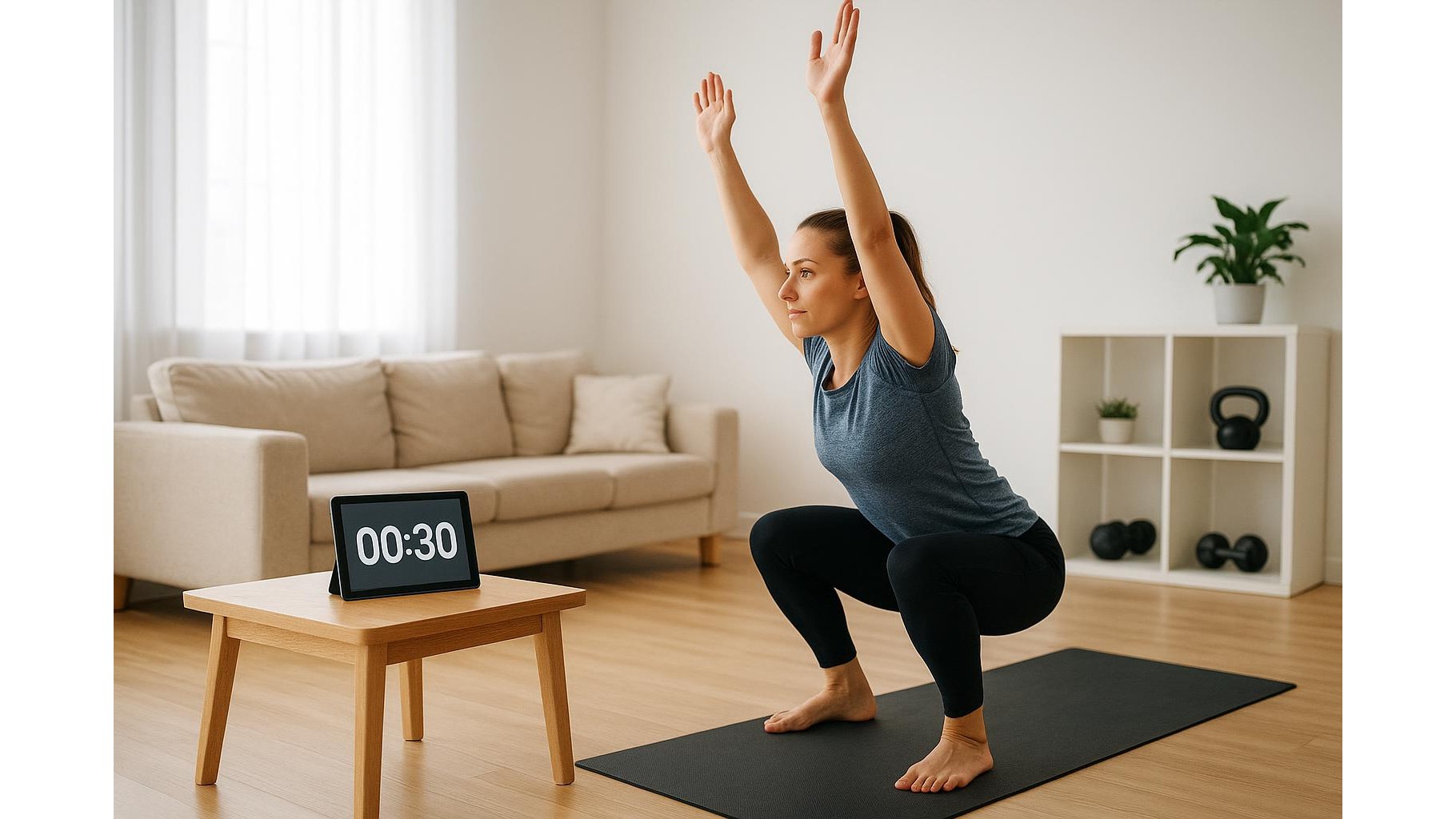
Start with 3–4 minutes of dynamic warm‑up: cat‑cows, hip circles, arm swings and bodyweight good mornings. Then your first ladder rung blends mobility and activation. Pair a deep bodyweight squat with overhead reach and a world’s greatest stretch (lunge with rotation and hamstring fold). Begin with 4 smooth reps per side, then add 2 reps each round. Move slowly, pausing in tight spots and breathing into them. These early rungs are about opening ankles, hips, thoracic spine and shoulders so later strength work feels stable and powerful. If you are stiff from desk work, linger a little longer in the bottom of each squat and lunge to encourage better joint positioning.
Strength ladder for legs and posterior chain
Once you are warm, shift focus to the lower body. Combine hinge and squat patterns for a balanced stimulus. A simple pairing is hip‑hinge deadlifts and goblet squats using any weighted object you have at home. Start at 4 reps each, then climb the ladder with 6, 8, 10 and 12 reps as time allows. Keep your spine neutral, push the floor away on each drive up and maintain tension in your midsection. Between rungs, sprinkle in 20–30 seconds of ankle rocks or 90/90 hip switches to preserve mobility as fatigue sets in. This alternating of strength and light mobility work helps your joints recover between heavy efforts while your muscles continue to be challenged.
Upper body and core integration rungs
For the upper body, choose a push and a pull plus one core‑dominant movement. A classic trio is incline push‑ups on a sturdy table, a row using a loaded backpack or household object, and a slow dead bug or plank shoulder tap. Again, use the ladder structure: 4 reps each, then 6, 8 and so on. Keep elbows at roughly 45 degrees to your torso during pushes, and drive the elbows back on rows to target the mid‑back. Throughout, brace your core and avoid sagging at the hips. If you fatigue early, stay at the same rung for one or two extra rounds rather than pushing sloppy reps. By the 15‑minute mark, your entire upper body and trunk should feel worked but not wrecked.
Putting it together and progressing over time
Set a 20‑minute timer and cycle continuously: one mobility pair, one lower body pair, one upper body and core trio. Climb the ladder steadily, increasing reps every round until your form starts to deteriorate, then hold that rung for the remaining time. To progress this full body ladder workout at home, you can slow the tempo, add a brief pause at the hardest point of each rep, or lightly load movements with whatever resistance you safely have available. Keep one or two reps “in the tank” each set to protect joints and maintain good technique. Completed two to three times per week, this structured but flexible ladder routine will gradually build strength, mobility and confidence in a compact, sustainable format.
Used consistently, this 20‑minute ladder workout becomes a powerful anchor in your weekly routine: it hits every major muscle group, reinforces joint mobility and fits into even the busiest schedule. By cycling between mobility flows and strength rungs, you train your body to move better under fatigue instead of simply grinding out reps. Stay patient, respect your current level and adjust the ladder height to match your energy on any given day. Over time you’ll notice easier daily movement, better posture and a stronger, more resilient body—all without leaving your living room.