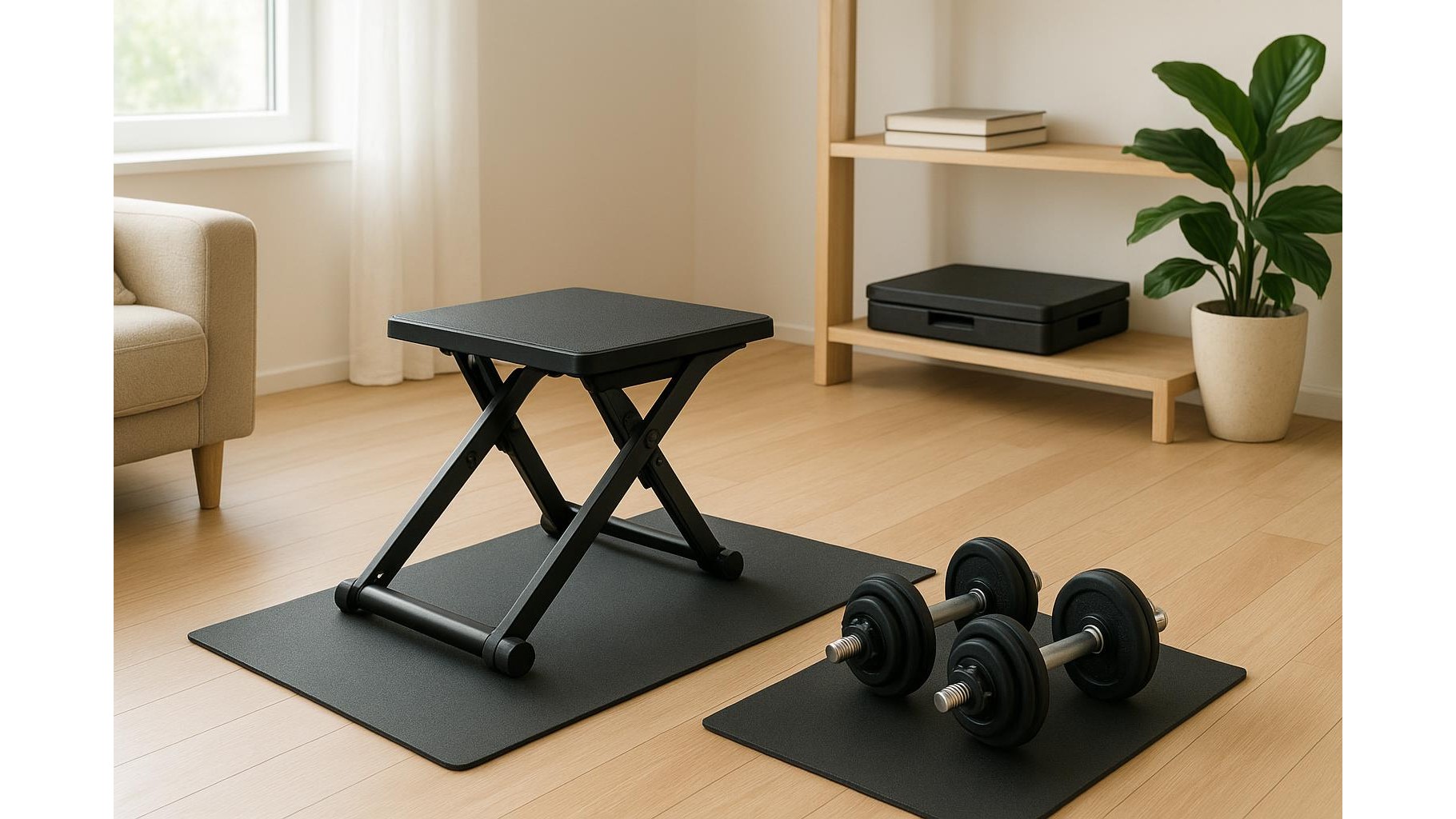
Designing a tiny home gym means choosing equipment that is safe, versatile and easy to hide away. A foldable squat box and step-up combo can replace several bigger pieces: it works for box squats, step-ups and even simple bench-style exercises like seated presses or hip thrusts. In this guide we’ll walk through how to pick the right height, footprint and construction so you don’t waste precious floor space or compromise on stability.
Table of contents
Why a foldable squat and step-up box is perfect for small spaces
In a tight training corner, every centimetre counts. A folding exercise step or box gives you an elevated platform for squats, step-ups, split squats and box push-ups, but folds nearly flat when not in use. Compared to a classic wooden plyo box or full bench, a compact step-style platform slides under the bed, behind a door or next to a wardrobe. This makes it ideal for renters and anyone who trains in their living room. Look for models with integrated carry handles and a light but sturdy frame so you can move them quickly between exercises without rearranging the whole room.
Key safety features to prioritise in a foldable box
Safety matters even more when you train in a small space where you can’t afford a bad fall. Aim for a non-slip surface on top, and wide, rubberised feet to stop the box from sliding on hard floors. A locking mechanism that prevents accidental folding while under load is essential. The platform should have a maximum user weight rating well above your bodyweight plus any dumbbells you plan to hold. Check product descriptions for stability notes and, where possible, user reviews mentioning heavy use, jumps or strength work. Even if you mainly perform controlled step-ups and box squats, a solid, wobble-free base will make every rep feel more confident.
Choosing the right height and adjustability for squats and step-ups
For a single piece of kit to cover box squats, step-ups and bench-style exercises, height selection is crucial. Many folding platforms are 10–20 cm high, which is great for beginners or rehab but too low for strong lifters seeking a challenging step-up. An adjustable-height step lets you start low for Bulgarian split squats or seated work and then stack higher for step-ups as your strength and balance improve. Ideally, choose a model with clear, secure height settings so the platform can’t rock or shift between levels. Before buying, measure your knee height and typical chair height at home; this gives a realistic reference for what “usable” heights feel like for your leg length.
Footprint, storage and how it fits your training corner
Beyond height, the footprint of the box determines how safe and practical it feels in a micro-gym. A surface that’s too small can feel unstable under wider stances, while an oversized platform will dominate your floor. Measure your available training area, including the space you need to step on and off the box safely. Then compare it with the platform’s length and width in the product specs. When folded, the step should be slim enough to slide under a sofa or bed or stand vertically in a cupboard. Flat, flush edges also help prevent toe stubs when the box is tucked into a corner of a multipurpose room.
Planning your exercises and progression with one compact box
A smart foldable squat box and step-up combo can anchor an entire lower-body session. At lower heights you can do box squats, seated dumbbell presses, hip thrust set-ups and elevated push-ups. At medium heights it becomes perfect for reverse lunges, Bulgarian split squats and staggered-stance deadlifts. At higher settings it challenges balance and strength with step-ups and eccentric step-downs. Think through your typical weekly routine: if you like interval circuits, pick a lighter, easy-to-move step. If you focus on heavy unilateral work, prioritise higher load ratings and a slightly larger platform. Planning ahead ensures your compact box won’t be a gimmick but a true workhorse in your small-space gym.
Choosing the best foldable squat box and step-up combo for a tiny home gym comes down to a few key criteria: stable construction, safe anti-slip design, suitable height range and storage-friendly dimensions. By measuring your space, checking weight ratings and thinking through your favourite exercises, you can invest in a single compact platform that replaces a bulky bench and several fixed-height boxes. The result is a cleaner, safer training corner that supports consistent strength work without filling your entire room.