When you lift in a tiny home gym, it’s tempting to rack the bar, strip the plates and walk straight to the shower. Yet those first five minutes after training are prime time to lock in recovery, reduce stiffness and keep your joints happy long term. The good news: you don’t need a massage room or yoga studio. With smart breathing, gentle mobility and a bit of self‑massage, you can build a powerful recovery ritual right next to your rack, even in the tightest space.
Table of contents
Downshift your system with simple breathing
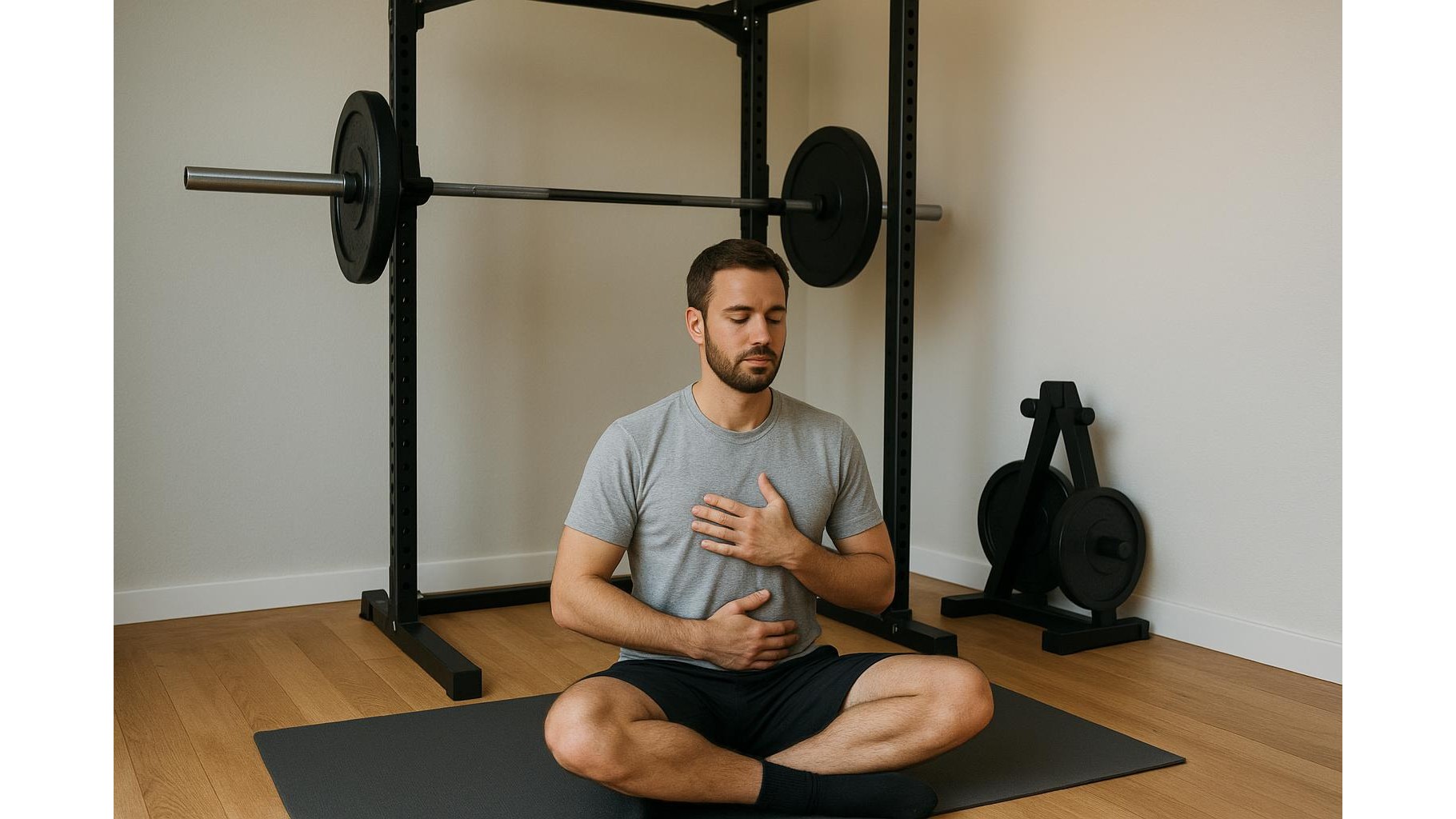
Heavy sets crank up your nervous system and drive up heart rate and tension. A short breathing routine helps you switch from “lift” mode to “recover” mode while you’re still beside the rack. Sit on a bench or the floor, lean your upper back lightly against the upright, and place one hand on your belly. Inhale through your nose for four seconds, feeling your ribs expand sideways, then exhale through pursed lips for six to eight seconds. Keep shoulders relaxed and jaw loose. Three to five slow breaths can noticeably lower your heart rate, reduce that post‑set tightness around the neck and traps, and prime your body for better mobility and muscle recovery without taking up any extra floor space.
Micro-mobility for hips and ankles in one mat-length
Home lifters often feel jammed up in the hips and ankles, which can stall progress in squats and deadlifts. In a narrow strip of space beside your rack, you can cycle through a quick micro‑mobility sequence. From a half‑kneeling position with one foot forward, gently drive your knee over your toes while keeping the heel down for 5–8 slow reps, then switch sides to free up the ankles. Next, shift into a compact 90/90 hip position: front leg bent at 90°, back leg bent behind you, both knees on the ground. Staying tall through the chest, slowly rotate your torso toward the front knee and breathe. These low‑amplitude movements lubricate the joints, improve range of motion and reduce that day‑after stiffness, all while staying within the footprint of your rack.
Target your back and glutes with light self-massage
Loaded rows, pulls and squats can leave your upper back and glutes feeling like concrete. Even without big equipment, you can do effective self‑massage in a very tight space using a small ball or similar implement. Stand or sit with your back to the rack upright and place the ball between your shoulder blade and the post. Gently lean your weight into it and make slow, controlled micro‑rolls for 20–30 seconds per spot, hunting for tender but tolerable areas. Repeat around the glutes by placing the ball at the wall or on the floor and easing your weight onto it. Keep breathing calmly and avoid “grinding” aggressively; the goal is to signal relaxation, not more tension. This kind of localized pressure helps ease trigger points and improves blood flow without needing a foam roller or open floor.
Reset the spine and shoulders with compact flows
Lifting in a home rack often means your upper body takes a beating from pressing, pull‑ups and bracing. A short spinal and shoulder flow lets you reset posture and joint mechanics without sprawling out across the room. Facing the rack, hold a light support on the upright, hinge your hips back and let your chest sink slightly toward the floor to open your lats and thoracic spine. From there, move into slow cat‑cow style motions on all fours in a narrow lane: round your back up as you exhale, then gently extend as you inhale. Finally, kneeling beside the rack, perform small shoulder circles and arm sweeps, keeping ribs stacked over hips. These controlled patterns help restore fluid movement after heavy loading, support healthier overhead positions and keep your shoulders from feeling locked up between sessions.
Turn your cool-down into a consistency ritual
The biggest benefit of a five‑minute post‑workout ritual isn’t just immediate relief—it’s long‑term consistency. By pairing a simple routine with the act of reracking your bar, you build an automatic habit: finish last set, start recovery. Because every drill described here fits in the small footprint of your rack, there’s no friction, no extra setup and no excuse to skip. Start with one breathing drill and one mobility or self‑massage move, then expand as it becomes second nature. Over time, these short sessions add up to fewer aches, smoother lifts and better performance, allowing you to train harder and more often while keeping your home gym lifestyle sustainable.
By treating recovery as a non‑negotiable part of your home workouts—just like loading plates or logging your sets—you protect your joints, maintain your movement quality and make progress that actually lasts. Five minutes beside the rack is a small investment that pays off every time you train.