Building a home gym often means stacking weight plates in corners, under benches or against walls. That works for a while, but as you add more plates and start using more precise loads, messy storage slows you down and increases the risk of tripping or misloading the bar. A clear system for organizing weight plates at home lets you change loads faster between sets, keep your training space safe, and protect your equipment from damage.
Table of contents
Start with a clear plate organization strategy
Before you buy any storage, decide how you want to group your weight plates. A simple rule is to keep the heaviest plates closest to your main lifting area and the lightest plates further away. Store plates by type and size: all 20 kg plates together, all 15 kg together, and so on. If you use both iron and bumper plates, give each its own zone so you never mix them on the bar by mistake. Aim for a “one glance” system: when you look at your rack or wall, you should instantly know where every plate lives. This reduces decision time between sets and makes it easier to re-rack everything when you finish.
Use a vertical plate tree to keep the floor clear
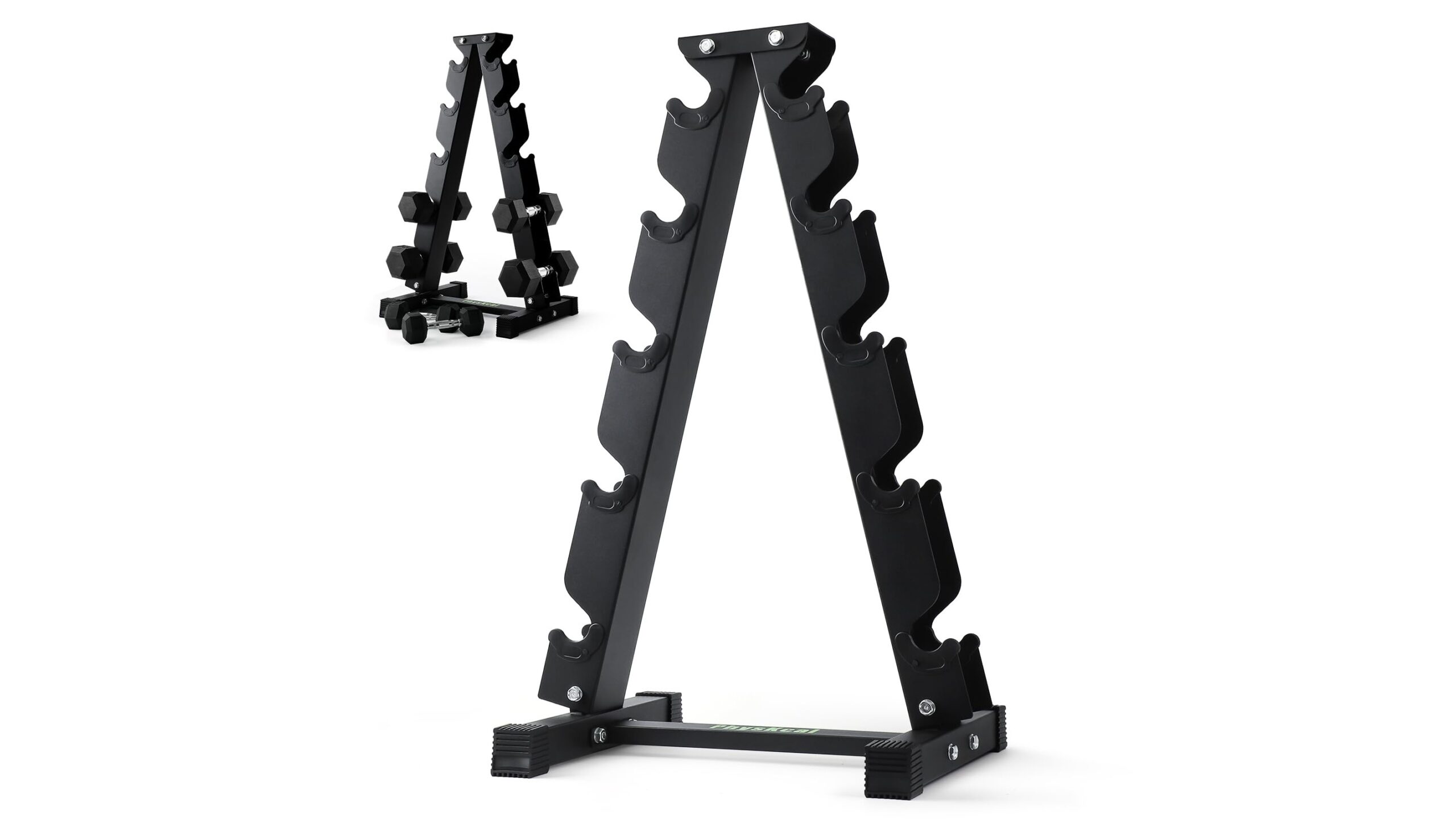
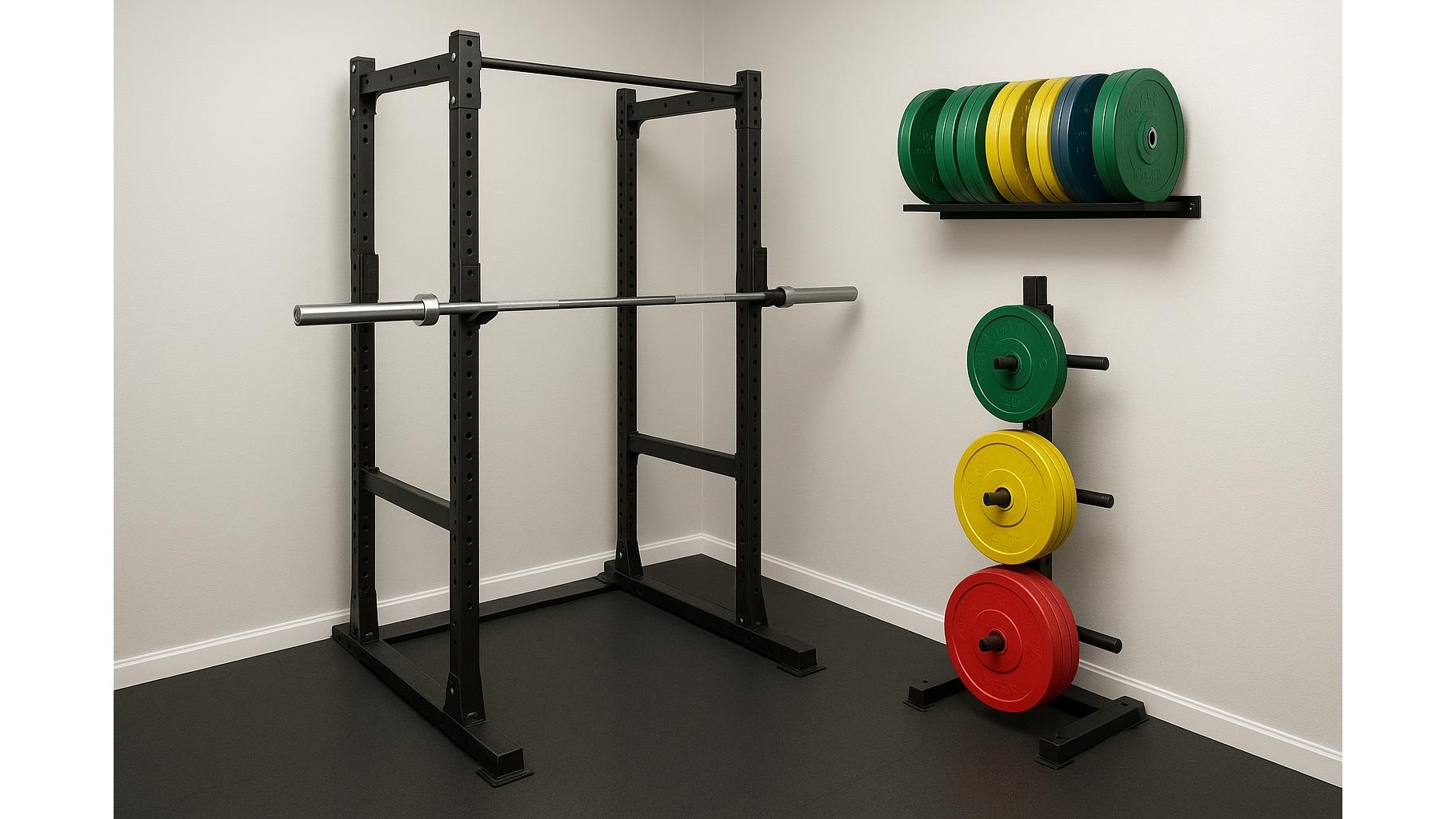
A dedicated weight plate tree is one of the most efficient ways to organize plates in a home gym, especially when space is limited. A good plate tree lets you store multiple pairs of plates on vertical posts, keeping the floor clear and reducing trip hazards. Look for a heavy-duty steel model with multiple horns at different heights so you can separate 20 kg, 15 kg, 10 kg and smaller change plates. A stable base and a compact footprint are crucial in tight spaces: the goal is to keep your plates close to your rack without blocking your walking path. Place the tree on the side where you normally load the bar, so you can change loads quickly without crossing the room.
Add wall-mounted storage for overflow and specialty plates
If you have a lot of plates or use specialty sizes, consider wall-mounted plate storage to extend your system vertically. Wall pegs or horizontal racks free up floor space and are ideal for rarely used plates such as 25 kg, fractional plates or technique plates. Mount racks into solid studs or masonry, and keep your heaviest plates on the lowest hooks to avoid awkward overhead lifting. By combining a plate tree for your everyday working plates with a wall rack for overflow, you get a clear visual hierarchy: frequently used plates at arm’s reach, specialty plates neatly parked but still visible.
Use color coding and labeling for faster identification
To speed up plate changes between sets, make it obvious which plate is which, even when you are tired. If you use bumper plates, standard color coding (green 10 kg, yellow 15 kg, blue 20 kg, red 25 kg) makes identification almost automatic. With iron plates, use large, high-contrast labels or stick-on vinyl numbers so the weight is readable from a distance. You can also label shelves or horns by size using tape or tags: for example, “20 kg only” or “5 kg & 2.5 kg”. This reduces guessing and prevents misloads, which is especially important when you are following percentage-based strength programs and need exact loads workout after workout.
Create loading zones and clear walkways
Good plate organization is also about how you move through your space. Designate a loading zone around your rack or lifting platform where plates are stored and changed, and keep that area free of clutter. Place your plate tree or primary rack within one or two steps of the barbell sleeves so you can unload and reload without turning your back or weaving around equipment. Keep walkways at least one plate’s width clear, and avoid stacking plates against walls where they can roll or tip. A tidy, well-planned layout not only saves time between sets, it significantly reduces the risk of stubbing toes, slipping on loose plates or catching your foot on hidden stacks.
Maintain your system with simple habits
Even the best storage system fails if you do not use it consistently. Build the habit of re-racking plates immediately after each exercise rather than at the end of the session. Always return plates to the same horn, shelf or wall peg, and do a quick 30-second tidy-up before you leave the gym room. If you share the home gym, print a simple plate map or list and stick it on the wall as a reminder of where everything goes. Over time, this discipline means you start every session with a clean, predictable setup, making your home strength training both faster and safer.
By combining a clear storage strategy, a sturdy plate tree, smart wall-mounted solutions and consistent labeling, you turn a chaotic pile of plates into an efficient system. You will move more confidently between sets, hit your training numbers with fewer mistakes and reduce clutter-related risks. A well-organized plate setup is a small investment of time and attention that pays off in smoother workouts, safer lifting and a more professional feeling home gym.