Logging miles on your home treadmill is convenient and efficient, but real progress happens when you respect recovery. A focused post‑treadmill recovery routine helps reduce soreness, protect your joints and keep you consistent with your training. Below you’ll find a simple home protocol that blends stretching, light mobility, hydration and practical self‑massage ideas tailored to treadmill runners.
Reset your breath and cool down gradually
When your run ends, avoid jumping straight off the treadmill and collapsing on the sofa. Instead, walk for 3–5 minutes at an easy pace to let your heart rate drop gradually. Focus on slow nasal breathing and lengthened exhales to calm the nervous system. This gentle cooldown flushes metabolic by‑products from the legs and prepares your body for the next phase of recovery after treadmill running. Once you step off, stand tall, roll your shoulders, and take a minute to notice any tight or sore areas that will need extra attention during stretching and self‑care.
Targeted stretching for hips, hamstrings and calves
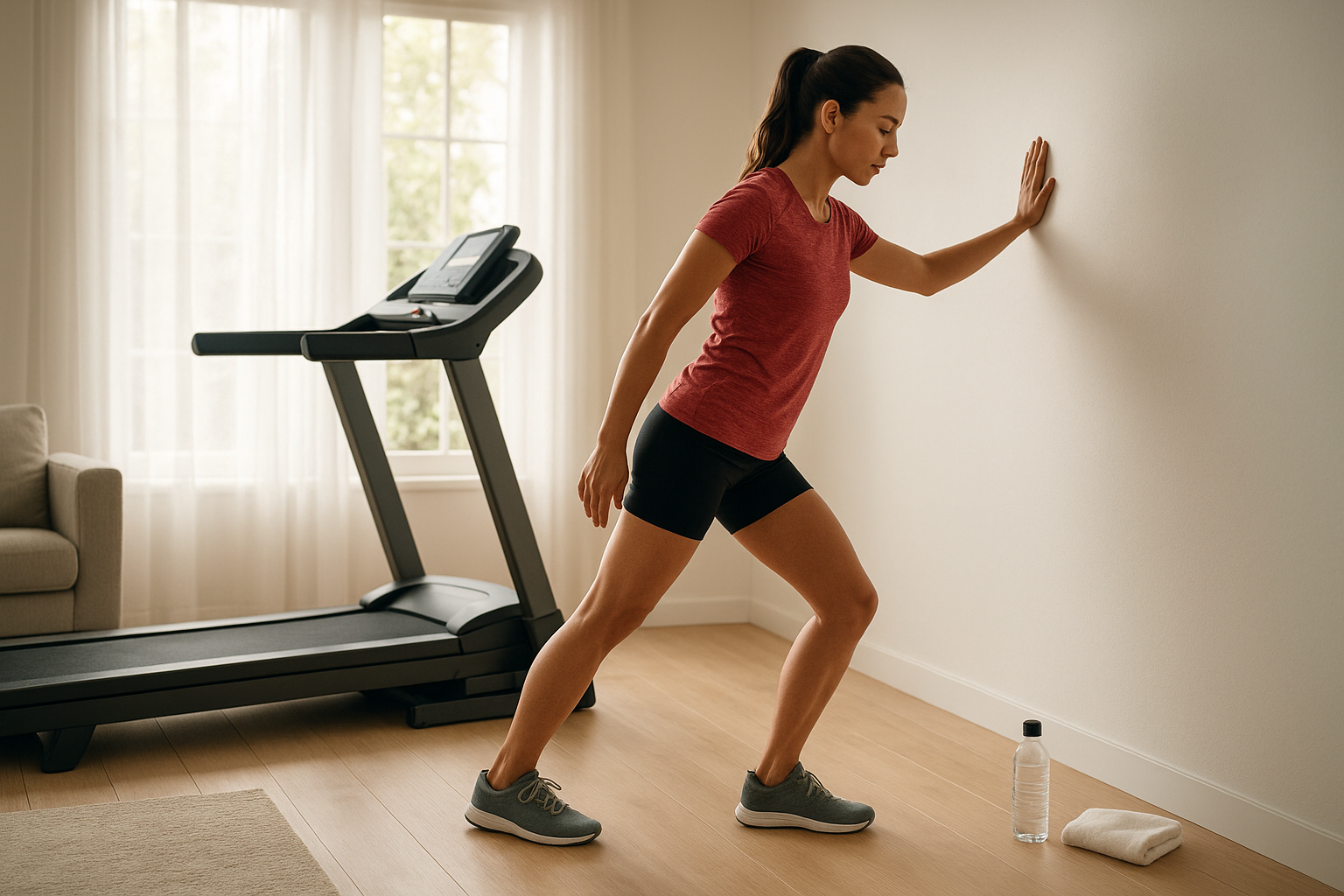
Indoor running tends to repeat the same motion, which can leave your hip flexors, hamstrings and calves especially tight. Spend 8–10 minutes on gentle static stretches, holding each for about 30 seconds without bouncing. Prioritise a half‑kneeling hip flexor stretch, a seated or supine hamstring stretch, and a wall calf stretch for both the gastrocnemius and soleus. Keep your breathing relaxed and stop before any sharp pain. This simple sequence improves range of motion, supports better running form, and can reduce the risk of niggles such as Achilles discomfort or lower‑back stiffness associated with frequent treadmill sessions.
Light mobility to keep joints happy
After stretching the main muscle groups, add some mobility exercises to maintain healthy joints. Think of these as controlled, gentle movements rather than workouts: ankle circles, hip CARs (controlled articular rotations), and cat‑cow flows for your spine. Spend 5 minutes moving slowly through pain‑free ranges, aiming for smooth, continuous motion. This helps lubricate the joints with synovial fluid and reinforces stability in the ankles, knees and hips, which work hard to control repetitive impacts on the treadmill belt. Regular mobility work can make your stride feel lighter and more efficient in future runs.
Hydration and simple nutrition for faster recovery
Even if you run indoors, you still lose fluids and electrolytes through sweat. Within 30 minutes of finishing, sip water and consider adding an electrolyte source if you’ve done a longer or more intense treadmill workout. Pair hydration with a small snack that combines carbohydrates and protein, such as yogurt with fruit or a smoothie, to support muscle recovery and replenish glycogen stores. Avoid overdoing caffeine or alcohol right after running, as both can interfere with rehydration and sleep quality. Consistent post‑run nutrition doesn’t have to be complicated, but it makes a noticeable difference to how fresh your legs feel the next day.
Self‑massage and cooling strategies to reduce soreness
Finally, use simple self‑massage techniques to ease tight spots and promote circulation. You can use a basic massage tool, a ball, or even your hands to gently work along the calves, quads and glutes for 5–10 minutes, applying moderate pressure and moving slowly over tender areas. Follow this with a short cool shower or the application of a reusable cold pack on any joints that feel irritated. Cooling can help manage post‑run inflammation, while self‑massage encourages relaxation and body awareness. Combined with stretching, mobility and hydration, these strategies form a complete at‑home recovery routine tailored to frequent treadmill use.
By treating recovery as a deliberate part of your training, your home treadmill sessions become more sustainable and enjoyable. A few extra minutes of stretching, mobility, smart hydration and self‑care will help you bounce back faster, reduce soreness and stay consistent with your running goals—all without leaving your living room.