Building a home gym in a small space often means choosing equipment that is compact, versatile and gentle on your walls. A doorway dip station that uses leverage instead of screws is a smart way to train triceps, chest and core without permanent installation. In this guide we’ll look at how leverage-based systems work, what to check for safe locking, how to measure your doorway, and how to get the most from this piece of gear with effective bodyweight exercises.
Table of contents
How leverage-based doorway dip stations work
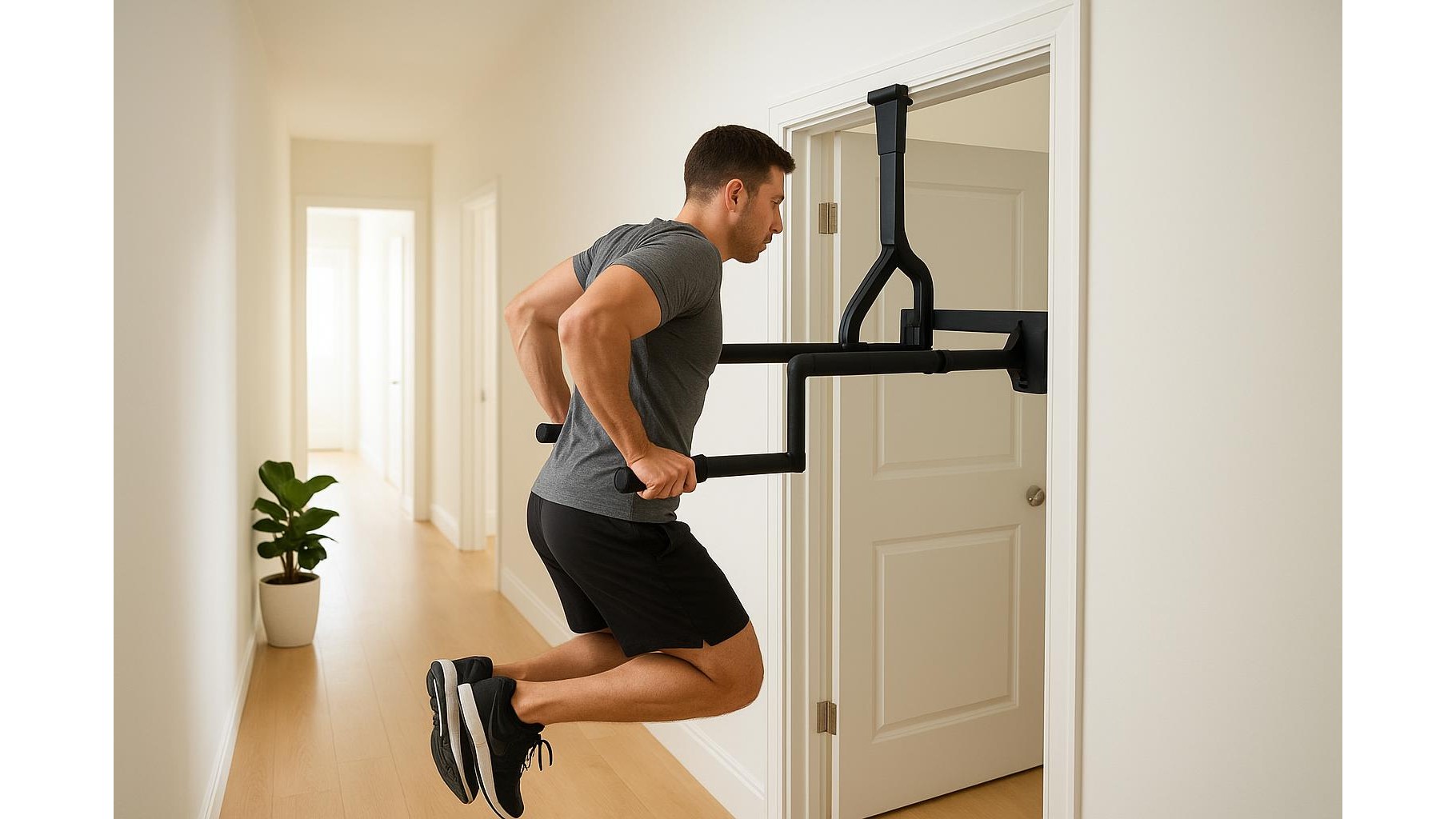
Unlike fixed wall-mounted bars, a leverage doorway dip station hooks over the top of the door frame and uses your own bodyweight to lock itself in place. Large padded arms rest on the opposite side of the frame, creating a stable clamp when you load the handles. The key parts to look at are the upper hooks, the contact pads and the horizontal crossbar. Together they distribute your weight so there is no need for drilling or screws. When you step off, the load is released and you can lift the unit away in seconds, making it ideal for rented homes or rooms where you cannot modify the walls.
Essential safety checks before you buy
For safe use, start with the weight capacity and choose a doorway dip station rated well above your bodyweight. Check that the frame is made from steel tubing with solid welds and that the grips have non-slip padding to keep your hands secure during dips and leg raises. Look for wide, foam-covered contact points to protect the door trim and improve stability. A good model will have clear installation instructions that show how the leverage system locks against the frame. Avoid products that rely only on thin hooks or minimal contact surfaces, as they can dig into the wood and shift under load.
Measuring your doorway and planning the space
Before ordering, measure the internal width of your doorway and the depth of the top trim. Most doorway dip bars are designed for standard interior frames, so knowing your exact door width helps avoid a poor fit. Check the required clearance height as well: you need enough room above the bar for your head during dips or leg raises. Plan for free space on both sides of the door, so you can lean forward slightly without hitting the wall. You should also test that the door itself is solid and well fixed to the frame, even though you will usually work with the door open and the load on the frame rather than on the door panel.
Setting up and locking your doorway dip station safely
To set up, place the upper hooks of the dip station over the top of the door frame and press the pads firmly against the opposite side. Ensure the crossbar sits level and the grips are at a comfortable height for your arms. Before your first full set, perform a load test: hold the handles, gently support part of your weight with your feet and rock the unit slightly to check for movement. If it shifts or creaks, adjust its position so the pads have full contact with the frame. Never exceed the recommended user weight and avoid explosive kipping or swinging that can compromise the leverage lock. Used correctly, a quality leverage bar will feel solid and secure without damaging the paintwork.
Exercise ideas for triceps, chest and core
Once installed, a doorway dip station becomes a compact multi-gym. Start with bent-knee dips to build triceps and lower chest strength, then progress to straight-leg dips as you become stronger. You can perform assisted dips by keeping one foot on the floor or a small step. For the core, use hanging knee raises and straight leg raises, focusing on slow, controlled movement without swinging. Slightly leaning forward during dips increases chest activation, while a more upright posture targets the triceps. Combined with push-ups and bodyweight rows using other minimalist gear, a doorway dip bar offers a full upper-body workout in a very small footprint.
Choosing the right doorway dip station comes down to understanding leverage-based locking, checking safety features and matching the design to your doorway. By measuring your space carefully and performing simple stability tests, you can enjoy challenging bodyweight strength training at home without drilling into your walls. With consistent use and a selection of dips, raises and static holds, this compact tool can significantly improve your triceps, chest and core strength while keeping your home intact.