Building a serious home gym is not just about barbells and racks. If you have big thighs from squats and deadlifts, the wrong shorts or leggings can ruin a session with chafing, waistbands that dig in and fabric creeping up every time you hit depth. This guide focuses on choosing the right home gym bottoms for strength athletes with larger legs, so you can train hard without worrying about split seams, transparency or constant adjustment between sets.
Table of contents
Choose the right fabrics for big thighs
The foundation of comfortable training bottoms is the fabric. For lifters with big thighs, look for a blend of nylon or polyester with elastane (spandex). These materials stretch in multiple directions, return to shape and are more resistant to seam stress from deep squats. Avoid pure cotton shorts or joggers as your main lifting bottom: cotton holds sweat, gets heavy and is more likely to bunch and chafe at the inner thighs. Instead, opt for moisture‑wicking performance fabrics that keep you dry and reduce friction. Slightly thicker, opaque knits help minimise transparency in the bottom position of squats and when you hinge hard in deadlifts. A smooth, soft interior finish is also key for reducing irritation on longer sessions.
Cut and inseam length to prevent ride‑up
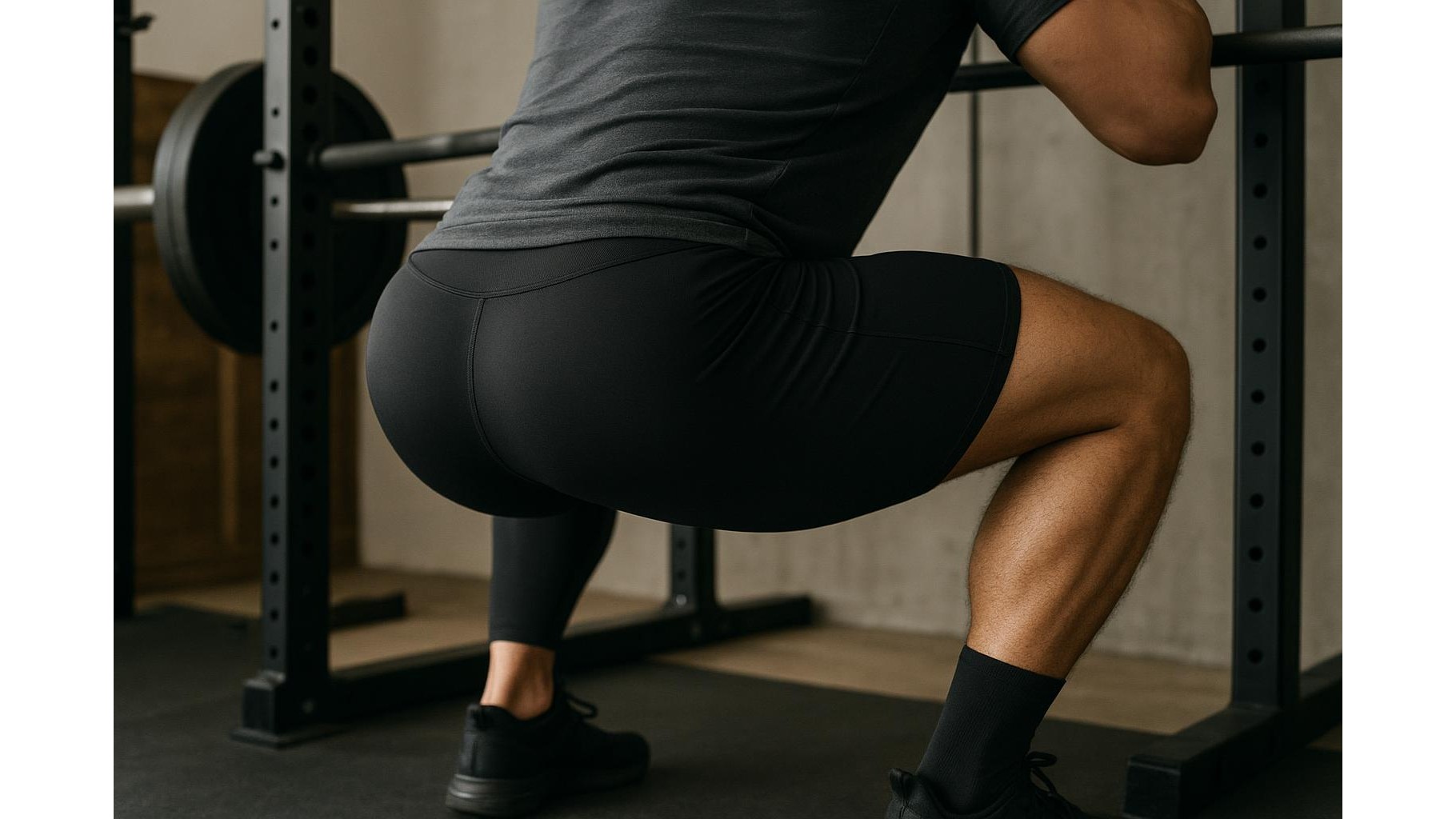
Even with great fabric, poor cut and inseam length can cause rolling and ride‑up. For shorts, lifters with big thighs generally do better with a 7–9 inch inseam that ends a little above the knee. This gives your quads and glutes coverage when you sink into a deep squat, while still allowing full mobility. Very short inseams tend to creep up and get trapped in the hip crease, especially on bigger legs. Look for a slightly tapered but not tight leg opening, or a split hem that allows your thigh to expand without pulling the whole short upwards. For leggings, a full‑length or 7/8 cut with a firm but stretchy cuff at the ankle helps keep them anchored so they don’t migrate up your calves during movements like Romanian deadlifts, step‑ups and lunges.
Waistband design for comfort under load
The waistband is where many lifters with bigger legs run into trouble, especially if they also have a solid core and glutes. Choose bottoms with a wide, soft elastic waistband (often 4–6 cm) that distributes pressure evenly rather than a thin, sharp band that digs in when you brace. A high‑rise or mid‑rise cut can work well, as long as the waistband doesn’t fold or roll when you hinge or sit into the hole. Look for an internal drawcord so you can fine‑tune the fit without over‑tightening the elastic. In a home gym where you might be moving between heavy sets and floor work, a secure but forgiving waistband keeps your bottoms in place without creating pressure points under a lifting belt or while doing core drills.
Stitching, gussets and anti‑chafe details
For lifters with big thighs, stitching and construction are just as important as fabric. Prioritise bottoms with a gusseted crotch or articulated inner leg panels; these allow more range of motion and reduce the chance of seams splitting when your stance is wide for squats or sumo deadlifts. Flatlock stitching is ideal, as it lies flat against the skin and minimises rubbing along the inner thigh. Avoid bulky or exposed seams in high‑friction zones. If you’re prone to chafing, smooth compression‑style liners inside shorts can create a protective layer between your thighs. In a home gym environment, where you may train longer without clothing changes, these construction details dramatically cut down on irritation and the need for constant adjustments between sets.
Home gym‑friendly styling and layering strategies
Training at home gives you freedom to prioritise function over fashion, but smart styling still helps. Many lifters with big thighs like to pair compression shorts or leggings underneath looser training shorts. The inner layer stays locked in place against the skin, while the outer layer provides coverage and pockets for essentials like your phone or timer. Choose darker colours or subtle patterns if you’re concerned about sweat marks or slight transparency; these are common worries during heavy lower‑body sessions. Since you don’t need to impress a commercial gym crowd, you can also rotate through a small collection of bottoms that you know fit your body well, rather than chasing trendy cuts. Focus on pieces that let you move freely through squats, hinges and lunges without tugging, pulling or worrying about what your clothes are doing.
Finding the perfect home gym bottoms for big thighs takes some experimentation, but the principles are consistent: moisture‑wicking stretch fabrics, functional cuts with the right inseam, secure but comfortable waistbands and smart stitching that supports deep ranges of motion. When your shorts or leggings stay put and don’t chafe, you can focus fully on your training, push heavier loads and make better progress in your home gym. Invest in a few well‑chosen pieces built for lifters’ legs, and your lower‑body sessions will feel smoother, safer and far more enjoyable.