Adjustable step-up platforms with safety rails are a niche but increasingly popular piece of home gym equipment. They sit somewhere between a traditional aerobic step, a plyo box and a rehab step, adding the security of integrated handrails. For some lifters they are overkill; for others they are exactly what makes unilateral leg training and safe conditioning possible at home. This guide explains who they are best for, how to set them up correctly, and how to plug them into lower-body strength and rehab-focused programmes.
Table of contents
What are adjustable step-up platforms with safety rails?
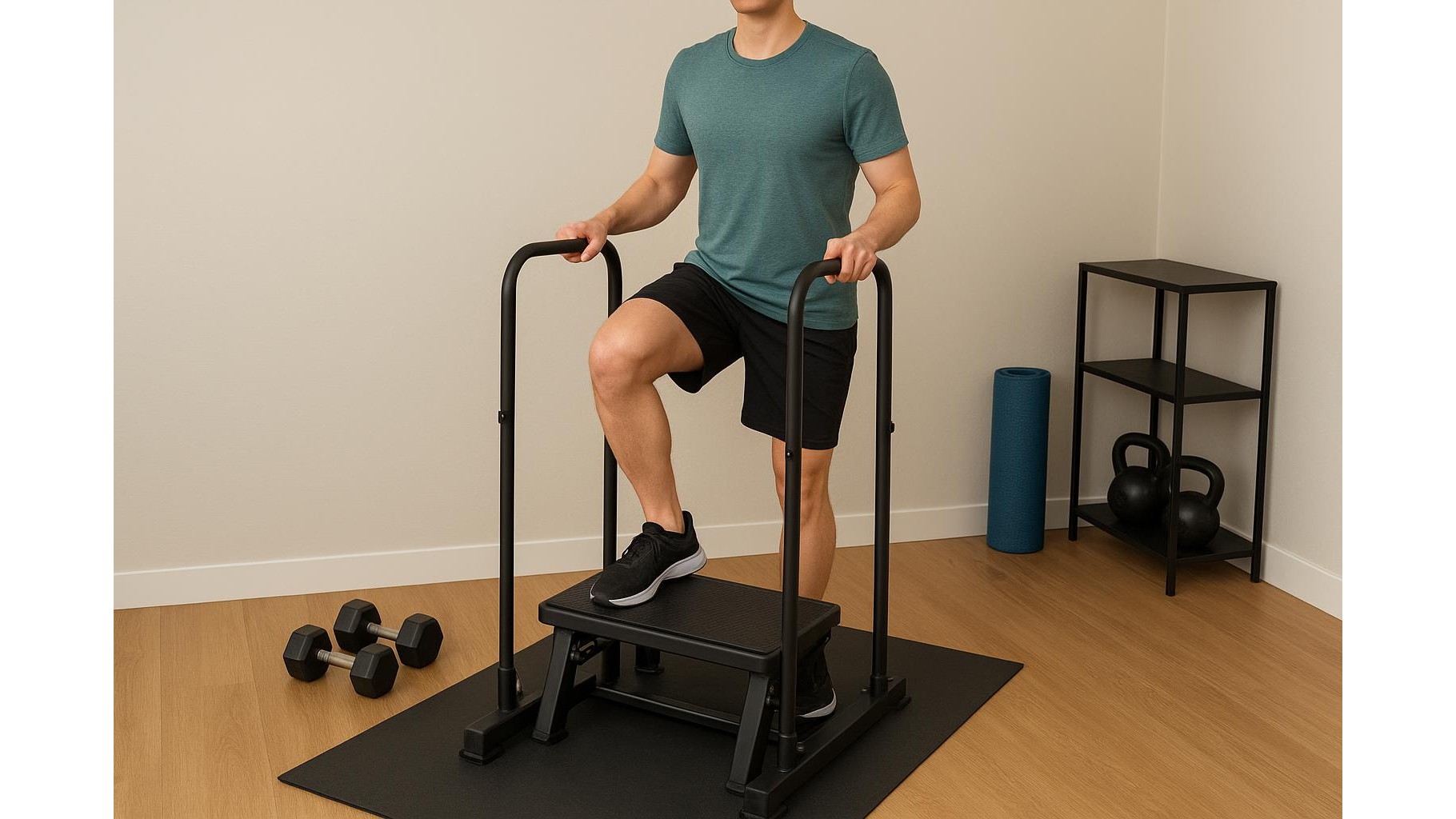
An adjustable step-up platform with rails is essentially a sturdy, height-adjustable step with integrated side or front safety handrails. Unlike basic plastic aerobic steps, these are built more like small pieces of gym infrastructure: steel frames, non-slip platforms, and weight ratings that can exceed bodyweight plus dumbbells. The rails allow you to offload part of your weight, catch your balance, or simply feel more confident as you move. Many models marketed for rehabilitation and mobility training offer fine height increments so you can progress in small, safe steps. In a compact home gym, they can double as conditioning tools, strength accessories and rehab stations, especially when heavy squat racks or large machines are not an option.
Who actually benefits from safety rails in a home gym?
Safety rails make the most sense for trainees who need extra stability and confidence. Older lifters, people returning from lower-body injuries and beginners who feel uneasy on high steps can all benefit. The rails allow you to train single-leg strength with step-ups and step-downs without fearing a mis-step. They are also valuable if your home gym floor is hard or cluttered, where a fall would be more consequential. That said, highly athletic users who are comfortable with unassisted step-ups, box jumps and lunges may not need rails and could prefer a simpler plyo box. The key question is: will rails allow you or a family member to do more useful lower-body work, more often, with less anxiety? If the answer is yes, then the extra bulk and cost can be justified.
Setting the correct step height and rail position
To get the most from an adjustable step-up platform, you must set the step height correctly. For strength-focused step-ups, a good starting point is where your working leg forms roughly a 90-degree bend at the knee when your foot is on the platform. If you feel hip pinch or lose balance, lower the height until you can step up with control. For rehab or early return-to-training, start lower than you think you need and only increase when reps feel easy and symmetrical. The rails should be at a height where your arms can hold them lightly without shrugging your shoulders. Use a “two-finger” rule: you should be able to maintain balance by touching the rails with just a couple of fingers rather than hanging on with a death grip. This encourages your legs to do the work while the rails provide a safety net rather than becoming crutches.
Integrating step-up platforms into strength and rehab training
With the platform and rails set correctly, you can build them into a wide range of lower-body workouts. For strength, perform controlled step-ups holding dumbbells or wearing a weighted vest, using the rails only to stabilise. You can also do eccentric-focused step-downs to build knee resilience, slowly lowering from the step to the floor. In rehab-focused plans, start with bodyweight only, using the safety rails to modulate how much weight the affected leg carries. Over time, reduce hand support and gradually increase step height. For conditioning, circuit the step-up platform with other home gym tools such as resistance bands or light kettlebells, keeping intensity high while impact and joint stress remain low. The versatility to shift from rehab to performance in the same footprint is where these platforms quietly shine.
Choosing the right adjustable step-up platform for your space
When selecting a platform for a home gym, prioritise stability, adjustability and footprint. Look for a heavy-duty steel frame, non-slip stepping surface and a clearly stated weight capacity that exceeds your bodyweight plus any external load you might hold. Multiple, secure height settings are essential, especially for shared use by family members of different abilities. Adjustable or removable rails can help the unit fit into tighter spaces and make storage easier. While integrated safety rails are a premium feature, consider them an investment in long-term usability: equipment that feels safe gets used more consistently. Measure your training area, check that you can comfortably step in all directions without hitting walls or other equipment, and choose a platform that fits both your goals and your room.
In summary, adjustable step-up platforms with safety rails are not a must-have for every home gym, but they can be transformational for those who value stability, gradual progression and joint-friendly lower-body work. They bridge the gap between clinical rehab equipment and practical strength tools, enabling unilateral training, careful step-down work and accessible conditioning for a wide range of users. If you or someone in your household feels limited by balance, confidence or past injuries, integrating a well-chosen platform with rails into your setup can unlock a safer, more sustainable approach to lower-body training at home.