Late-night training can leave you feeling wired just when you need to wind down. A focused combination of evening self-massage and gentle stretching can help shift your body from “go mode” into a calmer state, easing tight muscles and signalling to your nervous system that it is time to sleep. In about 20–25 minutes, you can create a repeatable ritual that supports better recovery and deeper sleep after your home workouts.
Table of contents
Set the scene for better post-workout sleep
Before you start your self-massage and stretch routine, dim the lights, switch off bright screens and keep your room slightly cool. Aim to begin 20–40 minutes after your late session, once your heart rate has come down a little. Breathe slowly through your nose and try to lengthen your exhale, which helps activate the parasympathetic, “rest and digest” side of your nervous system. Keep a mat or soft rug on the floor and wear comfortable layers so you do not get cold during the slower work. Treat this entire block as a pre-sleep ritual, not a second workout: the goal is relaxation, not intensity.
Upper-body self-massage to release training tension
Start with very light self-massage to ease tension built up during pushing, pulling and pressing movements. Use your hands to slowly knead across your chest, shoulders and upper back, applying only enough pressure to feel a gentle release, not pain. Move in small circles, pausing on tender spots for 20–30 seconds while you breathe deeply. Slide your fingers along the side of your neck and base of the skull to loosen the areas that often tighten with desk work and heavy lifting. This calm, repetitive contact tells your body it is safe to relax, and can noticeably reduce the “buzz” you sometimes feel after an intense strength or HIIT session.
Lower-body self-massage to calm restless legs
If your late workouts are leg-heavy, spend time on quads, hamstrings and calves. With your thumbs or knuckles, gently work from just above the knee towards the hip, following the length of the muscle. On the calves, use your fingers to glide from heel towards the back of the knee, again focusing on slow, rhythmic strokes. Avoid aggressive digging or fast movements, which can be stimulating instead of calming. The aim is to soften post-workout tightness and reduce the restless, “twitchy” feeling that can keep you from falling asleep. Finish this section by lightly massaging the soles of your feet, which often brings an immediate sense of grounding and relaxation.
Slow stretches to downshift your nervous system
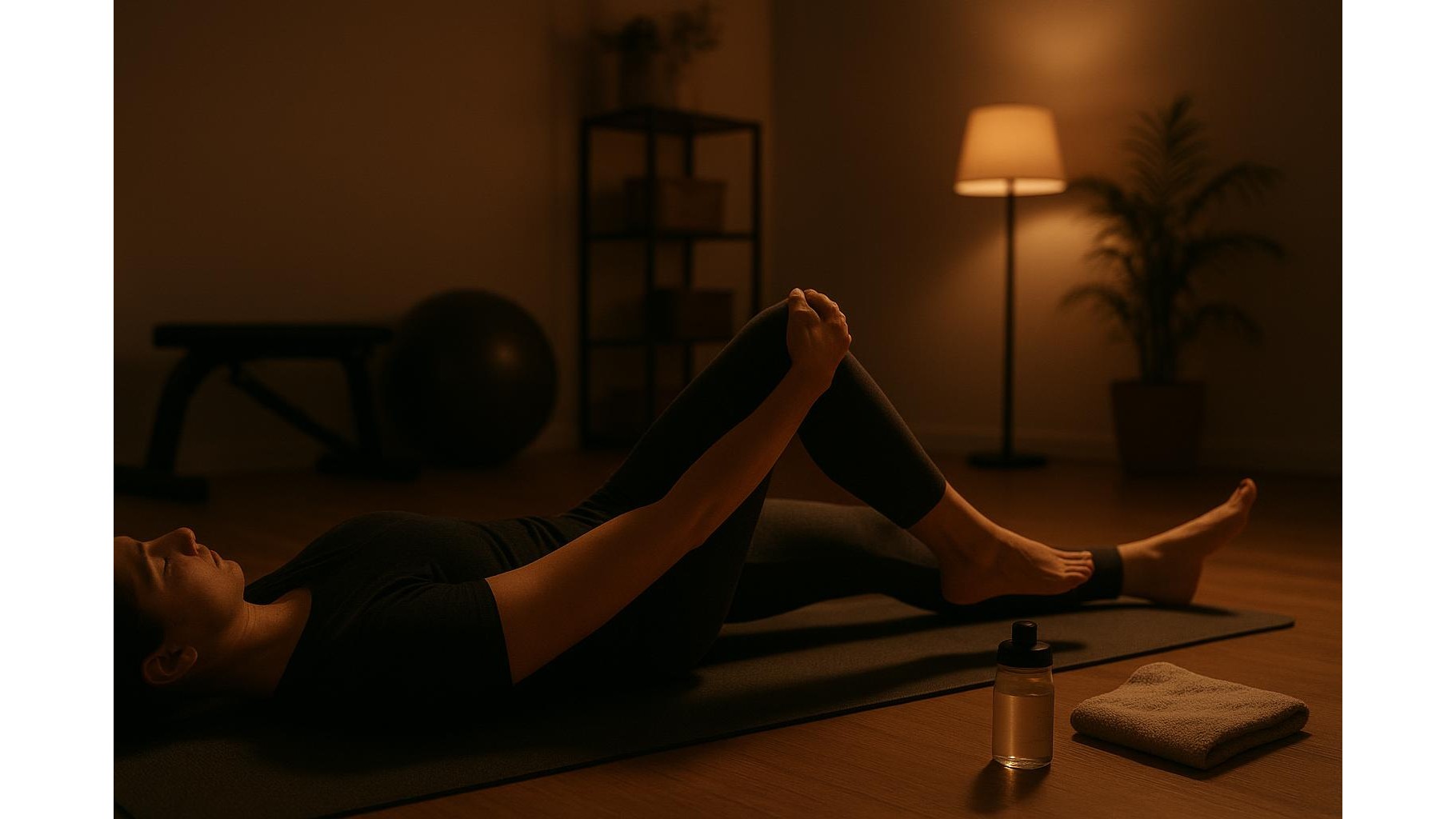
Follow the massage with 10–12 minutes of static stretching, holding each position for 45–60 seconds. Focus on big, postural muscles that affect how your body feels when you lie down: hip flexors, glutes, hamstrings, chest and upper back. Move into each stretch slowly, stopping at a mild, comfortable tension you can breathe through without holding your breath or clenching your jaw. For example, use a simple kneeling hip-flexor stretch, a lying hamstring stretch with a towel, a gentle child’s pose and an open chest stretch against a wall. The combination of longer holds and calm breathing helps lower muscle tone and heart rate, making your body feel heavier and more ready for sleep rather than primed for further effort.
Breathing and mindfulness to finish the routine
Close your evening cool-down with 3–5 minutes of simple breathing on your back. Place one hand on your belly and one on your chest, then inhale quietly through your nose for about four seconds and exhale for six. Feel your ribs expand sideways, not just your shoulders lifting. If your mind drifts back to your workout, gently bring your focus to the sensation of the breath and the contact between your body and the floor. This mindful, extended exhale breathing has been shown to promote a calmer heart rhythm and a lower state of arousal, both crucial for falling asleep faster and staying asleep after demanding evening training sessions.
By pairing light self-massage, targeted stretching and relaxed breathing, you create an evening ritual that tells your body the hard work is over. In just 20–25 minutes, you can ease tight muscles, quiet a busy nervous system and turn late home workouts from a sleep disruptor into part of a structured, recovery-focused routine that supports deeper, higher-quality rest night after night.