Creating a knee-friendly home gym floor is one of the smartest upgrades you can make if you train regularly. Instead of accepting sore knees and aching ankles after every workout, you can build a layered surface that absorbs impact, improves traction and keeps noise low. By combining the right gym mats, a supportive rug or underlay, and well-cushioned training shoes, you transform any room into a safer, more forgiving training space for both strength and cardio sessions.
Table of contents
Start from the base: dense mats for everyday protection
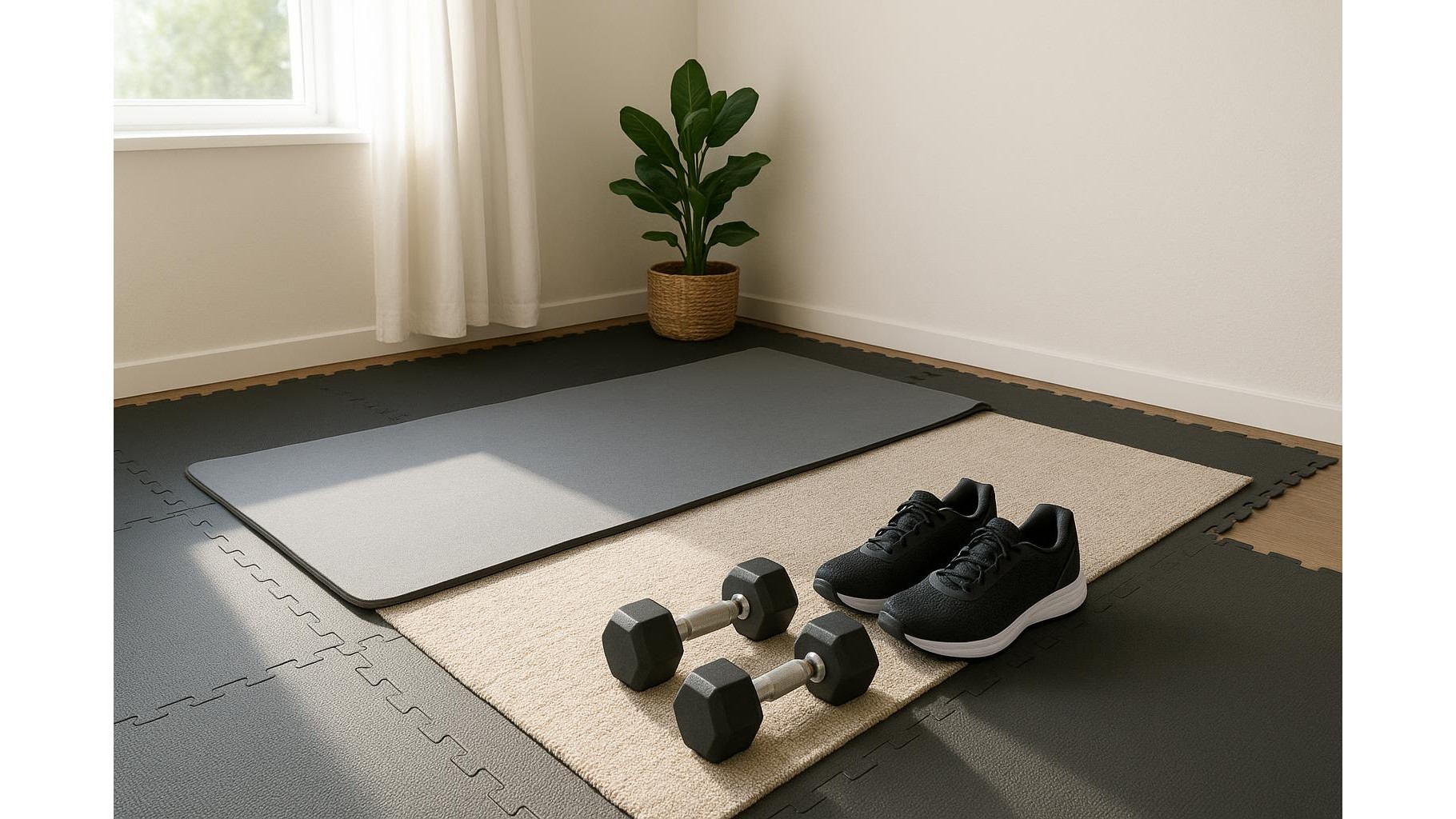
The foundation of a joint-friendly training surface is a layer of dense, shock-absorbing gym mats. Look for interlocking tiles or roll-out mats made from high-density EVA or rubber, at least 10–12 mm thick, which provide enough give to reduce impact without feeling unstable under heavy lifts. A good mat layer spreads the force of each step or jump, helping to protect your knees, ankles and lower back. Choose a textured, non-slip surface so you can safely perform lunges, squats and HIIT drills without sliding. If you train with dumbbells or kettlebells, this base layer also protects your floor from drops and cuts down on noise so you can work out more comfortably at home.
Add comfort with rugs and underlays for extra cushioning
On top of your base mats, adding a rug or carpet underlay can dramatically improve comfort for bodyweight and mobility work. A medium-pile rug with a supportive foam or felt underlay creates an extra buffer between your joints and the hard subfloor, making movements like kneeling push-ups, hip thrusts and core work much more pleasant. For stability, avoid very deep pile carpets that can twist under your feet; instead, prioritise even cushioning and a non-slip backing so the rug stays anchored on top of your mats. This layered approach is especially helpful if you like to train barefoot or in socks for yoga, Pilates or stretching, because the surface remains soft yet still feels controlled underfoot.
Use a dedicated exercise mat for knees, elbows and spine
Even with a cushioned floor, sensitive joints like knees and elbows often need extra protection. A thick, single-piece exercise mat (around 15 mm or more) is ideal for ground-based exercises, providing focused padding under pressure points. Place this mat on top of your existing layers for moves such as planks, bird-dogs, glute bridges and foam rolling. The key is to choose a mat that is firm enough that your hands and knees don’t sink and wobble, but soft enough to prevent that sharp, bony contact feeling that can irritate joints over time. A closed-cell surface also keeps sweat and moisture from soaking in, making it hygienic and easy to wipe down after intense sessions.
Choose cushioned training shoes to finish the system
Your footwear is the final layer of impact protection between your body and the floor. For cardio, circuits and mixed training, opt for cross-training shoes with responsive cushioning, good heel support and lateral stability. This type of shoe helps absorb the initial shock of landing from jumps, sprints and directional changes before the force reaches your knees and hips. Look for a secure heel counter, a slightly wider base for balance, and a flexible forefoot so you can move naturally. If you also lift heavy, you might keep a flatter, more stable pair for squats and deadlifts and switch to cushioned trainers when you move into high-impact conditioning. Rotating shoes based on activity can significantly reduce joint stress and prolong comfort.
Match your surface to your training style
The best home gym flooring setup depends on how you train. If your focus is heavy strength training, emphasise dense mats and stability, using extra padding only in specific zones where you kneel or lie down. For HIIT, dance fitness or plyometrics, prioritise shock absorption by combining mats, rug or underlay, and cushioned shoes to create a highly forgiving landing area. For yoga and mobility, you may prefer a slightly softer feel under a grip-focused mat. The goal is to create distinct, purpose-built training zones within your space using these layers, so every movement pattern—from jumping jacks to slow lunges—has the right balance of softness and support to keep your knees and ankles happy.
By thoughtfully layering gym mats, supportive rugs or underlays, and the right training shoes, you can turn even a hard, echoing room into a joint-friendly home gym. This approach not only reduces impact on your knees and ankles, but also improves comfort, confidence and consistency in your workouts. Investing in a softer landing today means protecting your joints for the long term, so you can keep progressing in both strength and cardio without being held back by avoidable pain.