Spending all day on your feet and then heading straight into a heavy home lifting session is a recipe for a grumpy lower back. A smart solution is to add a short, structured evening recovery routine before you touch a barbell or dumbbell. In around 20 minutes, you can decompress your spine, wake up key stabilising muscles and calm down tight hip and leg tissues so your home strength training feels smoother, safer and more powerful.
Set the stage: breathe, downregulate and unload the spine
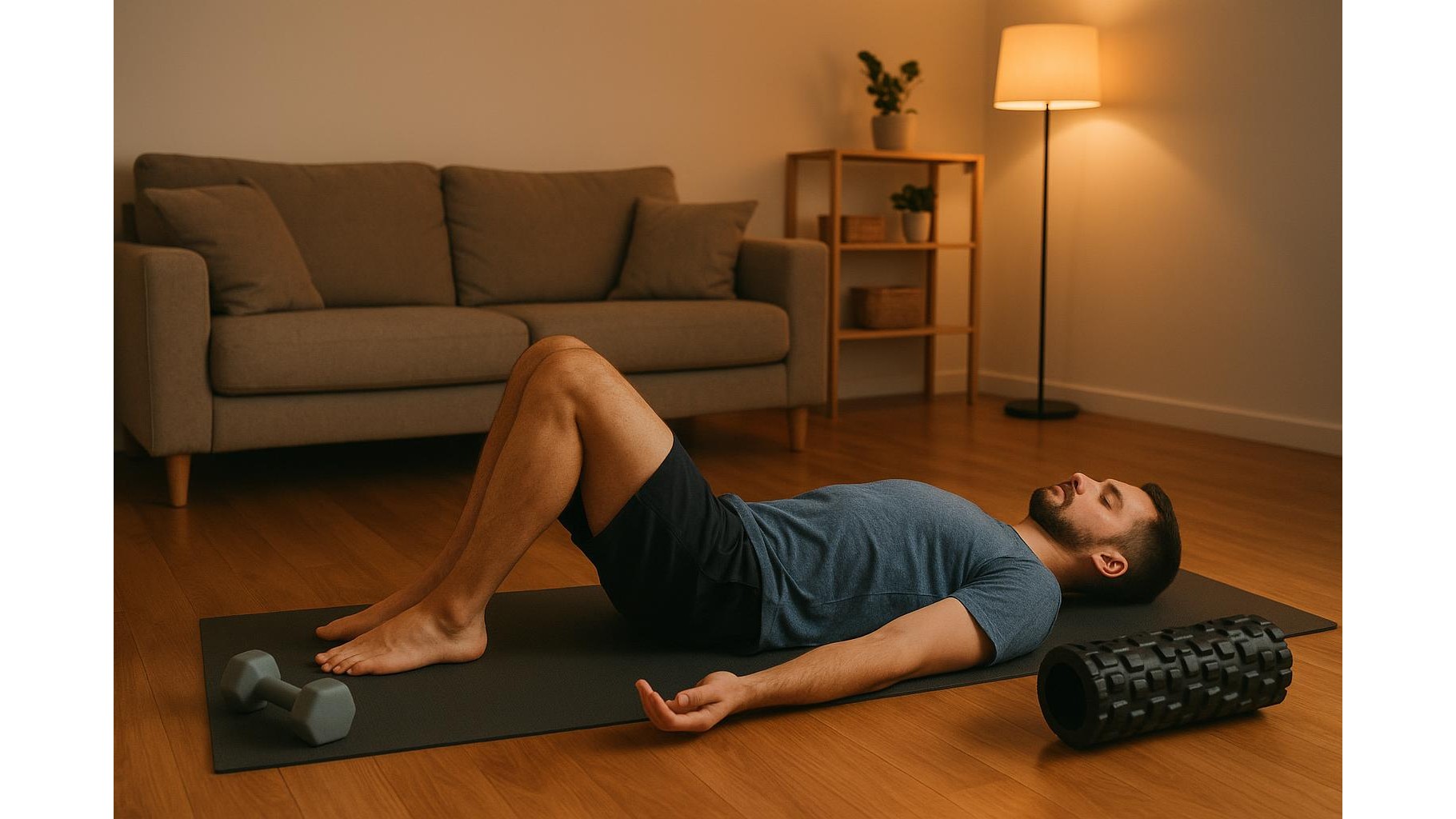
Start by giving your nervous system a signal that the workday is over and your body can shift into recovery mode. Lie on your back with your calves on a chair or bench, knees bent at 90 degrees, and focus on slow nose breathing for 2–3 minutes. This position gently unloads the lumbar spine after hours of standing. Place one hand on your chest and one on your belly and aim to expand the belly first as you inhale for 4 seconds and exhale for 6–8 seconds. This extended exhale helps downregulate tension in the hip flexors and low back, setting up the rest of the session. Keep your shoulders heavy on the floor and imagine your ribs melting down towards your hips.
Mobilise stiff hips and ankles to save your lower back
When you stand all day, it’s common for the calves, hip flexors and adductors to tighten, forcing the lower back to move more than it should during squats and deadlifts. Spend 6–7 minutes on targeted mobility. Begin with a half-kneeling hip flexor stretch, gently squeezing the glute of the back leg and reaching the same-side arm overhead for 5–6 slow breaths. Then move into a 90/90 hip rotation drill to open both internal and external rotation without cranking on the spine. Finish with ankle rocks against a wall, driving the knee forward over the toes while keeping the heel down. The goal isn’t to chase extreme range of motion, but to reclaim smooth, pain-free movement so your hips and ankles can do their job, letting your back stay stable under load.
Activate core and glutes with low-back friendly patterns
After you’ve loosened up, it’s time to switch on the muscles that protect the spine. Focus on low-load, high-quality core activation exercises that avoid excessive lumbar flexion or extension. A simple sequence could include dead bugs, side planks and glute bridges, performed for 2 sets of 6–8 slow reps per side. In dead bugs, press your lower back gently into the floor and move opposite arm and leg with full control, keeping the ribs down. In side planks, think long from head to heels rather than high. In glute bridges, drive through your heels and squeeze your glutes to lift, stopping when your body forms a straight line from shoulders to knees. This trio strengthens the anterior core, lateral stabilisers and posterior chain without aggravating a sensitive back, creating a more resilient base for your home lifting.
Self-massage for tired feet, calves and hips
Long days on your feet load your arches, calves and hip rotators, often leading to subtle tension that creeps into your squats and pulls. A few minutes of self-massage can dramatically improve comfort and movement quality. Use a firm massage ball or roller under the sole of each foot, slowly exploring tight spots and pausing to take 3–4 deep breaths when you find one. Move up to the calves, working from Achilles to just below the knee, and then target the glutes and the sides of the hips while lying on your side or back. Keep pressure at a 5–6 out of 10—intense enough to feel change, but not so strong that you tense up. Combining this gentle myofascial work with calm breathing helps your muscles relax and can make your next home workout feel lighter and more controlled.
Integrate the routine into your home lifting schedule
To get the most from this evening recovery routine, anchor it to your existing training days. Aim for 3–4 evenings per week, performing it right before your first warm-up set. On heavier squat or deadlift days, you might lean more into hip and ankle mobility plus core activation; on upper-body days, keep the full sequence but shorten each block slightly to keep it near 15 minutes. Consistency is more important than perfection: even 10 focused minutes is better than skipping entirely. Track how your back feels on a simple 0–10 scale before and after sessions for a couple of weeks. Many home lifters notice improved energy, less morning stiffness and more confidence under the bar simply by making this low-back friendly routine a non-negotiable part of their training environment at home.
This 20-minute, low-back friendly recovery sequence is a small time investment that pays off in better movement, reduced discomfort and more productive strength sessions. By decompressing after hours of standing, restoring hip and ankle mobility, activating the core and glutes, and releasing tight tissues, you build a protective buffer around your lumbar spine. Integrate this routine into your home gym habits and you’ll be able to lift hard while keeping your back happy for the long term.