If you log most of your miles on a home treadmill, you probably know the feeling of tight calves, stiff ankles and that dull ache along the front of the lower leg that hints at shin discomfort or even early shin splints. A simple, consistent foam roller routine can help you restore tissue quality, improve circulation and keep your stride light and efficient in just 10 minutes after your run.
Why treadmill runners need a foam roller
Indoor running is wonderfully convenient, but the repetitive, uniform surface of a treadmill means your feet land in almost exactly the same way every step. Over time, this can create overuse tension in the calf muscles (gastrocnemius and soleus) and the smaller stabilisers around the shin. Without regular recovery work, those tissues become less elastic, pulling on the shin and Achilles and making each run feel heavier. A basic cylindrical foam roller is an ideal home tool because it lets you apply controlled pressure to these overloaded areas while also encouraging better blood flow and mobility. Aim to use your roller immediately after running, when muscles are warm, to get the most benefit in the shortest time.
Set‑up: choosing and using your foam roller safely
For a quick, effective routine you do not need anything fancy, but you should choose a roller that offers enough firmness to reach deep tissue without being painfully hard. Look for a medium‑density foam roller around 30–45 cm long so it is stable under both legs but easy to store beside your treadmill. Start on a mat or carpeted surface to protect your knees and elbows, and always support your body with your hands or forearms so you can adjust how much weight you put on the roller. On a pain scale of 1 to 10, aim for a 5–7: uncomfortable pressure but never sharp or numbing pain. Breathe slowly throughout and avoid rolling directly over joints like the back of the knee or ankle bones.
The 10‑minute calf‑focused foam roller sequence
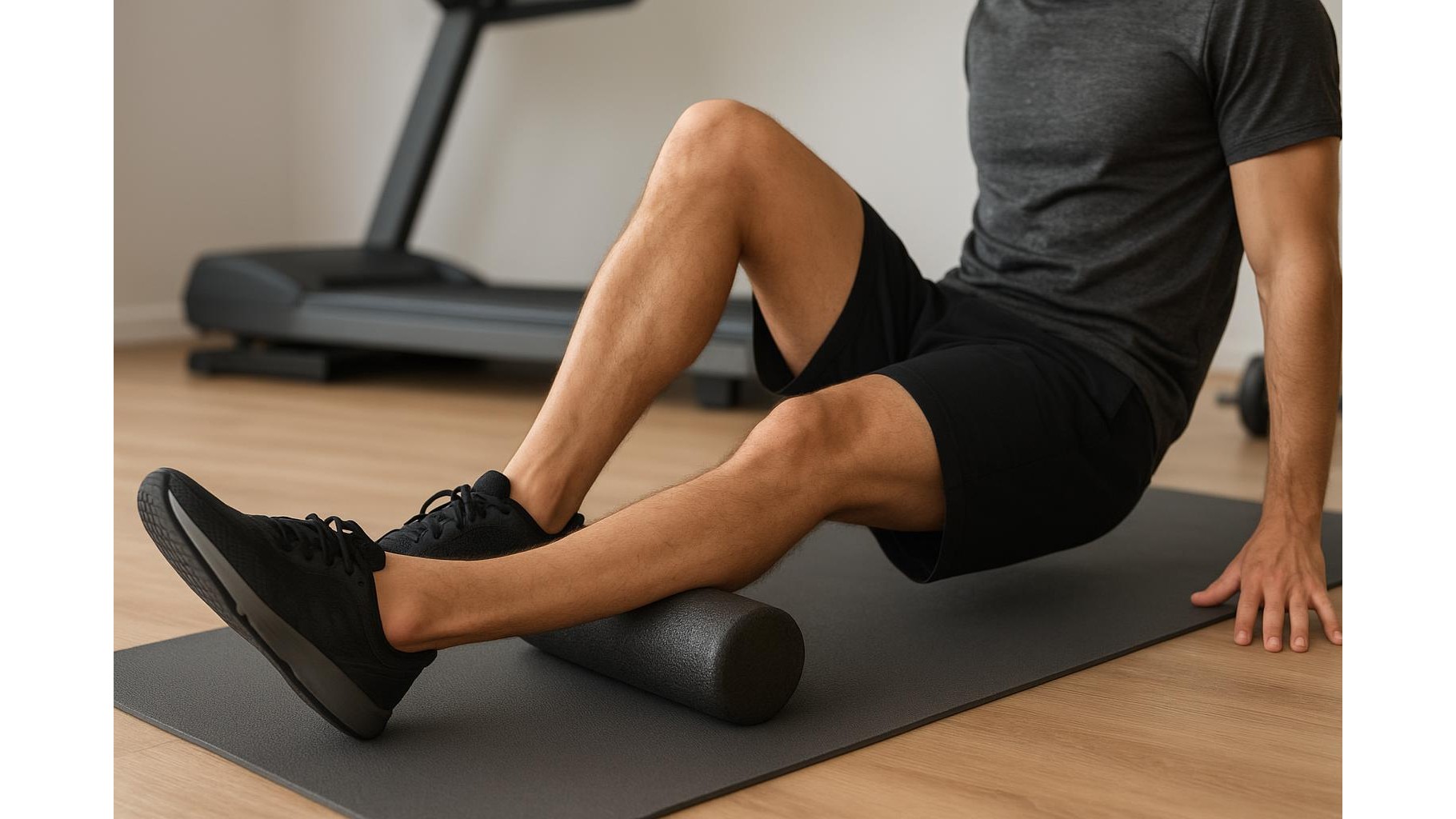
This simple 10‑minute routine targets the key structures that tighten up during treadmill running: calves, shins and plantar fascia. Spend roughly 60–90 seconds per area on each leg. Start with calf rolling: sit on the floor with the roller under one calf, hands behind you supporting your weight. Lift your hips slightly and roll from just above the Achilles to just below the back of the knee, pausing on tender spots for a few slow breaths. Next, shift the roller a little to the outside of the lower leg to reach the peroneal muscles, which stabilise the ankle. Finally, sit with your shin on the roller and gently work along the muscles beside the shin bone, not directly on the bone itself, to ease tension linked to shin splints.
Mobility add‑ons for tight calves and shins
Foam rolling works best when combined with simple mobility drills that teach your lower legs to move freely again. After rolling each calf, immediately follow with a calf stretch: stand facing a wall, place the rolled leg behind you, heel down, and gently press your hips forward until you feel a stretch in the back of the lower leg. Hold 20–30 seconds and repeat with a bent knee to target the deeper soleus muscle. For the shins, try controlled ankle circles while seated or kneeling, drawing slow, full circles with the foot to restore range of motion. You can also perform a few slow heel raises off a step, focusing on smooth, pain‑free movement, to reinforce the new tissue length you have created with the roller.
Progression ideas as your legs adapt
As your calves and shins become less reactive, you can progress your home routine to keep seeing benefits. First, add gentle pin‑and‑flex work: when you find a tight spot on the calf, hold pressure there with the roller and slowly move your ankle through flexion and extension. This helps release specific adhesions that basic rolling may miss. Second, very gradually increase the time spent on problem areas by 30–60 seconds per leg, staying within a tolerable discomfort range. Finally, integrate the routine into your weekly training plan: do the full 10‑minute sequence after your longest treadmill runs, and a shorter 3–5 minute version after easy jogs. Over a few weeks you should notice smoother strides, fewer post‑run twinges and better readiness for your next session.
Putting your foam rolling routine into practice
Consistency matters more than intensity. Keep your foam roller close to your treadmill as a visual reminder, and treat this 10‑minute sequence as the final part of your workout rather than an optional extra. Listen to your body: if an area feels unusually sore, ease off the pressure or reduce the time there, and if pain persists, speak to a health professional. Combined with sensible training progression and good footwear, this short, targeted routine can help you relieve tight calves and shins, protect against overuse issues and make your home treadmill runs feel lighter, smoother and far more enjoyable.