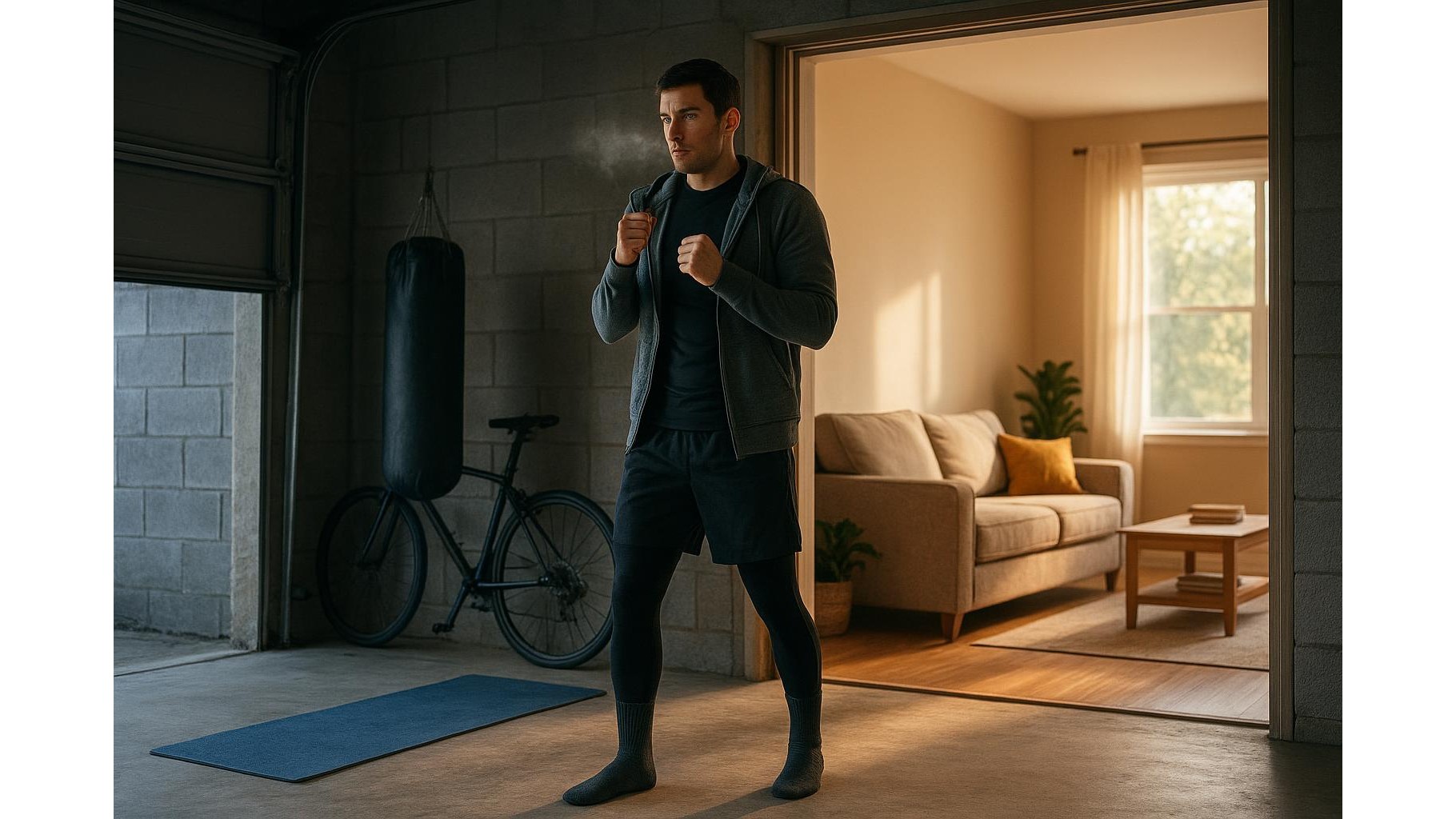
Training at home often means moving between a cool bedroom, a warm living room and a chilly garage in the same session. Instead of stopping to change clothes every 20 minutes, you can build a smart home gym outfit based on layering and the right technical fabrics. With a few well‑chosen tops, bottoms and socks, you can stay comfortable as your body and room temperature change, while keeping your focus on performance instead of wardrobe management.
Why layering matters in a multi‑room home workout
When you shift between cold and warm rooms, the biggest challenge is managing body heat and moisture. In a cold bedroom or garage, you need enough insulation to warm up your joints quickly. As you move into a warmer living room or your heart rate climbs, that same insulation can become a sauna. A layered home gym outfit lets you adjust on the fly: start with a close‑fitting base layer that wicks sweat, add a light mid‑layer you can unzip or remove, and finish with flexible bottoms and breathable socks. This way, you fine‑tune temperature by removing or opening layers rather than changing everything.
Base layers that work from cool to warm
The foundation of any versatile home gym kit is a moisture‑wicking base layer. Look for synthetic or blended fabrics that pull sweat away from the skin and dry quickly, so they feel warm in a chilly room but do not stay wet when you heat up. A close but non‑restrictive fit is essential: it should hug the body without compressing your breathing. In practice, this means long‑sleeve tops or fitted tees that you can wear alone in a warm room, or under a hoodie in the cold. Prioritise pieces marketed as training tops, performance layers or thermal base layers rather than casual cotton; cotton absorbs sweat and will feel clammy when you move to a cooler space mid‑session.
Smart mid‑layers: hoodies, zip‑ups and light shells
The mid‑layer is your on/off temperature dial. A lightweight zip hoodie or training jacket is ideal because you can regulate heat without pausing your workout. Start zipped up in the garage or a cool bedroom to protect your shoulders and elbows, then gradually unzip or remove it as your body warms. For home gym use, favour thin, stretchy fabrics that do not bunch at the elbows when you perform presses, rows or push‑ups. Thumb holes and snug cuffs help keep sleeves in place during dynamic moves. A hood can be useful for the first few sets in a very cold space, then pushed back when you head into the living room. Neutral colours also make it easy to pair with different base layers across the week.
Bottoms that adapt: leggings, joggers and shorts
Your lower body needs both mobility and thermal control. One of the most adaptable strategies is to combine light leggings with breathable shorts. Start your workout in a cold room wearing both; as you transition to a warmer area or into high‑intensity intervals, you can strip off the leggings and continue in shorts without a full outfit change. For strength or mobility sessions in cooler spaces, slim joggers with tapered ankles keep warmth around the knees and prevent fabric from catching on equipment. Prioritise quick‑dry and four‑way stretch materials with a secure waistband that stays put during squats, deadlifts and lunges, even when you are layering pieces over or under them.
The underrated hero: performance socks
Feet often get ignored in home gym outfit planning, but they are crucial for comfort when moving between cold and warm floors. Choose performance training socks made from breathable, moisture‑wicking fibres with light cushioning under the heel and forefoot. In a cold garage, the extra padding helps insulate against concrete or tiles; in a warm living room, the ventilation zones prevent overheating. Ankle‑length or crew‑length designs add a bit of warmth around the Achilles without feeling bulky. Multipacks are ideal so you can rotate pairs across the week and avoid damp socks during back‑to‑back sessions.
Putting it all together for seamless home sessions
To build a truly versatile home gym wardrobe, think in systems, not single items. Combine a sweat‑wicking base layer, a light zip‑up mid‑layer, adaptable bottoms (like leggings plus shorts) and technical socks you can rely on across different rooms. This setup lets you start warm in a cool space, shed heat gradually as you move or intensify, and stay dry enough that shifting back to a cooler room does not feel like stepping into an ice bath. With a small selection of smart, layered pieces, you reduce friction, save time between sets and keep your focus where it belongs: on consistent, high‑quality training at home.