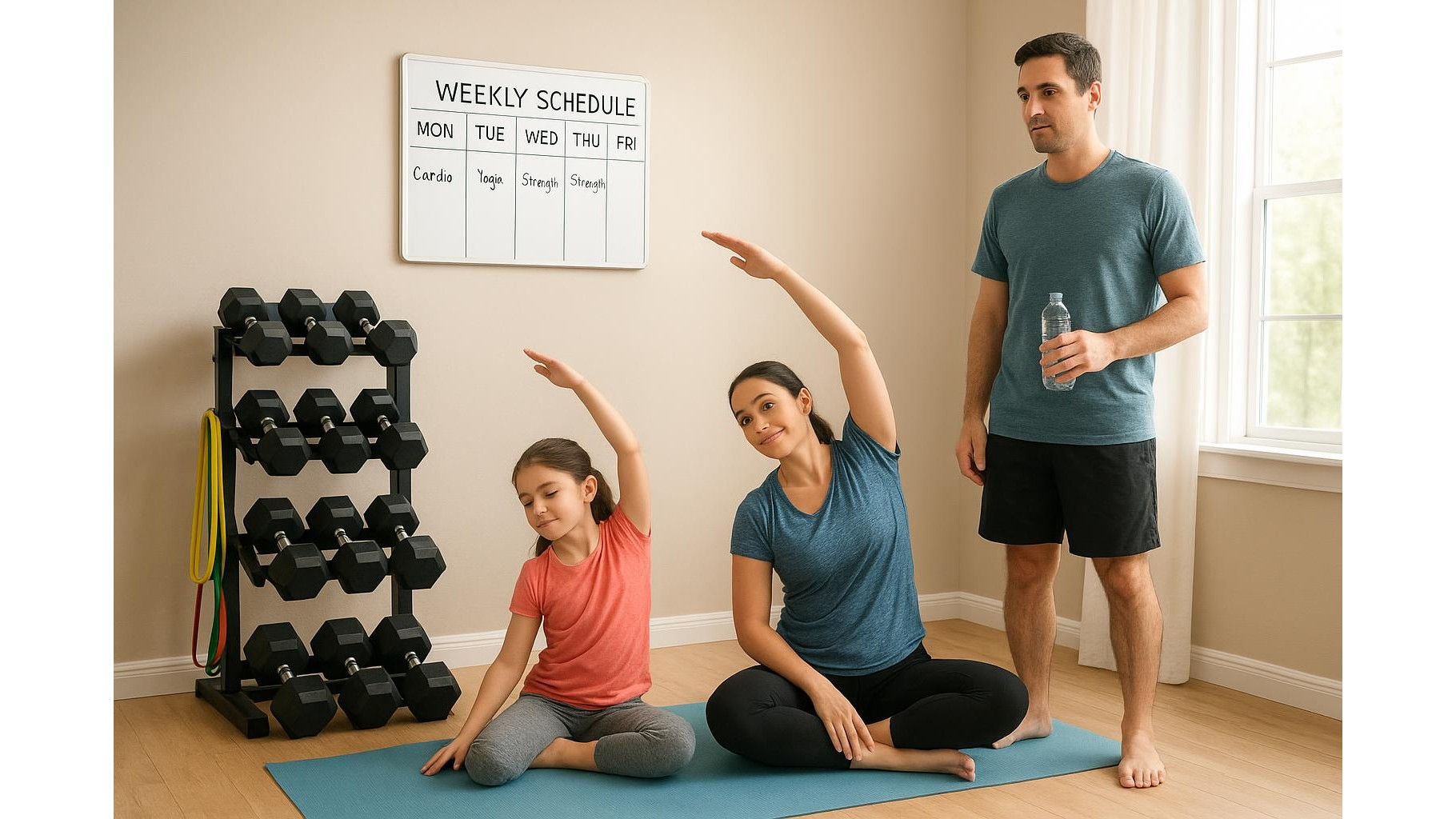
When several people use the same home gym, the risk of overuse injuries, rushing workouts and family tension grows quickly. A smart recovery routine and a few clear rules can transform a crowded corner of the house into a shared wellness space where everyone trains safely. Focusing on scheduling, warm-up and cooldown, and cleaning habits will protect both your body and your equipment.
Plan the family training schedule
In a shared home gym, recovery starts with a realistic weekly plan. Create a simple timetable where each family member books their slots, alternating high‑intensity days with lighter sessions. For example, pair a parent’s heavy strength workout with a teenager’s mobility or core session so equipment is rotated instead of constantly loaded the same way. Encourage at least one full rest day from the gym for everyone, and add short, low‑impact walks or stretching instead. Clear scheduling avoids clashes, prevents someone from feeling rushed off the treadmill and reduces the temptation to “squeeze in” extra sets that lead to overtraining.
Warm‑up rituals that protect shared joints
Because different bodies use the same kit, a structured warm‑up is crucial. Start every session with 5–10 minutes of light cardio: brisk walking on the spot, gentle cycling, or step‑ups on a stable platform. Then add dynamic moves that match the equipment you’ll share: leg swings and hip circles before squats, arm circles and band pull‑aparts before pressing, controlled walkouts and lunges before deadlifts. Make this warm‑up routine visible on a printed card in the gym so every family member follows the same joint‑friendly sequence. A shared ritual reduces the risk that one person jumps cold onto the bench or rowing machine and later blames the equipment for aches and pains.
Smart cooldown and daily recovery habits
Cooldowns are usually skipped when the next person is waiting to train, but that is exactly when they matter most. Reserve the final 5–10 minutes of each slot for stretching and breathing. Focus on the muscles that just worked: calves and hamstrings after treadmill intervals, chest and shoulders after pressing, glutes and lower back after squats or deadlifts. Slow nasal breathing helps bring the heart rate down and signals the nervous system that the body can start to recover. Encourage family members to keep a simple log of sleep, soreness and stress; if someone reports repeated tightness in the same area, adjust the weekly plan with more mobility work and lighter loads to avoid chronic overuse.
Cleaning rules to keep the home gym healthy
Shared gear demands shared hygiene rules. Keep a visible station with towels, a mild disinfectant spray and a small bin. After each session, wipe down benches, mats, handles and touch‑points on cardio machines. This is not only about cleanliness; removing sweat and chalk build‑up protects grips and upholstery, extending the life of your equipment. Establish a simple checklist: put weights back on the rack, disinfect used surfaces, hang resistance bands neatly. When everyone follows the same routine, the gym feels welcoming instead of chaotic, and nobody wastes their limited training window hunting for dumbbells or clearing clutter.
Equipment rotation to avoid overuse and conflict
In a busy family gym it is easy to fall into the habit of using the same equipment every day—often the most popular items like the treadmill, bench or a favourite pair of dumbbells. To prevent this, build sessions around movement patterns (push, pull, hinge, squat, core) rather than specific tools. For example, if one person is using the bench and heavy weights, another can perform push‑ups on the floor or banded rows. Agree on time limits for the most in‑demand stations and switch every 10–15 minutes if necessary. Rotating tools spreads the load across different joints and muscles, reducing repetitive strain and improving overall fitness variety.
Communication rules that keep peace in the gym
Recovery is also emotional: tension in a shared gym often comes from poor communication. Set a few house rules, such as no interruptions during a set, no criticism of others’ performance and always asking before changing the weight or height settings. Encourage each person to voice how their body feels that day and adjust plans accordingly, instead of competing. A short weekly “gym meeting” helps review what worked, any equipment niggles and whether anyone needs extra rest. When the family treats the home gym like a cooperative space rather than a battleground, recovery improves naturally and everyone is more likely to stay consistent.
Sharing a home gym successfully is less about having perfect equipment and more about adopting smart routines. With clear scheduling, structured warm‑ups and cooldowns, consistent cleaning and open communication, your family can enjoy efficient workouts without burnout or unnecessary aches. Protect the space, respect each other’s needs and you will turn a crowded home gym into a long‑term asset for everyone’s health.