
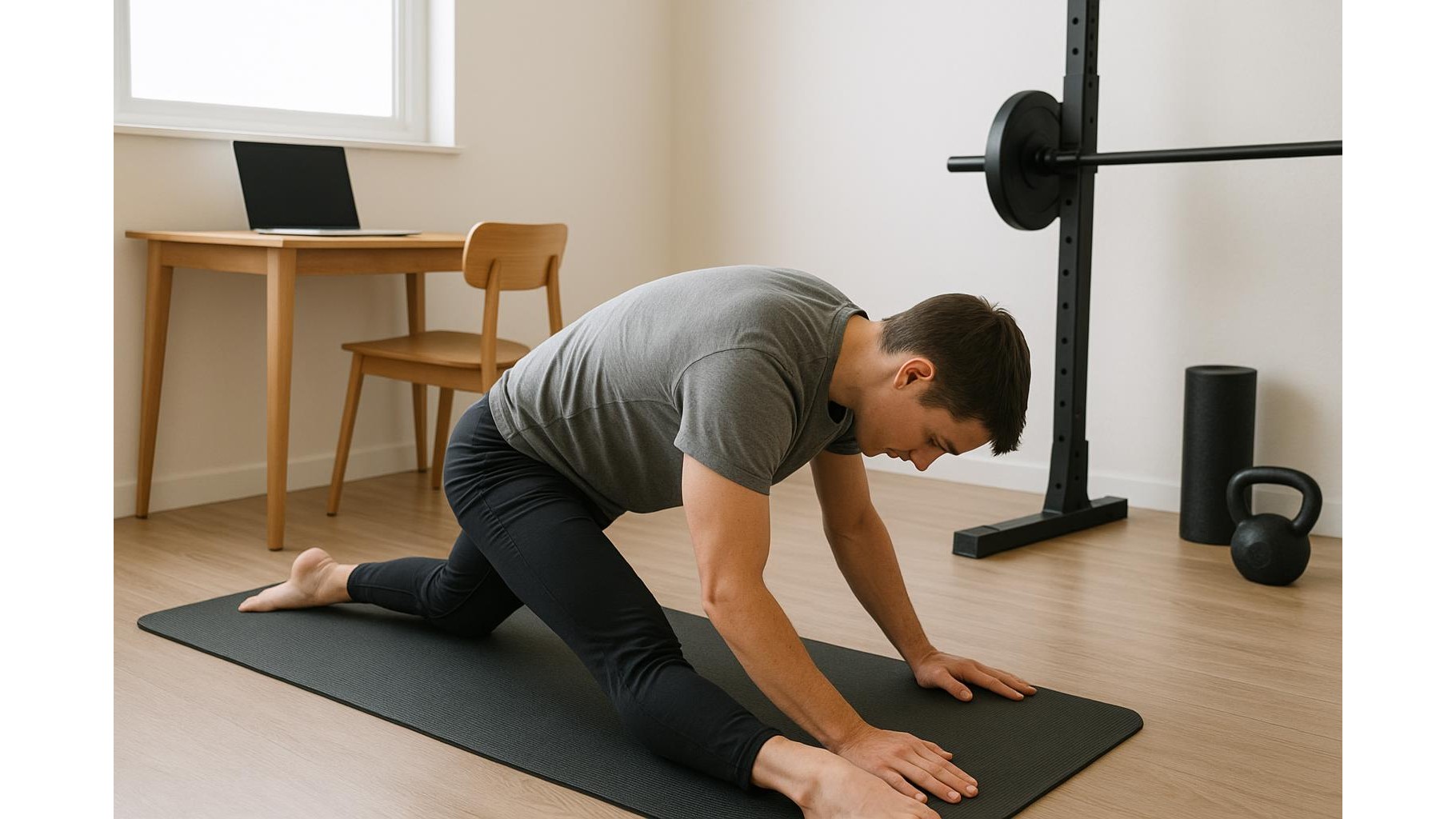
Long computer days can leave your body feeling locked up, especially in the hips, ankles and upper back. That stiffness doesn’t just feel uncomfortable – it also reduces the quality of your home workouts, from squats to push-ups and even your easy cardio. This 30-minute, equipment-light mobility routine is designed to take you from desk to mat, reset your posture and help you move better in your next training session.
Set up your space and intention
Before you start, clear a small area where you can comfortably lie down and lunge without bumping into furniture. A simple exercise mat or even a folded rug is enough; the key is having a non-slip surface so you can relax into the positions. Switch your phone to silent, set a 30-minute timer and think of this as a “movement shower” after your workday. The goal isn’t to sweat or chase reps, but to explore ranges of motion and reconnect with your body. Breathe slowly through your nose, keep tension low and move with control – this primes your nervous system for better performance later.
Desk-to-mat reset: spine and upper back
Start on all fours for some gentle cat-camel movements: inhale as you drop your chest and extend your spine, exhale as you round and gently tuck your tailbone. This helps undo hours of slumped sitting. Next, add thoracic rotations: from the same position, place one hand lightly behind your head, rotate your elbow toward the ceiling as you inhale, then toward the supporting arm as you exhale. Aim for 8–10 smooth reps per side. Finish this block with a child’s pose side stretch, walking your hands to each side to open the lats and ribs. These drills restore upper-back mobility so overhead presses, rows and even running posture feel more natural.
Open the hips for better squats and deadlifts
The hips take the biggest hit from prolonged sitting, often leading to tight hip flexors, limited rotation and a cramped bottom position in squats. Move into a half-kneeling hip flexor stretch, gently squeezing the glute of the back leg and keeping your ribs stacked over your pelvis. Avoid aggressively pushing forward; think of lengthening through the front of the thigh. Then transition into a 90/90 hip rotation position on the floor, switching sides slowly to work internal and external rotation. Finish with a deep supported squat hold, using a chair or doorframe for balance if needed. These focused hip drills can noticeably improve depth and comfort in your lower-body training.
Wake up your ankles for stronger, smoother movement
Stiff ankles can limit squat depth, alter your running stride and make lunges feel wobbly. Start in a half-kneeling knee-to-wall dorsiflexion drill: place your toes a few centimetres from a wall, drive your knee forward over the third toe without the heel lifting, and gently pulse in and out of that range. Rotate your torso slightly in and out to explore different lines across the ankle. Then, from a standing position, perform slow calf raises, focusing on spreading your toes and controlling the descent. Finish with some ankle circles, drawing smooth, deliberate circles in both directions. Better ankle mobility makes everything from goblet squats to step-ups feel more stable and powerful.
Link it all together: flow and breathing
To round out the 30 minutes, combine elements into a simple mobility flow. For example: from standing, walk your hands out into a plank, press back into a downward dog to lengthen calves and hamstrings, step one foot forward into a world’s greatest stretch lunge with rotation, then drop to all fours for a few cat-camel reps. Stand back up and repeat on the other side. Move continuously but unhurriedly for 5–8 minutes, coordinating breath with motion – inhale into open, lengthened positions, exhale as you return or rotate. This integration teaches your body to use the new ranges you’ve opened, so they show up automatically in your strength and cardio sessions.
With just 30 intentional minutes, you can transform how your body feels after a long day at the desk. By targeting the upper back, hips and ankles, you’ll stand taller, move more freely and get more out of every rep in your home gym. Make this desk-to-mat mobility routine a regular part of your week and treat it like any other training block: consistent, progressive and non-negotiable. Your joints, posture and performance will thank you.









