Heavy pulling sessions, kettlebell work and long barbell sets can leave your hands and forearms aching, tight and swollen. A simple home contrast bath routine – alternating warm and cold water – can boost circulation, calm irritation and help your grip feel ready for the next workout. Below you’ll find a practical guide to temperatures, timing and safety so you can use contrast baths confidently after your home strength sessions.
Why contrast baths help tired grips
Contrast water therapy works by cycling your tissues through gentle vasodilation in warm water and vasoconstriction in cold water. This pumping effect can support fluid movement, ease a sense of tightness and promote relaxation in the small muscles and tendons of the hand and forearm. After heavy lifting, your flexors and extensors are often overworked, and the small joints of the fingers can feel stiff. A well‑planned contrast bath can temporarily reduce soreness, support recovery between sessions and help you maintain a strong, reliable grip for deadlifts, pull‑ups and carry work.
Setting up your warm–cold stations safely
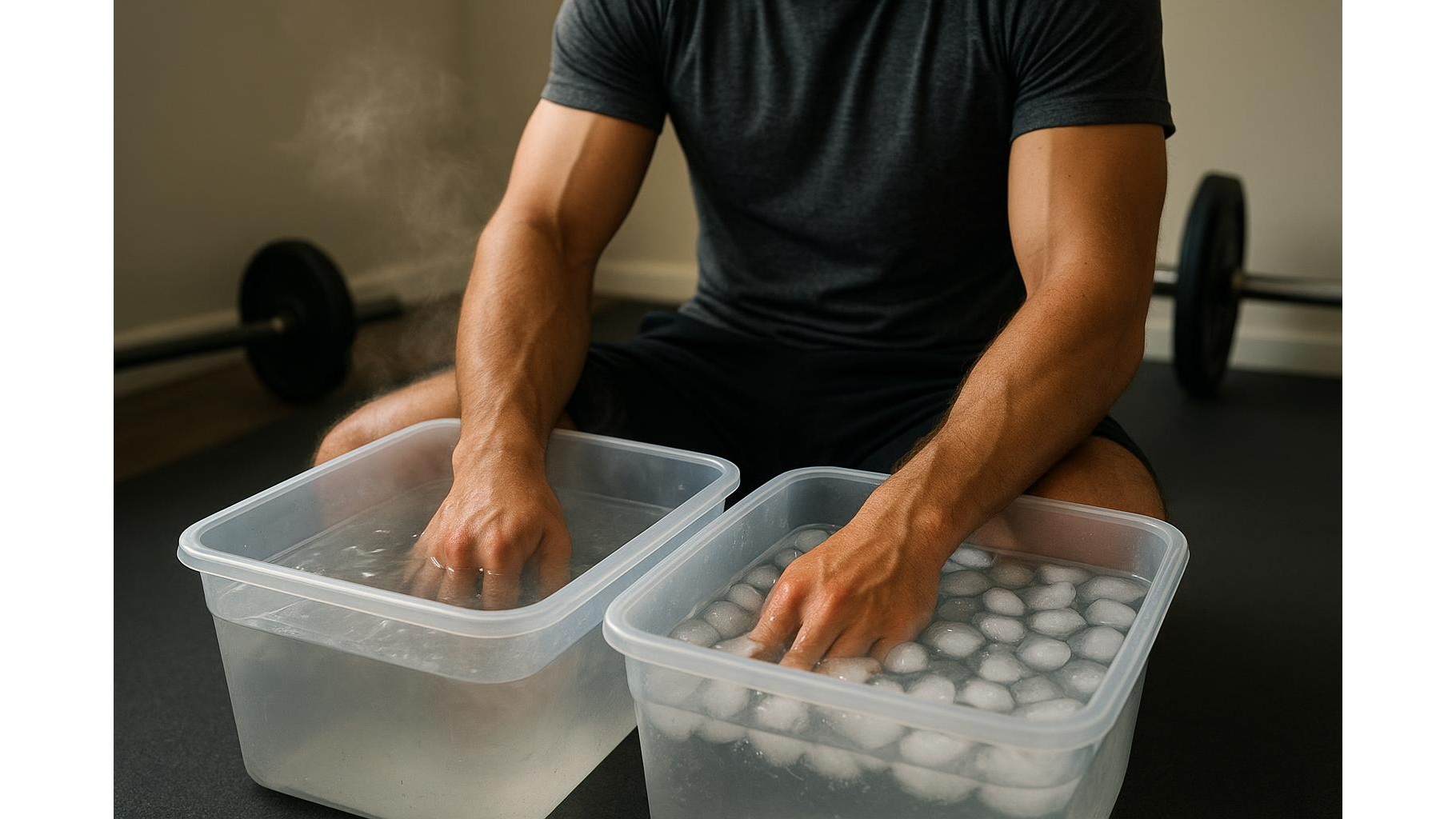
To keep things simple, use two sturdy containers deep enough to cover from your fingertips to just below the elbow. Fill one with warm water at roughly 37–40°C (comfortably warm, never scalding) and the other with cold water around 10–16°C. If you do not have a thermometer, rely on your skin: warm should feel soothing but not hot; cold should feel brisk but tolerable. Add a few ice cubes if the cold water warms up. Keep a towel nearby and ensure the floor around your setup is dry and non‑slippery. Sit in a stable chair so you can fully relax your shoulders and neck while your hands and forearms soak.
Step‑by‑step timing for contrast baths
For healthy lifters without circulation or skin conditions, a classic protocol is 3–4 warm–cold cycles. Start with 3 minutes in warm water to relax tissues, then move to 1 minute in cold. Alternate back and forth for a total of 12–16 minutes, finishing in cold if your hands feel inflamed, or in warm if they mainly feel stiff. During each warm phase you can gently open and close your hands or slowly rotate the wrists to encourage blood flow; keep movements minimal in the cold phase. Limit contrast baths to 3–4 sessions per week, and schedule them after your main training, leaving at least a few hours before bedtime in case the cold phases make you feel more alert.
Listening to your joints, skin and nerves
Even a simple home contrast bath needs a few safety rules. Avoid extremes: water that is painfully hot or painfully cold can irritate nerves and skin rather than help recovery. If you have a history of Raynaud’s phenomenon, vascular disease, diabetes‑related neuropathy, recent fractures, open cuts or skin infections, skip contrast baths unless cleared by a medical professional. During the routine, watch for sharp pain, burning, numbness that does not fade quickly, or unusual colour changes in the fingers – if any appear, stop immediately and warm the area gently at room temperature. After the final cycle, pat your hands dry, apply a light, non‑greasy moisturiser if your skin is dry, and spend a minute lightly shaking out the arms to return to normal sensation.
Integrating contrast baths into your recovery plan
A contrast bath is one useful tool, but it works best as part of a broader grip recovery strategy. Pair your water routine with forearm stretching, light tissue massage using your opposite hand, and easier technique days where overall training volume is lowered. After soaking, perform a few gentle active movements – wrist circles, finger spreads, and light fist squeezes – to take advantage of the improved circulation. Track how your hands feel in the next 24 hours: less stiffness, fewer cranky joints and better bar contact are good signs that the protocol suits you. If soreness is unchanged or worse, reduce the total duration or frequency.
Used with sensible temperatures, moderate timing and awareness of your own medical history, hand and forearm contrast baths can be a simple, low‑cost way to look after your grip after home lifting sessions. They will not replace smart programming, technique or load management, but they can make your recovery more comfortable and consistent. Experiment cautiously, keep notes on how you respond, and build a post‑training routine that keeps your hands strong, supple and ready for your next pull.