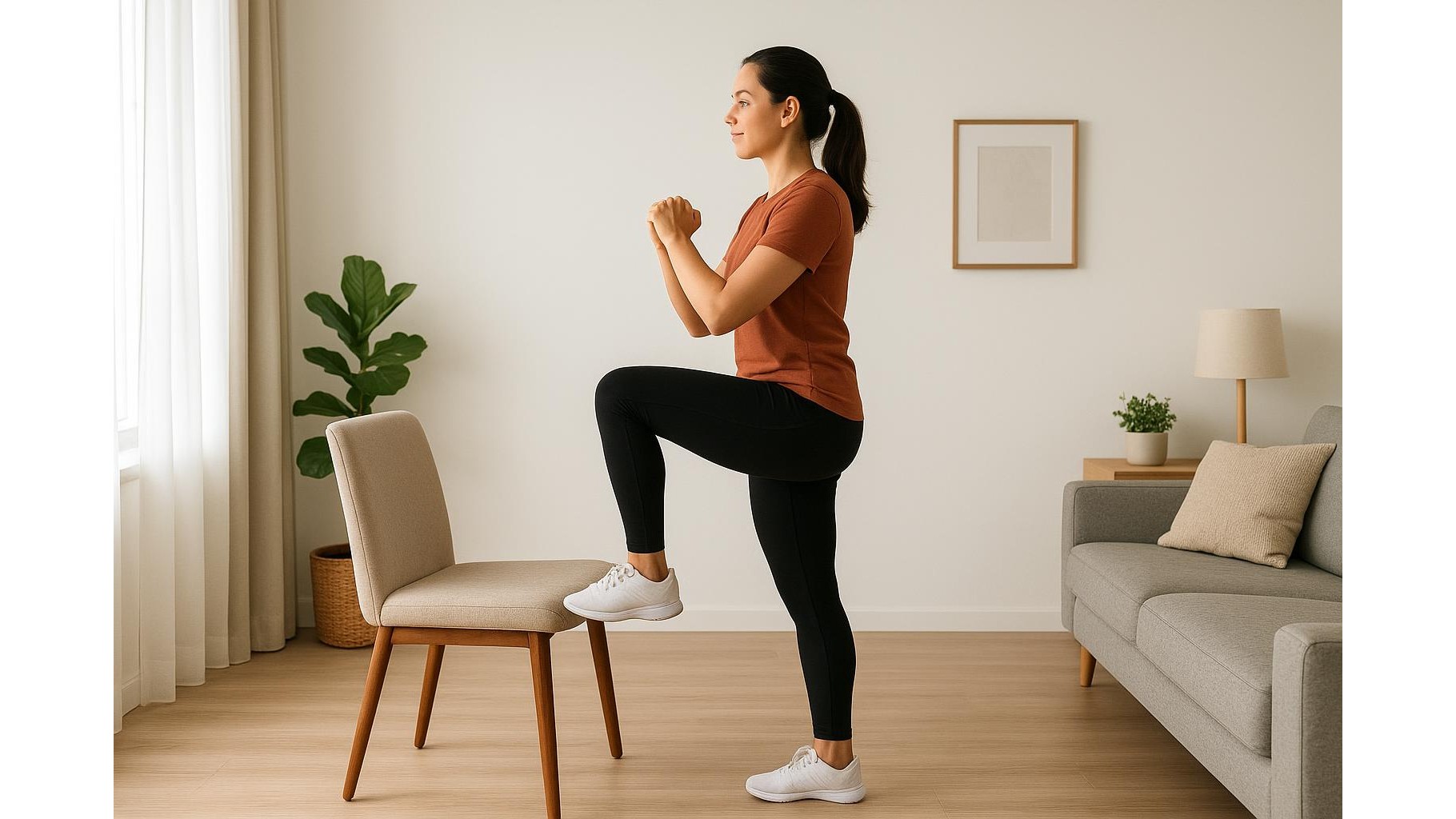
Living in a small home or struggling to get down on the floor does not mean giving up a full body workout. With a bit of planning, you can combine standing strength and low‑impact cardio into a smooth 30‑minute routine that needs only a wall, a sturdy chair and a couple of simple tools. This makes it ideal for beginners, older adults, or anyone dealing with mobility issues who still wants an efficient home workout without a mat, burpees or floor exercises.
Set up your safe standing workout space
Before you start, clear a small area where you can comfortably take a few steps forward and to the side without bumping into furniture. Place a sturdy chair with a backrest against the wall so it cannot slide, and keep a bottle of water within reach. Warm up with 3–5 minutes of gentle marching in place, shoulder rolls and easy arm circles to get your joints ready. Focus on upright posture: feet hip‑width apart, knees soft, ribs stacked over hips, shoulders relaxed. If you feel unsteady, lightly rest one hand on the chair or a wall for balance throughout the session.
Upper body strength without the floor
You can train your chest, back, shoulders and arms effectively while staying on your feet. Use the wall for wall push‑ups: stand an arm’s length away, hands flat on the wall at chest height, bend your elbows to bring your chest toward the wall, then push back. For the back and biceps, perform standing rows by hinging slightly at the hips and pulling your elbows behind you with or without light weights. Shoulder presses and lateral raises can also be done standing, using water bottles or light dumbbells. Aim for 2–3 sets of 10–15 controlled reps, keeping movements slow and pain‑free. Rest as needed, but keep your body gently moving between sets with easy marching.
Lower body and balance using just a chair
The chair becomes your best friend for leg strength and balance training. Start with sit‑to‑stand squats: sit on the chair, plant your feet firmly, lean slightly forward and stand up using your legs, then lower back down with control. This mimics a squat without needing to drop to the floor. Add supported lunges by holding the chair back with one hand, stepping one foot back and bending both knees slightly, then returning to standing. For hip and glute strength, stand side‑on to the chair and perform standing leg lifts to the side and behind you. Work for 8–12 reps per leg, focusing on stability rather than depth. These moves strengthen the muscles that support your knees and hips and improve everyday movements like climbing stairs.
Low‑impact standing cardio intervals
To boost heart health without jumps or floor work, add simple standing cardio intervals. Alternate 30–45 seconds of marching in place, side steps or low knee lifts with 15–30 seconds of easy walking on the spot. Keep one hand on the chair if you feel wobbly. You can increase intensity by swinging your arms, speeding up your steps or adding gentle standing punches across the body. A 10‑minute block of these intervals within your 30‑minute routine can significantly improve circulation, endurance and mood while staying joint‑friendly and apartment‑neighbour‑friendly.
Core and posture work without getting down on the ground
Core training does not have to mean crunches on a mat. Use standing core exercises that challenge your midsection while you remain upright. Try standing tall with feet hip‑width apart, gently drawing your navel toward your spine, then performing slow standing knee raises, lifting one knee toward your chest and lowering it with control. Add standing cross‑body reaches, bringing one arm across your torso while tightening your core. You can also face the wall, place your forearms on it and lean slightly forward, holding a gentle standing plank variation for 15–30 seconds. Focus on breathing steadily and keeping your spine long. Over time, this improves posture, balance and back support without any floor contact.
By combining these standing strength moves, chair‑supported lower body drills, low‑impact cardio bursts and upright core work, you can build a complete full body workout that fits into a 30‑minute window and a very small space. Adjust the duration of each block to match your fitness level, and stop any exercise that causes pain or dizziness. With consistency, this floor‑free routine can help you gain strength, improve balance, support healthy joints and boost your daily energy levels — all without ever getting down on the ground.