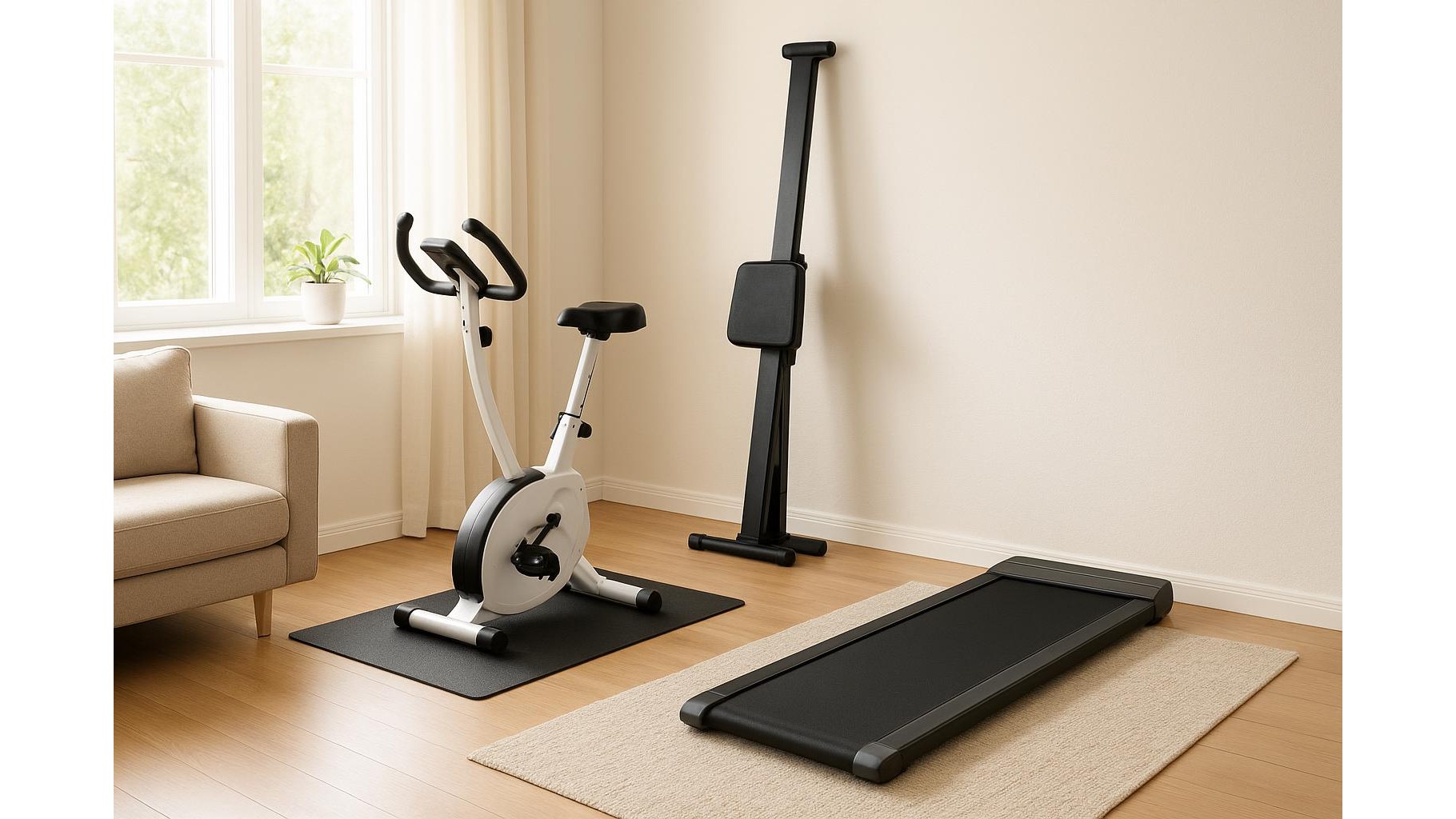
Designing a smart cardio combo strategy is the key to getting more fitness from less space. If you own a compact exercise bike, a rower and a walking pad, you can turn one tight corner into a versatile home gym that supports daily movement, structured workouts and active recovery. The trick is planning your layout, managing noise and rotating the machines across the week so nothing gathers dust.
Choosing compact machines that actually fit
When you are working with a single corner, footprint and storage options matter as much as resistance levels. A slim folding exercise bike lets you sit upright or slightly leaned forward without your knees hitting a desk or wall, while many modern walking pads slide under a sofa or bed when not in use. A low-profile rower that can stand vertically against a wall or tuck behind a door is ideal. When assessing any machine, look at the length and width in use, plus the folded size; then compare that to your exact corner dimensions and door clearances. Leave at least 30–40 cm of buffer space around the bike pedals and rower handle path so your form is not compromised.
Smart layout in one small home corner
The most efficient layout for a triple-cardio corner is usually L-shaped. Place the walking pad parallel to the longest wall; it can stay down if you walk while working, or be stood upright when you need floorspace. Position the bike at the open end of the pad so you can mount it without stepping over anything, and keep the rower stored vertically against the shorter wall, rolling it out only for sessions. Using a cheap furniture slider or small mat under each base makes it easier to shuffle machines without scratching floors. Keep a compact rack or wall hooks nearby for essentials like a heart-rate monitor, towel and resistance bands, so your cardio corner feels like a tiny but complete studio.
Noise and neighbour-friendly cardio planning
In apartments, noise and vibration control can make or break your routine. Walking pads are generally the quietest option, especially at low speeds for zone 2 cardio or work calls. Use them early in the morning or late at night when you need to be discreet. An exercise bike with magnetic resistance is typically quieter than one with a loud fan wheel, and a rower with a smooth belt drive and rubber feet will transmit less vibration through the floor. Add a dense rubber mat under each machine, avoid sprint intervals at antisocial hours, and reserve higher-intensity rowing or cycling for daytime. If you share walls, angle machines so your effort faces inward; you will naturally reduce stomping and jerky movements, which further cuts vibration.
Programming a weekly cardio rotation
With three machines, the real magic is in the weekly programming. Think in simple themes: use the walking pad for longer, low-intensity sessions; the bike for moderate intervals and low-impact conditioning; and the rower for short, powerful workouts that hit both cardio and upper body. For example, a balanced week in a small space might look like this: two days of 30–45 minutes easy walking while working; two days of 25–35 minute bike intervals (5-minute warm-up, 10–15 minutes of short efforts, 5–10 minutes cool-down); and one or two days of 10–20 minute rowing sessions with technique focus and brief sprints. Rotate emphasis every 4–6 weeks so each machine gets a turn as your “main” tool, preventing both boredom and overuse niggles.
Making your corner routine sustainable
The best home cardio strategy is the one you can maintain. Keep your machines visible but not intrusive: if the walking pad or bike is already in position, you are far more likely to step on for 10 minutes. Pre-set a few favourite workouts (for example, a go-to 20-minute row or a default 30-minute walk pace) so you do not waste time deciding what to do. Track simple metrics like weekly time on each machine instead of obsessing over calories, and adjust based on how you feel and sleep rather than chasing constant intensity. By rotating your bike, rower and walking pad intelligently, one small home corner can deliver year-round cardio variety, better recovery and a routine that genuinely fits your lifestyle.
In summary, a compact cardio combo setup is about integration, not just equipment. Choose machines with small footprints and smart storage, arrange them in an L-shaped or linear layout that respects movement and safety, manage noise with mats and time-of-day choices, and program a weekly rotation that plays to each tool’s strengths. With a thoughtful plan, even the tiniest home corner can function as a flexible, efficient cardio hub you will actually use.