
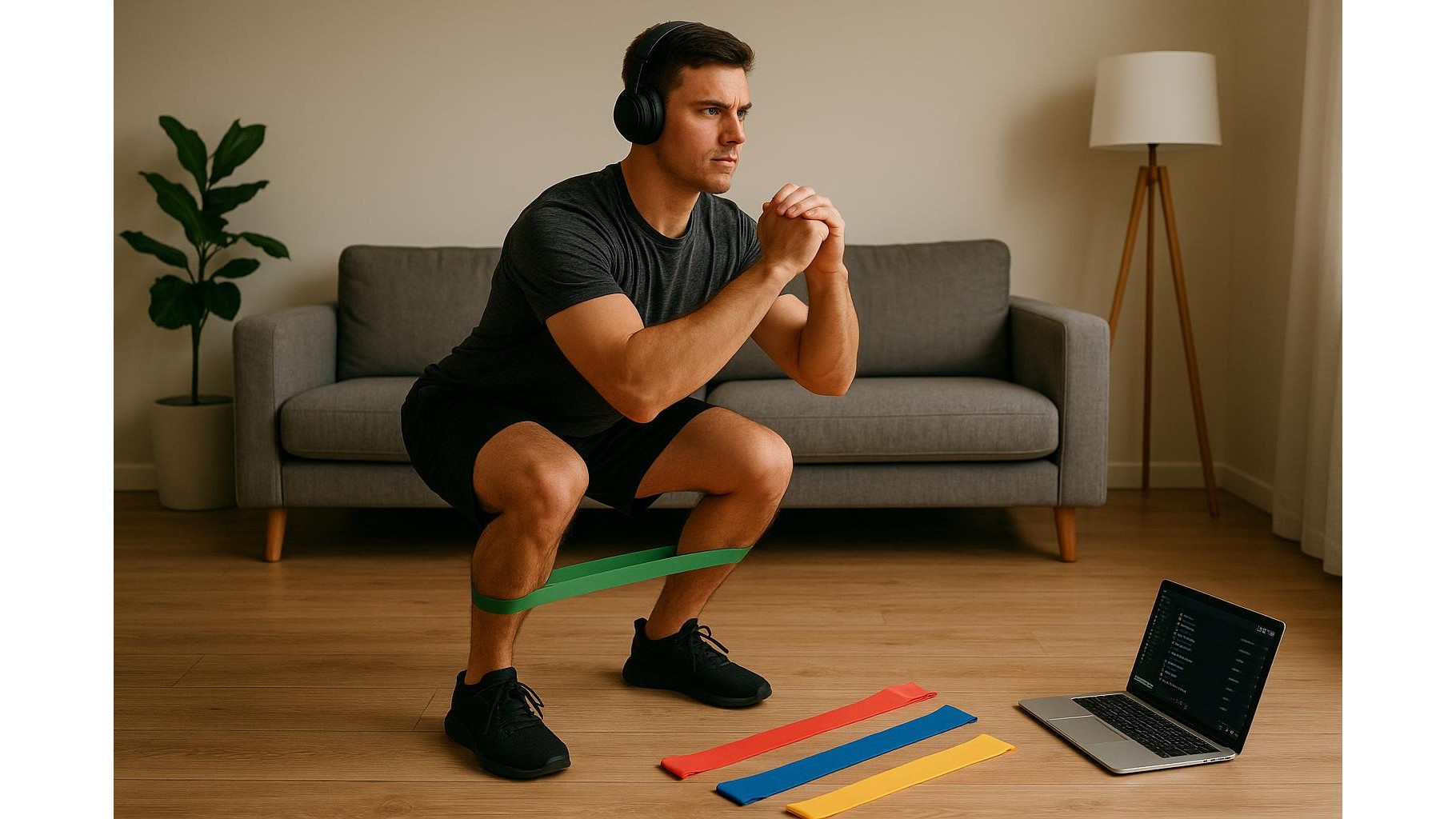
Training at home doesn’t have to mean random reps and boring timers. A full body resistance band workout can become far more engaging if you let your favourite tracks dictate the rhythm. In this 40‑minute plan, you will use the tempo of songs to control lifting speed, time under tension and rest periods, turning a small living room into a focused strength studio without any bulky machines.
Why use music beats instead of timers?
Traditional interval apps beep at you, but they rarely help you feel the muscle working. By matching your reps to the beat of the music, you naturally slow down, control the movement and avoid rushing through sets. A slower cadence on the down phase (eccentric) builds strength and joint control, while the up phase (concentric) follows the rhythm for consistency. You also know when to rest: switch song or wait for the chorus change. This makes the session more intuitive, reduces the need to watch screens, and turns your playlist into a personal tempo trainer.
What you need in a small living room
For this workout, you only need space to take a couple of steps in any direction and a reliable set of resistance bands. Choose at least one long loop band for squats and rows, and one tube band with handles for presses and curls. Pick bands with different resistance levels so you can match the tension to the tempo: heavier bands for slow tracks around 80–100 BPM, lighter bands for faster songs around 120 BPM or more. Add a door anchor if possible, so you can set up horizontal rows and chest presses off the door frame without drilling or extra hardware.
40‑minute full body tempo structure
Think of the session as four blocks of about 8–10 minutes each. Block 1 focuses on lower body (banded squats and hip hinges) with a slow track to emphasise control: for example, 4 beats down, 1 beat pause, 2 beats up. Block 2 targets the back and chest with rows and presses synced to a medium‑tempo song. Block 3 moves to shoulders and arms, using lighter bands and slightly faster tracks. Block 4 finishes with core and conditioning: banded dead bugs, Pallof presses and quick band pull‑aparts. Rest by simply letting one full verse or chorus pass without lifting, then re‑start when the music shifts again.
Exercise examples with tempo cues
For banded squats, stand on the band and hold the ends at shoulder height. Inhale as you lower for 4 beats, pause at the bottom for 1 beat, then stand up for 2 beats. For a banded row using a door anchor, step back until there is tension at arm’s length. Pull on 2 beats, squeeze your shoulder blades for 2 beats, then return slowly for 4 beats. Banded chest presses, overhead presses, curls and triceps extensions can all follow similar patterns: slower on the way down, slightly faster but still controlled on the way up. Aligning each phase with the song keeps your pacing consistent across the entire workout.
Tips to progress your tempo training
To keep improving, adjust one variable at a time. You can choose slightly slower songs to lengthen time under tension, increase band resistance while keeping the same BPM, or add an extra verse of work before resting. Another option is to use playlists with structured changes: slower tracks for strength blocks, then higher‑tempo songs for conditioning. Track your sessions by writing down which bands and which playlists you used, so you can revisit successful combinations. Over time this beat‑based approach improves not only strength and endurance, but also coordination, rhythm and overall training enjoyment.
Bringing tempo resistance training into your routine
This 40‑minute at‑home resistance band workout shows that you do not need complex timers or big equipment to train effectively in a small room. Letting the music tempo guide your lifting speed and rest makes the session more intuitive and helps maintain strict form from warm‑up to final rep. With just a couple of well‑chosen bands and a curated playlist, you can build full‑body strength, control and focus, turning everyday living room time into productive tempo‑driven training.









