Building a home calisthenics space is exciting, but if your clothes ride up during pull-ups, slip during hanging leg raises or snag on the floor in handstands, your session quickly becomes frustrating. The right home gym outfits for calisthenics balance grip, coverage and freedom of movement so you can focus on technique instead of fixing your top or pulling up your shorts.
Choosing tops that stay put during hangs and levers
For pull-ups, front levers and bar work, prioritise slim-fit, moisture‑wicking tops that don’t flap or roll. Look for light compression or close-cut training shirts in technical fabrics that move with you and dry quickly. Avoid overly loose cotton, which can twist around the bar on swings or obscure your vision in inverted positions. A good rule: if a top shifts when you raise your arms overhead, it will be worse in dynamic kipping or explosive pull-ups. For women, pairing a medium‑support sports bra with a fitted tank provides coverage for inverted work while letting your shoulders and scapula move freely.
Bottoms for floor work, hip mobility and bar transitions
Calisthenics involves deep squats, pistols, L‑sits and transitions from floor to bar, so your bottoms must allow full range of motion without slipping or becoming see‑through. Choose high‑waisted leggings or compression shorts that hug the waist and stay in place during hollow holds and skin‑the‑cat transitions. Four‑way stretch fabrics with flat seams reduce chafing when you roll on your back or press into handstands. Steer clear of wide, heavy shorts that catch on your knees during tuck jumps or snag on parallettes and rings; instead, opt for mid‑thigh training shorts with a secure waistband if you prefer a looser look over compression layers.
Grip, socks and going barefoot on different home surfaces
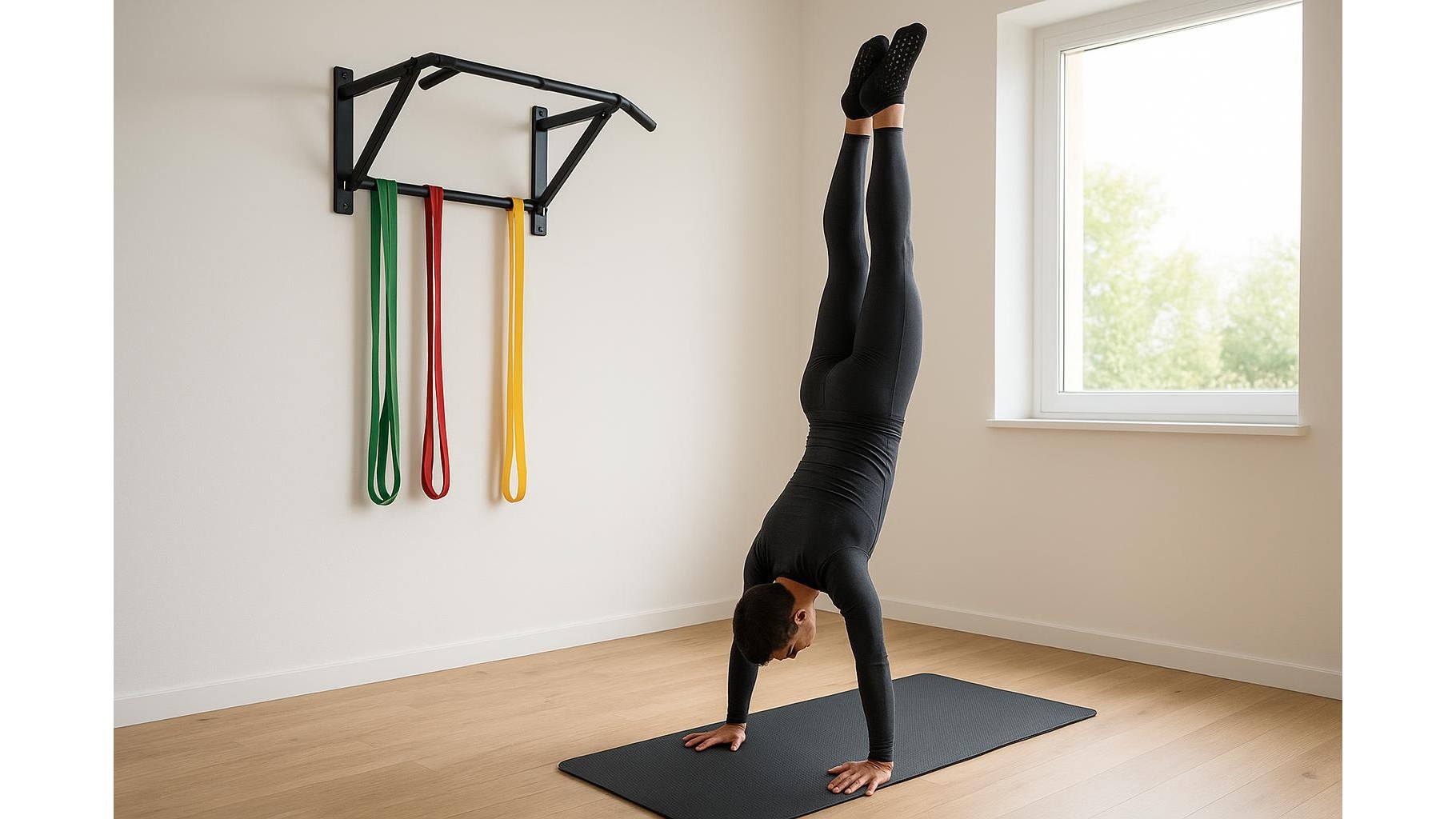
Your choice of footwear affects balance on handstands and stability in squats. On rubber tiles or mats, many athletes prefer going barefoot for maximum feedback and grip. On slippery wooden floors, consider grip socks with silicone patterns under the sole to prevent sliding in plank, pike or crow positions while still allowing toe articulation. Avoid thick, cushioned running shoes for skill work: they reduce ground feel, make balancing harder and can snag during floor transitions. If you need shoes for support or shared spaces, pick minimal training shoes with thin, flat soles so you stay stable in pistol squats and Nordic curls.
Balancing coverage, comfort and confidence at home
Even in a home gym, coverage matters for both comfort and performance. Tops that are slightly longer in the torso or feature a subtle drop hem stay anchored when you raise your arms into overhead pressing, wall walks and handstand kick‑ups. Anti‑slip waistbands and drawstrings keep bottoms locked during toes‑to‑bar and hanging knee raises. Prioritise soft, breathable fabrics with smooth labels or tag‑less designs, since you’ll spend a lot of time lying on the floor for hollow holds, arch holds and mobility drills. Feeling secure in your outfit boosts confidence, helping you commit fully to new skills without worrying about wardrobe distractions.
Accessories that support calisthenics flow at home
Smart accessories complete your home calisthenics outfit. Lightweight training gloves or simple wrist wraps can reduce friction during high‑volume bar work, though many athletes prefer bare hands for better grip development. A thin, non‑slip exercise mat or yoga mat prevents forearm and knee discomfort during planche leans, elbow stands and floor mobility flows. Headbands or sweat‑wicking caps keep hair and sweat out of your eyes so you maintain focus in inverted positions. Keep a towel nearby, and consider quick‑dry fabrics for all clothing so you can move from strength sets to mobility without feeling weighed down by sweat.
Curating the right home gym outfits for calisthenics means thinking beyond style and focusing on grip, coverage and freedom of movement. Fitted tops, secure bottoms, smart choices for feet and a few helpful accessories can transform your sessions, making pull-ups, levers and floor work smoother and more enjoyable. With distractions removed, you’re free to focus on progressive overload, clean technique and unlocking new skills in your home gym.