
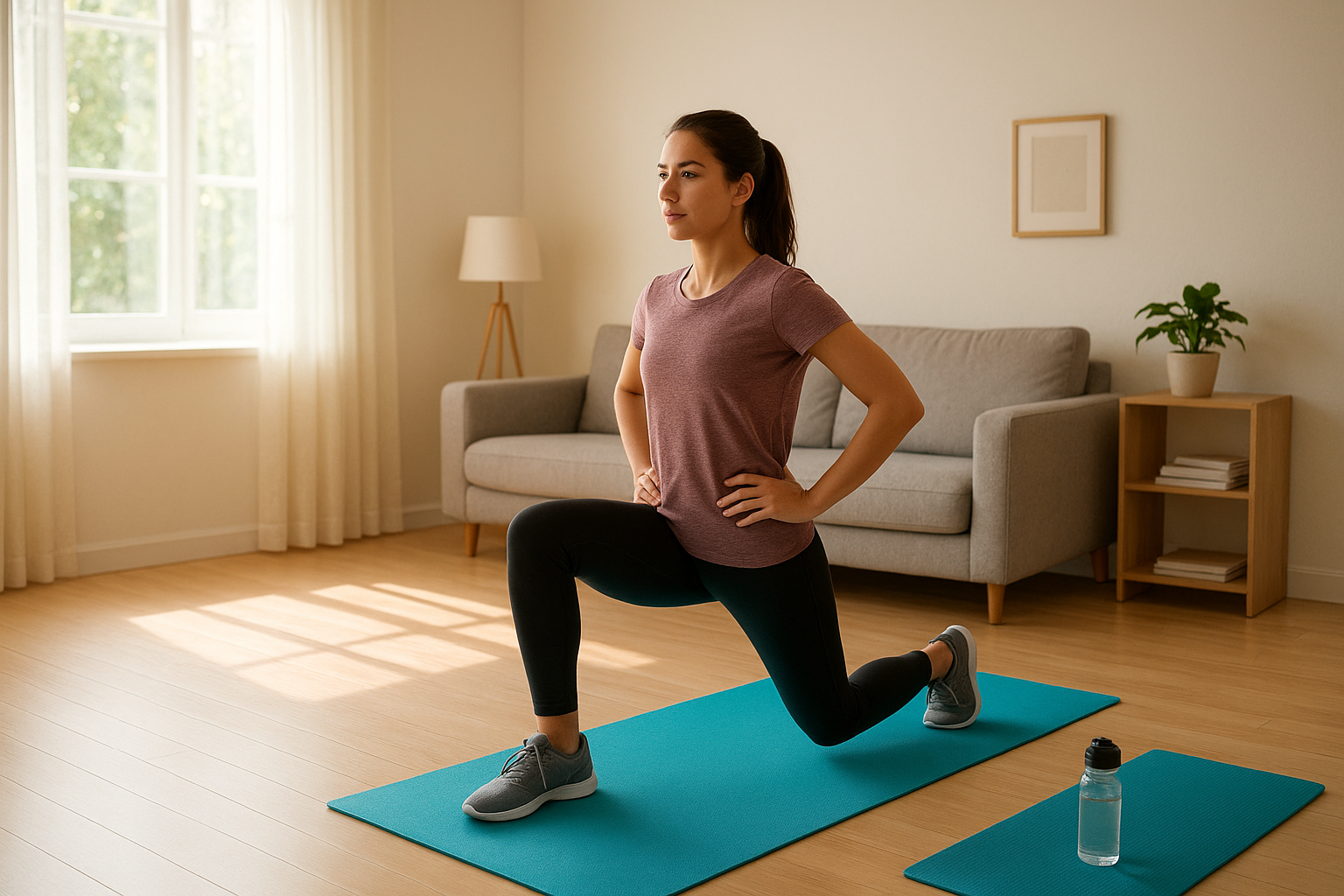
A packed week can leave your body tight, tired and craving a reset. This 45-minute home workout is designed exactly for that: a simple, equipment‑light routine you can do in your living room that blends strength training, mobility work and low‑impact cardio. Think of it as a weekly systems reboot for your joints, muscles and heart, helping you move better, feel energised and stay consistent with your home fitness goals without needing a full gym setup.
Set up your space and structure your 45 minutes
Before you start, clear a safe area about the size of a yoga mat and grab a bottle of water. The structure is simple: 10 minutes of dynamic mobility, 20 minutes of strength blocks, 10 minutes of low‑impact cardio, and 5 minutes of cool‑down. Use a comfortable non‑slip surface like a basic yoga mat to protect your knees and wrists, and keep any weights or accessories within arm’s reach so transitions stay smooth. Set a timer so you can focus on quality of movement, not counting down the clock. This “plug‑and‑play” format makes it easy to repeat every weekend as your regular reset routine.
Mobility warm‑up: wake up joints and muscles
The first 10 minutes focus on joint mobility and gentle activation so your body is ready to work. Start with cat‑cow spine waves, hip circles and arm circles, then move into inchworms, world’s greatest stretch and deep bodyweight squats with arm reach. Aim for smooth, controlled breathing and pain‑free ranges of motion rather than forcing depth. This phase improves movement quality, lubricates your joints and helps undo desk‑bound stiffness. Treat it like a moving check‑in with your body: tight hips and shoulders will soften, and your heart rate will rise gradually without any jarring impact, preparing you for the strength work to come.
Strength block 1: lower body power and control
The first strength block targets your lower body with 10 minutes of focused work. Perform 3 rounds of 40 seconds on, 20 seconds off with bodyweight or light resistance. Pair squats or goblet squats, reverse lunges and glute bridges. Emphasise full‑foot contact with the floor and controlled tempo, especially on the lowering phase. This improves leg strength, balance and hip stability, which are essential for both performance and joint health. If you want more challenge, add a single household object like a backpack or small weight held at your chest. Keep rest intervals honest so your muscles work, but you never lose clean form.
Strength block 2: upper body and core integration
The second 10‑minute strength training block blends upper body and core. Use the same 40‑second on, 20‑second off format for 3 rounds of push‑ups or inclined push‑ups, bent‑over rows using a sturdy object, and dead bug or plank variations. Focus on a long, neutral spine and strong, active shoulders. This section builds functional strength through the chest, back and midline, all crucial for posture and everyday tasks. If you fatigue, reduce the range or use incline push‑ups on a sofa instead of dropping form. The goal is steady, repeatable reps that leave you feeling worked, not wrecked, by the end of the block.
Low‑impact cardio finisher: elevate the heart, spare the joints
The 10‑minute cardio block gently pushes your aerobic system without pounding your joints. Alternate 45 seconds of work and 15 seconds of rest, cycling through low‑impact moves like marching or jogging on the spot, step jacks, fast but controlled bodyweight squats and shadow boxing. Keep your posture tall and land softly through the mid‑foot. You should be slightly breathless but still able to speak in short sentences. This finisher boosts cardiovascular fitness, helps clear fatigue from the muscles you just trained and delivers a mood‑lifting endorphin hit that feels more refreshing than exhausting, perfect for a weekend reset.
Cool‑down and turning it into a weekly ritual
The final 5 minutes are dedicated to cool‑down and recovery. Move through gentle stretches for your hips, hamstrings, chest and shoulders, holding each for 20–30 seconds while breathing slowly through the nose. This helps down‑regulate your nervous system and reduces post‑workout tightness. To turn this into a true weekend reset, block the same time in your calendar every Saturday or Sunday, treat it like a standing appointment with yourself and track small progress markers such as smoother mobility or extra reps. Over time, this simple 45-minute home workout can anchor your week, improving strength, mobility and cardio without leaving your living room.
This balanced routine gives you structure without complexity, intensity without burnout and progress without hours in the gym. With just your bodyweight, a small clear space and a bit of consistency, you can use each weekend to recalibrate your body, sharpen your mindset and step into the new week feeling lighter, looser and stronger.









