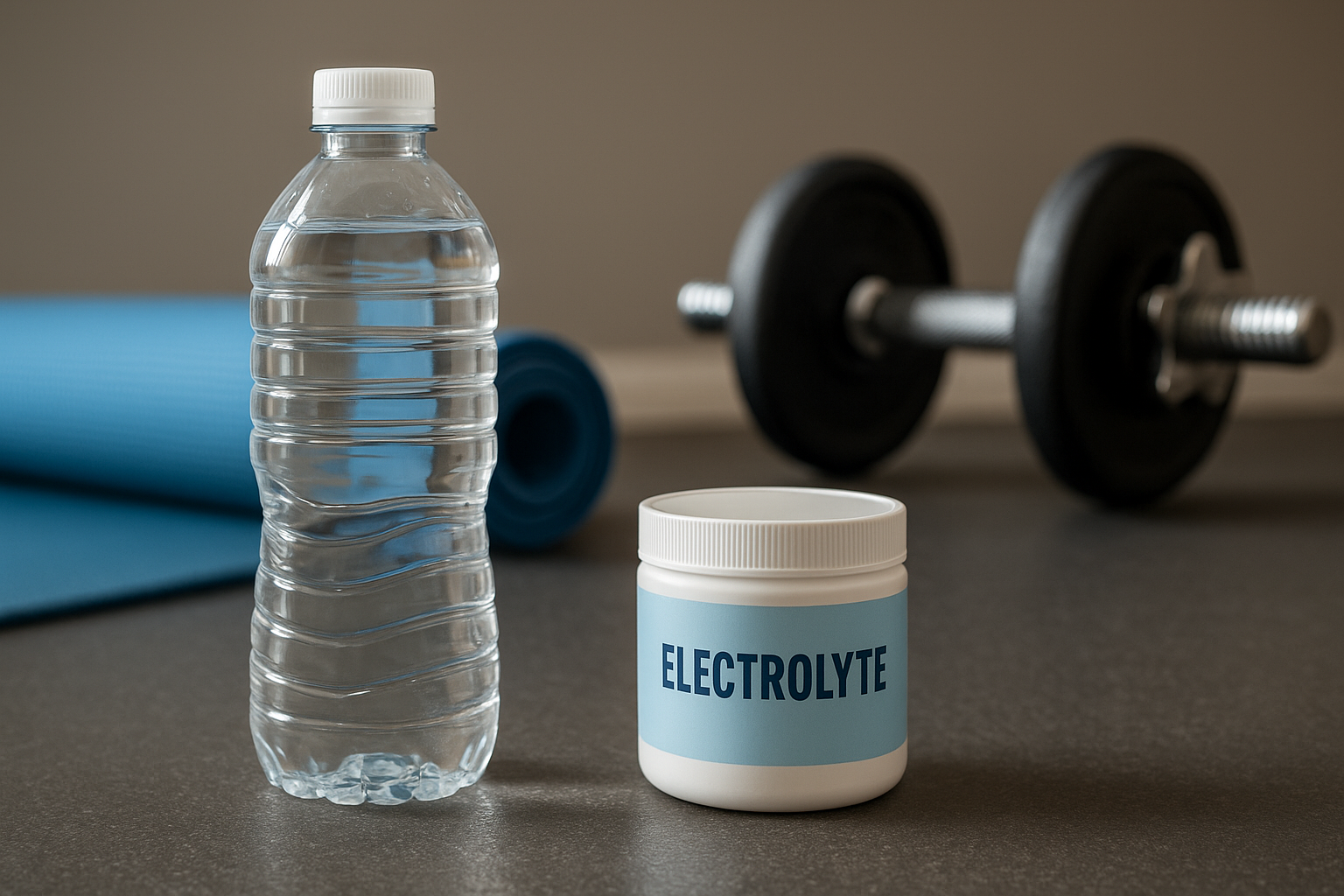
Staying hydrated is vital for effective home workouts, but do you really need fancy electrolyte powders and tablets for an indoor session? Between social media hype and colourful tubs promising “extreme hydration”, it’s easy to overcomplicate what should be simple: matching your fluid and mineral intake to the way you actually train. This guide looks at the evidence behind electrolyte supplements, when plain water is enough, and how to use products sensibly in a home gym setting.
What electrolytes do and when you lose them
Electrolytes are minerals like sodium, potassium, magnesium and calcium that carry an electric charge in your body. They help regulate muscle contraction, nerve signals, blood pressure and fluid balance. You lose electrolytes mainly through sweat and urine. For a short, low‑to‑moderate indoor workout (for example, 20–40 minutes of strength training in a cool room), your losses are usually small and easily covered by normal food plus water. Problems arise during long, hot or high‑intensity sessions, where heavy sweating can cause noticeable sodium loss, potentially leading to cramps, fatigue or “heavy legs”.
When plain water is enough for indoor training
For most people doing indoor strength training, yoga, Pilates or moderate cardio for under 60 minutes, water alone is sufficient. If your home gym is well ventilated and you are not dripping with sweat, you likely don’t need extra electrolytes. A practical rule: if your session is short, the environment is cool, and your sweat rate is mild (light dampness rather than clothing soaked through), focus on starting hydrated, sipping water during the workout, and eating a balanced meal afterwards. Foods like fruit, vegetables, dairy, nuts and salted meals provide plenty of potassium and sodium without a dedicated supplement.
Who actually benefits from electrolyte powders and tablets?
Electrolyte supplements can be genuinely useful for certain home athletes. If you do high‑intensity interval training (HIIT), indoor cycling or treadmill runs for longer than 60–90 minutes, especially in a warm or poorly ventilated room, your sweat losses can be significant. People who naturally sweat a lot, notice salt crusts on clothes, or experience muscle cramps may also benefit from a sodium‑containing drink. In these scenarios, a simple tablet or powder that provides sodium plus a small amount of potassium and magnesium can help maintain performance, reduce perceived effort and support quicker recovery between tough sessions.
How to dose electrolytes and read labels
When choosing an electrolyte supplement for home workouts, look closely at the sodium content. For most indoor exercisers, around 300–600 mg of sodium per litre of drink is adequate; more is rarely needed unless you are a very heavy sweater training hard for several hours. Avoid products loaded with added sugar if your main goal is hydration rather than fuelling long endurance sessions. Mix powders or dissolve tablets according to the manufacturer’s instructions and adjust strength based on taste and sweat rate. If you have high blood pressure or kidney issues, speak to a healthcare professional before using higher‑sodium products regularly, as unnecessary supplementation may not be appropriate.
Practical hydration strategy for your home gym
Instead of automatically reaching for a brightly coloured drink, build a simple hydration plan around your indoor training. Arrive at your workout well hydrated by drinking water throughout the day, then sip according to thirst during exercise. Use electrolyte powders or tablets on days when you know you will train hard, for longer, or in a hot room, and stick to water for easy sessions. Pay attention to signs like very dark urine, dizziness, headaches or persistent cramps; these may signal that you need more fluid, more sodium, or both. By matching your drink to the actual demands of your home training, you can avoid both overcomplicating hydration and wasting money on unnecessary products.
In summary, most indoor workouts do not require special electrolyte drinks, and plain water plus a balanced diet will fully cover your needs. Electrolyte powders and tablets become helpful tools when sessions are longer, hotter or more intense, or if you are a naturally heavy sweater prone to cramps. Focus on the basics—everyday hydration, sensible training duration and room temperature—and then layer in supplements only when your workout truly justifies them. This evidence‑based approach keeps your home gym hydration simple, effective and tailored to your real needs.