Home lifters today have access to something previous generations of athletes never had: instant feedback from online form-check communities. By learning how to film your sets clearly, share them safely and interpret comments intelligently, you can turn your living room or garage into a powerful learning environment. This guide walks you through filming basics, privacy tips, how to post for useful feedback, and how to turn that feedback into a safer, stronger home gym routine.
Set up your space and camera for clear lifting videos
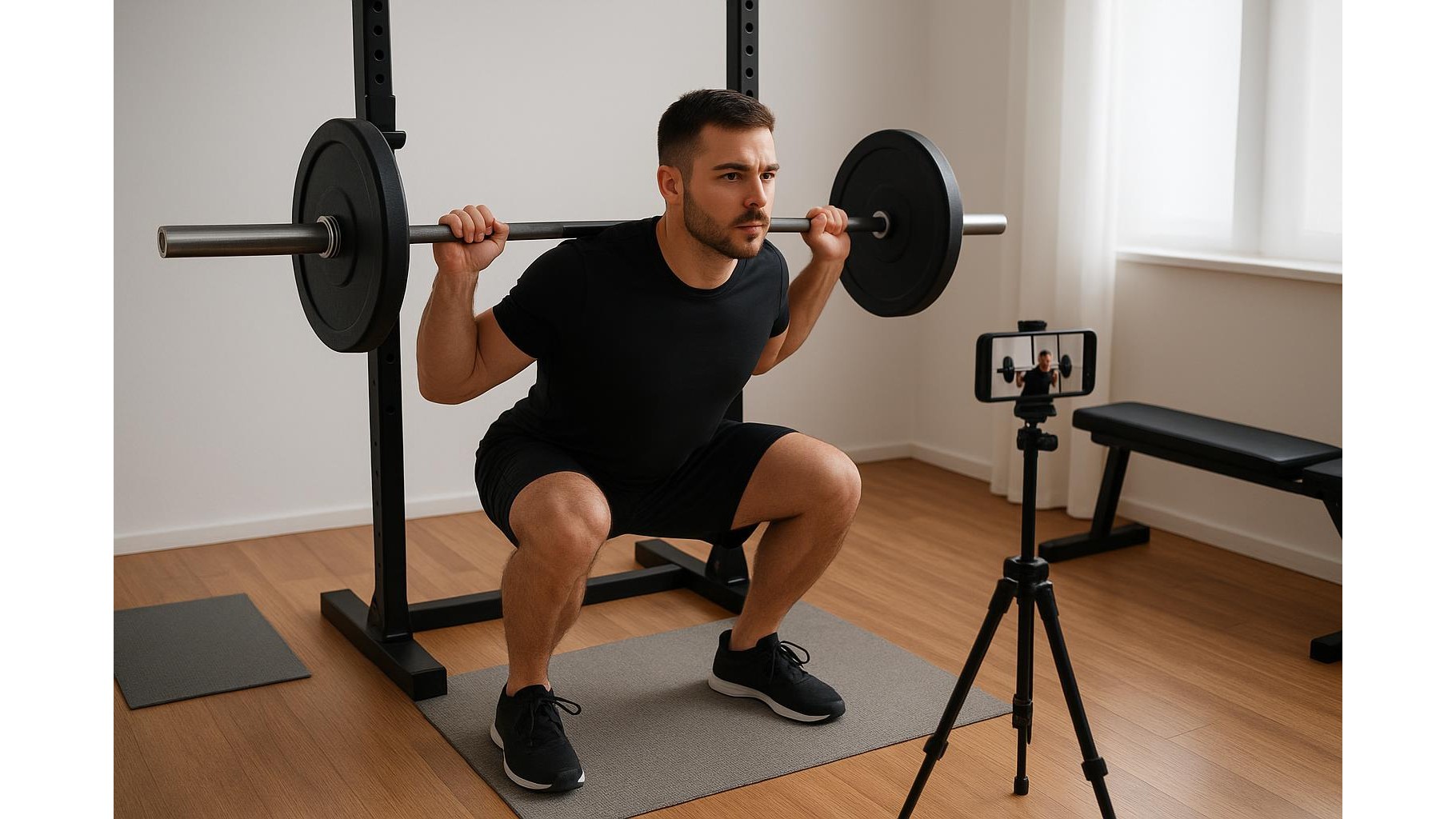
The quality of your form-check starts with how you film. You don’t need a fancy camera: any modern smartphone is usually enough, as long as it’s stable and well positioned. Clear lighting helps other lifters see your joint angles and bar path; avoid strong light from behind you, which turns you into a silhouette. Aim for popular angles used by coaches: for squats, a 45° angle from hip height; for deadlifts, slightly off to the side to show both bar path and back position; for presses, a side view at shoulder height. Step far enough from the camera that your entire body and the barbell stay in frame throughout the rep. Before a working set, do a quick test rep to check framing and adjust distance or angle as needed.
Protect your privacy when filming and uploading
Using online fitness communities doesn’t mean sacrificing your privacy. First, clear your training area of personal documents, family photos or anything that reveals your address or workplace. Consider training in neutral clothing without big logos or local team names. If you’re sharing videos publicly, use a username that doesn’t include your full name, and disable location data in your phone’s camera settings before recording. Many platforms allow you to blur faces; use this if other people appear in your shot. When posting, avoid sharing your full weekly schedule or precise training times, which can inadvertently reveal when you’re home alone. These simple precautions let you benefit from community feedback while keeping your personal life protected.
What to include when you post a form-check request
To get useful feedback, you need more than just a clip. In your post, briefly state the exercise, the load and your goal. For example: “3rd set of 5, low-bar squat, 90 kg, working on depth and knee tracking.” Mention any pain or past injuries, your height, and whether this is a novice, intermediate or advanced program. Upload a set that reflects your typical form; warm-up sets with very light weight can hide technical errors. Keep the video short and to the point: one work set is usually enough. In the description, ask 1–2 specific questions (“Am I hitting depth?” or “Is my back rounding off the floor?”). Targeted questions help experienced members focus and provide practical advice instead of vague comments.
How to read and filter online feedback
Online form-check communities contain a mix of expert coaches, experienced lifters and complete beginners, so you must learn to filter feedback. Give more weight to users who explain why they suggest a change, not just what to change. Comments that reference biomechanics, leverage, or established coaching cues are usually more reliable than one-line opinions. Look for patterns: if multiple knowledgeable members point out the same issue—like knees caving in or hips rising too fast in the deadlift—it’s probably worth addressing. Be cautious with advice that drastically alters your technique overnight, especially under heavy load. When in doubt, implement one change at a time and monitor how it affects comfort, stability and bar speed rather than rewriting your entire technique after a single comment.
Turning feedback into actionable home training changes
Feedback only matters if it leads to real-world improvements in your home workouts. Start by picking one primary cue to focus on in your next session—such as “brace before each rep” or “push knees out on the way up.” Film again a week later from the same angles to see if the issue has improved. If your problem is mobility-related, integrate 5–10 minutes of targeted warm-up drills before your main lifts. For strength or stability issues, add light technique sets or tempo work to practice the corrected pattern. Keep a training log where you note which cues you worked on, how they felt and what the community said about your latest clip. Over time this loop—film, post, refine—will make your lifting safer, more efficient and more confident, even if you train alone.
Used thoughtfully, online form-check communities can act like a remote coaching squad for your home gym. By filming from useful angles, protecting your privacy, posting with clear context and applying feedback progressively, you convert internet comments into real performance gains. Treat each video as a data point, each reply as a hypothesis to test, and your ongoing home training as the experiment. This deliberate approach keeps you progressing toward stronger, safer lifts without ever leaving your own space.