Training at home feels convenient and private, but your choice of home gym footwear has a big impact on stability, joint safety and hygiene. Between hard tiles, dusty carpets and slippery laminate, the wrong socks or shoes can cause slips, poor lifting mechanics and even skin infections. This guide walks through grip socks, barefoot shoes and lightweight trainers, explaining when to use each option so your home workouts stay safe, clean and effective.
Table of contents
Why your home gym floor changes what you should wear
Unlike commercial gyms, home training spaces mix laminate, tiles, rugs and puzzle mats. Smooth floors can be dangerously slick in ordinary cotton socks, while thick carpets hide uneven spots that challenge balance during heavy lifts. Bare feet give feedback but offer no protection from dirt, sweat and dropped dumbbells. The ideal home gym socks and footwear combination depends on your main activities: heavy strength work needs a flat, stable base; yoga and Pilates need grip without bulk; high intensity cardio needs some impact absorption. Thinking about your floor first helps you choose whether grip socks, barefoot shoes or lightweight trainers are the safest match.
Grip socks for slippery surfaces and bodyweight training
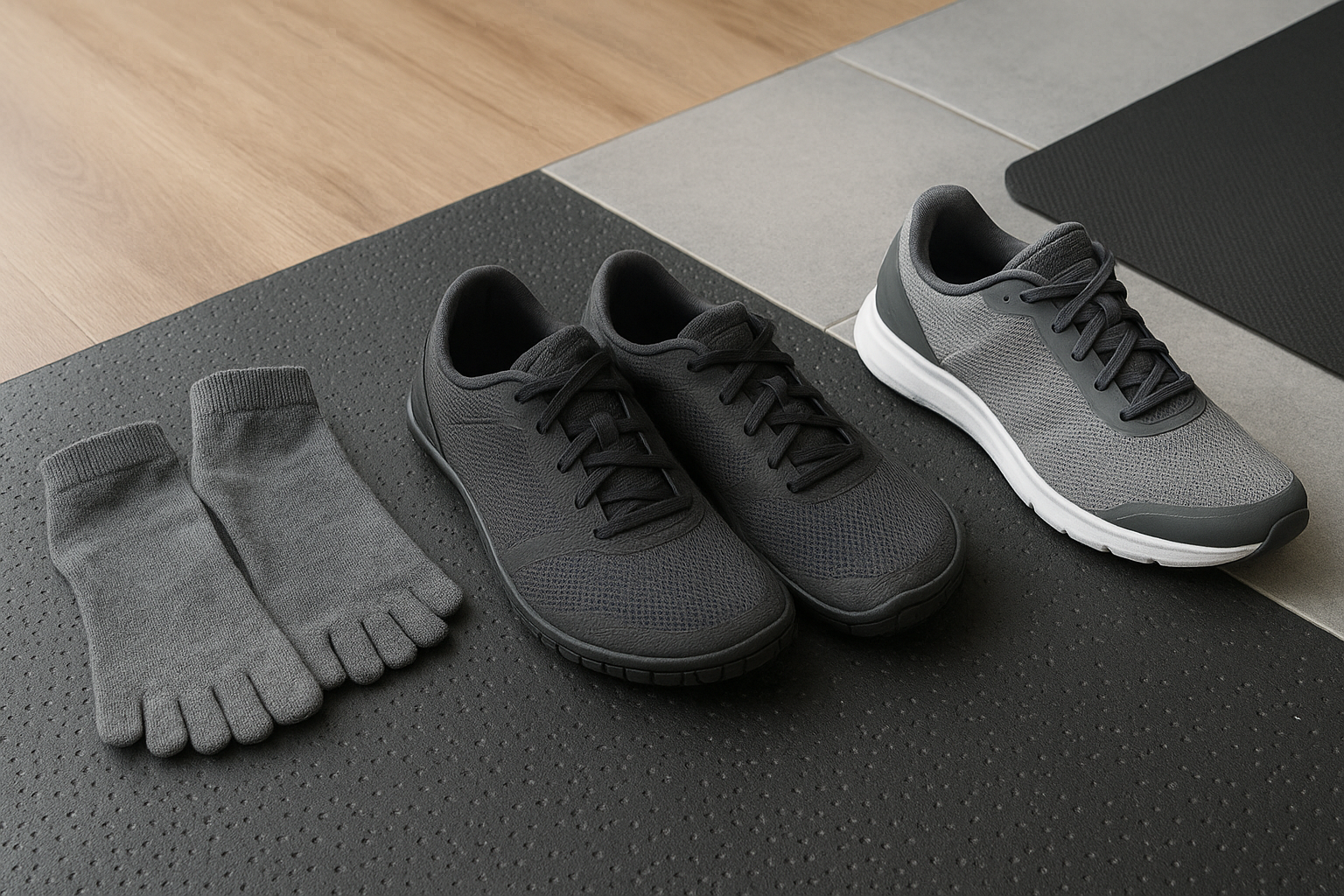
For yoga flows, Pilates, mobility and light strength work on smooth floors, grip socks with rubberised soles offer a smart compromise between barefoot feel and safety. Quality pairs add silicone dots or patterns under the entire foot to prevent sliding during lunges, planks and downward dog. Look for breathable cotton or bamboo blends, a secure midfoot band and full-sole grip rather than just heel and toe patches. Open-toe designs improve toe spread and balance on small home gym mats, while closed styles keep feet warmer in garages. Grip socks also boost hygiene by creating a washable barrier between your skin and dusty floors, which is especially useful if you share the space with family members or pets.
Barefoot shoes for lifting and natural movement
If you love strength training or functional workouts, barefoot shoes are a strong upgrade from running trainers. Their defining features are a wide toe box for natural splay, a thin, flexible sole and zero heel-to-toe drop, which together create a stable, grounded platform for squats, deadlifts and kettlebell work. On home surfaces they protect from cold tiles and dropped plates while still letting you “feel” the floor. Choose models with grippy rubber outsoles that will not slip on laminate and that bend easily when you perform lunges or calf raises. Start with shorter sessions so your feet adapt, particularly if you are used to cushioned trainers. With consistent use, Barefoot-style shoes can improve balance and ankle strength during home workouts.
Lightweight trainers for cardio, circuits and mixed sessions
For home workouts that blend HIIT cardio, light plyometrics and strength circuits, a pair of lightweight trainers is often the most versatile option. Unlike thick running shoes, cross-training styles offer a lower profile, moderately firm midsole and supportive upper that keep you stable during lateral movements, yet cushioned enough to absorb impact from jumping jacks or burpees on hard floors. Look for flat, non-marking rubber outsoles with multi-directional tread to maintain grip on tiles or garage concrete. Breathable mesh uppers help reduce sweat and odour in smaller, poorly ventilated home gyms. For safety, avoid overly squishy soles that compromise stability under dumbbells or kettlebells; your home gym footwear should balance comfort and control across all movements.
Hygiene tips: keeping socks, shoes and floors clean
Even the best home gym socks and footwear will not protect you if your training space is dirty. Make a habit of vacuuming or mopping your workout area weekly to remove dust, hair and chalk that reduce grip. Always let grip socks and shoes air dry fully after sessions, and wash socks after each use to prevent bacteria and odour build-up. Reserve one dedicated pair of trainers or barefoot shoes strictly for indoor training so you are not tracking outdoor dirt onto your mats. If you sweat heavily, consider quick-drying, antimicrobial socks and rotate two or three pairs. Clean gear plus clean floors improves hygiene, extends the life of your footwear and keeps your home gym a space you actually want to use consistently.
Choosing the right combination of home gym socks, grips and footwear comes down to your floor type, training style and hygiene standards. Grip socks shine on slippery surfaces and for bodyweight work, barefoot shoes give superior stability and feedback for lifting, and lightweight trainers support mixed sessions with impact and lateral moves. By matching your footwear to your environment and keeping both feet and floors clean, you will move with more confidence, protect your joints and enjoy safer, more hygienic workouts in your home gym.