
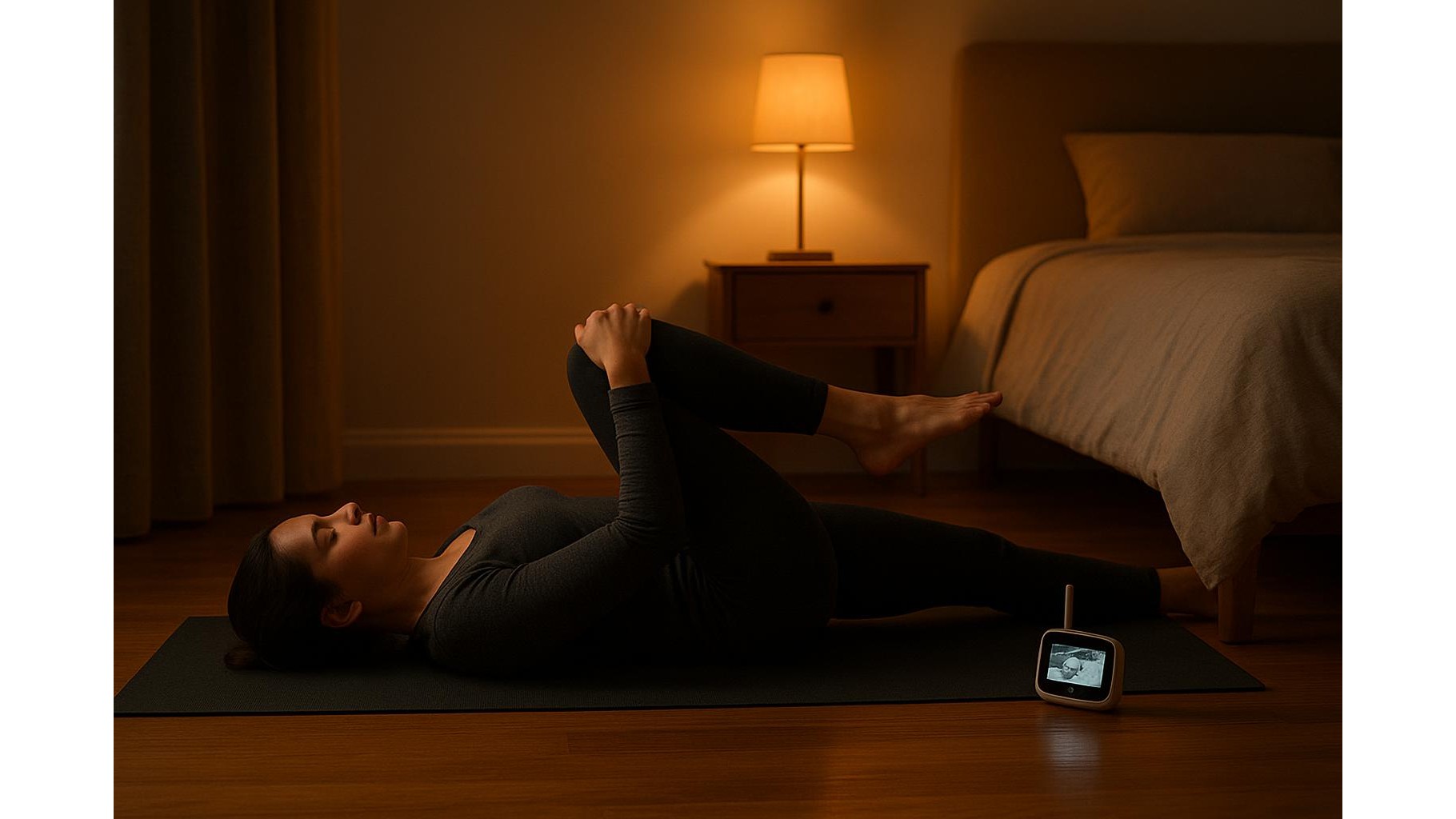
When you finally finish a late-night workout after getting the kids to bed, the last thing you want is a long, complicated cooldown. Yet skipping recovery can leave you wired, sore, and short on sleep. This gentle, 15‑minute home recovery routine is designed specifically for busy parents: simple moves, no noise, and minimal equipment, helping you shift smoothly from training mode to bedtime mode.
Set the scene: calm body, calm brain
Before you start moving, create a quiet mini bubble in your home. Dim the lights, silence notifications, and lay down a yoga or exercise mat. If your partner and children are nearby, choose a corner where you won’t need to turn on bright lights or move heavy objects. This “transition zone” tells your body you are done pushing and about to wind down. Keep a light blanket or hoodie nearby so you do not get cold as your heart rate drops. Even these small rituals help your nervous system shift from stressed and alert to relaxed and ready for sleep, which is crucial after a late session.
Breathing reset: from wired to restful
Begin with 3–4 minutes of focused breathing exercises. Lie on your back with knees bent and feet flat, one hand on your chest and one on your belly. Inhale through your nose for 4 seconds, letting your belly rise, then exhale slowly through the mouth for 6 seconds. Aim for 8–10 breaths. This simple pattern reduces heart rate and activates the parasympathetic nervous system, the “rest and digest” mode you need for quality sleep. If your mind is racing with tomorrow’s tasks, pair the exhale with a silent cue like “release” or “slow.” The goal is not perfection, but teaching your body that every workout ends with a calm, predictable reset.
Gentle mobility for tired joints
Once your breathing has slowed, move into 5–6 minutes of low‑intensity mobility. Focus on the areas that often tighten up when you train at night: hips, lower back, shoulders, and neck. From the same lying position, gently rock your knees side to side for 30–60 seconds to loosen the spine. Then switch to a hands‑and‑knees position for slow cat‑cow movements, rounding and arching your back in time with your breath. Follow with small, controlled arm circles and shoulder rolls, keeping tension out of the neck. The intention is not to stretch aggressively, but to send your joints the message that the hard work is over and the body can safely switch into recovery mode.
Self‑massage with simple tools or just your hands
Even without special gear, a few minutes of self‑massage can ease muscle tightness. Use your hands to gently knead your calves, quads, and upper back, applying light to moderate pressure. Move slowly over any tight spots rather than rushing. If you own basic recovery tools such as a foam roller or massage ball, use them briefly on your glutes, hamstrings, and upper back, but keep each area to 30–45 seconds so you do not extend the routine. The aim is to reduce stiffness, not to create more discomfort. For very late sessions, choose quieter techniques—slow pressure while lying on the floor—so you do not disturb sleeping children in nearby rooms.
Low‑key stretching that won’t keep you awake
Finish with 3–4 minutes of relaxing stretches that feel good rather than intense. Good options for home and small spaces include a lying hamstring stretch with a towel, a gentle hip flexor stretch in a half‑kneeling position, and a chest‑opening stretch using a doorway. Hold each stretch for about 20–30 seconds, breathing slowly and backing off if you feel sharp discomfort. Because you are about to sleep, avoid aggressive bouncing or long, painful holds that might stimulate rather than relax your system. Think of this final section as a signal to your body that “training is done, recovery has started,” so you wake up less sore and more present for your family the next day.
This short, realistic cooldown fits into the narrow window between your workout and bedtime, respecting the reality of parenting life. In just 15 minutes you address breathing, mobility, and muscle tension without sacrificing precious sleep. By repeating this routine after each late‑night session, you build a recovery habit that keeps you consistent, reduces next‑day soreness, and preserves the energy you need to show up both in your home gym and for your children.









