Building a consistent home workout routine often fails not because training is too hard, but because planning feels exhausting. Complex tracking apps, endless metrics and colourful dashboards can become another barrier between you and the mat. Ultra-simple checklist apps flip this around: they turn your phone into a clean, low-friction prompt that nudges you to move, then get out of the way.
Why minimalist checklists beat complex fitness trackers at home
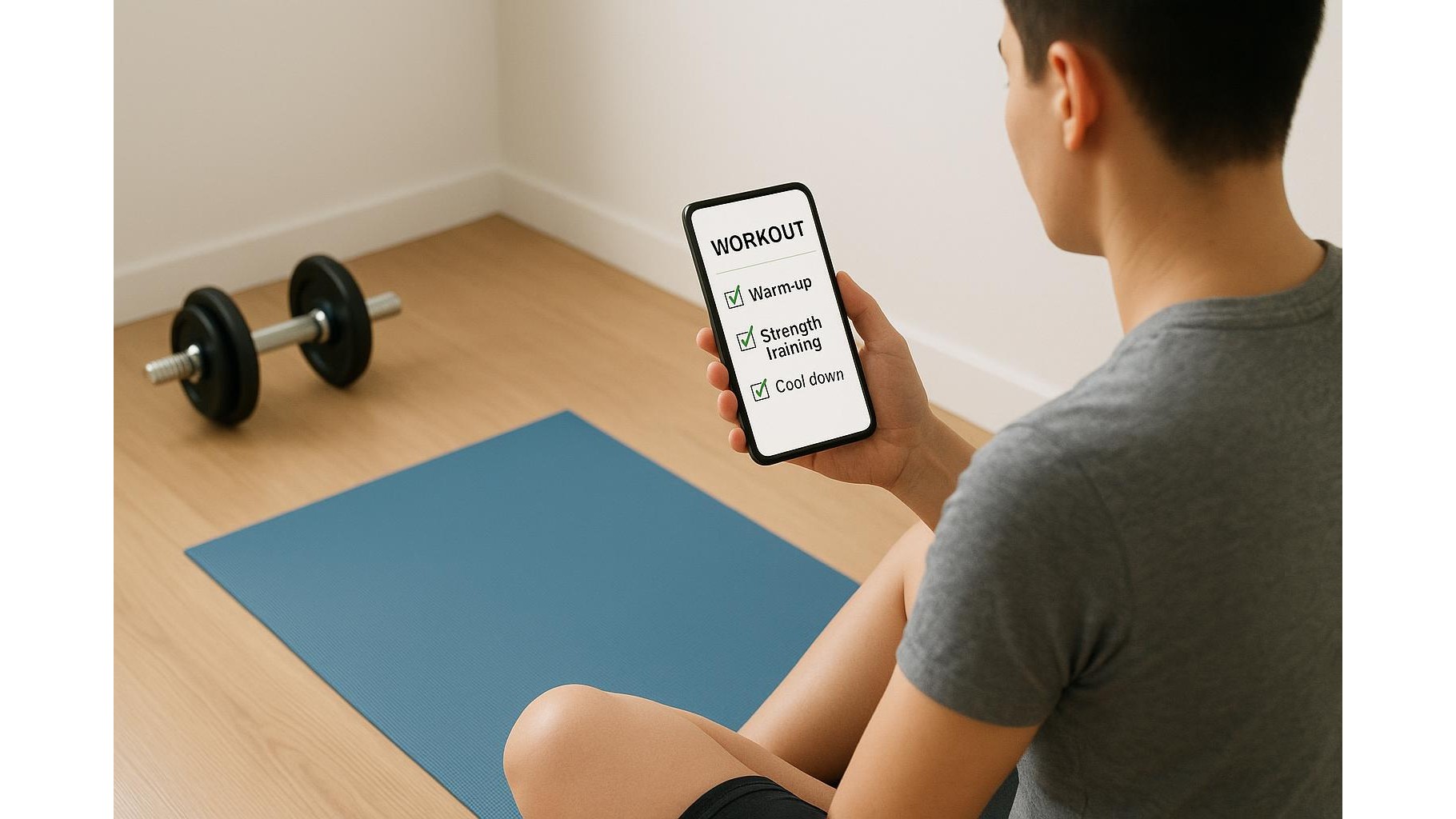
A stripped-back checklist app focuses on one thing: helping you start and finish today’s session. Instead of asking you to choose programs, adjust graphs or log every rep, it simply shows a short list of actions to tick off. This matters in a home gym context, where distractions are everywhere. With a minimalist approach you open the app and immediately see: “Warm-up, Push circuit, Core, Cool down.” No scrolling, no ads, no decision fatigue. By reducing friction, you lower the psychological cost of training and increase the odds that you will actually work out, even on low-motivation days.
Turning a basic checklist into a daily home workout planner
To turn a simple checklist into a powerful daily training planner, you only need a few recurring items. Create a list called “Home Workout – Today” and add tasks like: “5–7 minutes mobility warm-up”, “Upper body circuit (3 rounds)”, “Core finisher”, “5 minutes stretching”, and “Mark workout on calendar”. Each item represents a block of focused effort, not a detailed log of sets and reps. You can still keep your favourite adjustable dumbbells or resistance bands close by, but the app’s job is just to remind you of the sequence. Ticking each task becomes a small reward loop: you see progress in real time as you move down the list, which is often more motivating than staring at abstract numbers.
Weekly templates that keep you consistent without data overload
Minimalist checklist apps also shine as weekly routine templates. Instead of programming every single workout from scratch, create one list per day: “Monday – Full body”, “Wednesday – Cardio & core”, “Friday – Strength focus”, plus a short, optional “Weekend – Mobility walk & stretch”. Under each list, use 4–6 simple tasks such as “Squat pattern”, “Push pattern”, “Pull pattern”, “Carry pattern”, “Breathing & recovery”. This pattern-based design gives you structure while leaving room for flexibility: one week you might use a kettlebell, another week just bodyweight. You never need to rewrite the whole plan; you simply tick through the same reliable framework, keeping cognitive load low and adherence high.
Pairing checklists with simple home gym equipment
The beauty of a minimal app is how naturally it pairs with minimal home gym equipment. A single list can guide you through a full session using just a mat, a pair of dumbbells, or a compact resistance band set. For example, your “Full body at home” checklist could read: “Band pull-aparts”, “Goblet squats”, “Floor presses”, “Rows”, “Planks”. When you tap the app open, you immediately know which tool to grab and what comes next. Because your plan lives in a clean checklist, your living room doesn’t have to turn into a tech-heavy training lab. This low-tech, high-clarity pairing helps you stay focused on the work, not the interface.
Staying motivated with small wins and visual progress
Minimalist checklist apps can still support motivation without turning into full analytics platforms. The simple act of checking off items gives a sense of completion that many people find more satisfying than filling complex logs. You can add one or two meta-tasks such as “Started within 5 minutes of opening app” or “No phone distractions during workout” to reinforce good habits around your home training. Some apps allow basic recurring lists, so your weekly template reappears automatically, reminding you that consistency is the goal, not perfection. Over time, the growing history of completed checklists becomes a quiet but powerful record of your effort.
Keeping your home workouts friction-free is less about finding the most advanced tracker and more about using the simplest tool well. A minimalist checklist app lets you design clear daily and weekly templates, pair them with whatever basic equipment you own, and remove the clutter that often derails at-home training. By focusing on a handful of actionable tasks instead of exhaustive data, you make it easier to show up, move, and repeat—turning your home routine into a sustainable habit rather than another digital project.