Building a compact home gym often means squeezing a lot of gear into a small area. Without a clear storage system, resistance bands, lifting belts, jump ropes and small accessories quickly become a tangled, unsafe mess on the floor. A sturdy, wall-mounted pegboard solves this problem by keeping everything visible, easy to grab and securely off the ground, protecting both your equipment and your training space.
Why a wall-mounted pegboard is ideal for home gyms
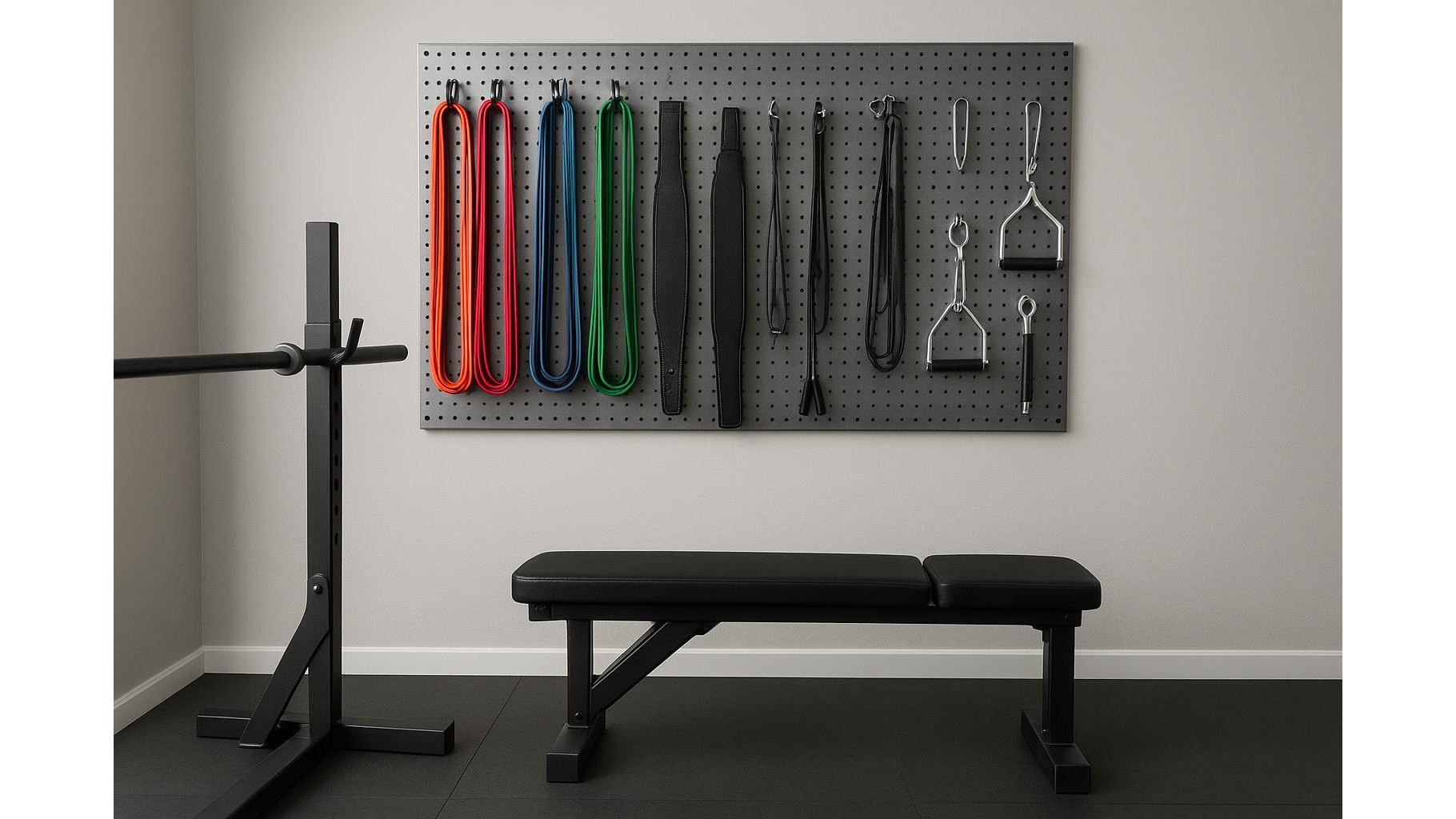
A wall-mounted pegboard storage system maximizes vertical space, which is crucial in small garages, spare rooms or studio apartments. Unlike fixed racks, a pegboard lets you move hooks and shelves as your equipment collection grows, so it adapts from basic setups with a few bands to more advanced gyms with belts, wraps, handles and jump ropes. Keeping gear at eye level also makes it easier to spot what you need quickly, reducing setup time between exercises and encouraging you to put everything back in its place after each session for a safer, more efficient workout area.
Key features to look for in a gym pegboard
When choosing a pegboard for fitness accessories, prioritize material strength and mounting hardware. Look for heavy-duty steel or thick plywood panels, rated to support multiple kilograms per hook, so they can safely hold weighted belts and fully loaded bands. A grid of closely spaced holes gives you flexibility to hang small items like jump ropes next to bulkier pieces such as dip belts. Opt for systems that include a mix of straight hooks, J-hooks and small shelves so you can separate categories: belts on large hooks, bands on medium hooks, skipping ropes on smaller ones, and chalk or collars on mini shelves. A durable powder-coated or sealed finish will withstand humidity in garages and basements.
Planning layout for bands, belts and small accessories
Before drilling into the wall, take five minutes to plan your pegboard layout. Group items by function: place resistance bands and tube bands with handles on one area of the board, arranged by resistance level from light to heavy. Position lifting belts, dip belts and weightlifting straps together, ideally at hip or chest height where they are easy to grab between sets. Use separate hooks for jump ropes, cable attachments and small accessories like carabiners or collars, so nothing overlaps or tangles. Leave a few empty hooks for future purchases and ensure that heavier items are kept on the lowest rows to reduce stress on the board and keep the center of gravity closer to the wall.
Safe installation on different wall types
Proper installation is essential to make a wall-mounted pegboard both safe and long-lasting. On brick or concrete walls, use masonry drill bits and heavy-duty wall plugs paired with long screws that pass through all mounting points; this spreads the load and reduces the risk of cracking. For stud walls, locate the wooden studs with a reliable finder and fix the board directly into at least two of them using structural screws; avoid relying on hollow-wall anchors alone for heavy gym gear. Always follow the manufacturer’s weight limits, and if you are unsure, overbuild your mounting with extra screws and brackets. Once installed, gently load the board in stages, checking for movement or flex before hanging your heaviest belts and bands.
Daily use, safety checks and keeping order
Once your home gym pegboard system is in place, make a habit of using it consistently. Always return bands, belts and accessories to the same hooks so you build muscle memory and avoid clutter creeping back onto the floor. Every few weeks, run a quick safety check: inspect hooks for bending, ensure screws remain tight, and look for any signs of wall damage, especially around heavily loaded points. Wipe down dusty panels and remove chalk build-up to preserve finishes. A well-maintained pegboard not only protects your investment in equipment but also acts as a visual reminder of your training routine, making your compact home gym feel more like a dedicated, professional space.
In summary, a sturdy, adjustable wall-mounted pegboard is one of the most effective upgrades you can make to a compact home gym. By choosing a strong, well-finished panel, planning a smart layout for bands, belts and accessories, and installing it correctly on your wall type, you create an organized, safe environment that keeps gear ready to use and out of the way. The result is a cleaner training space, smoother workouts and a storage system that can grow with your fitness journey.