
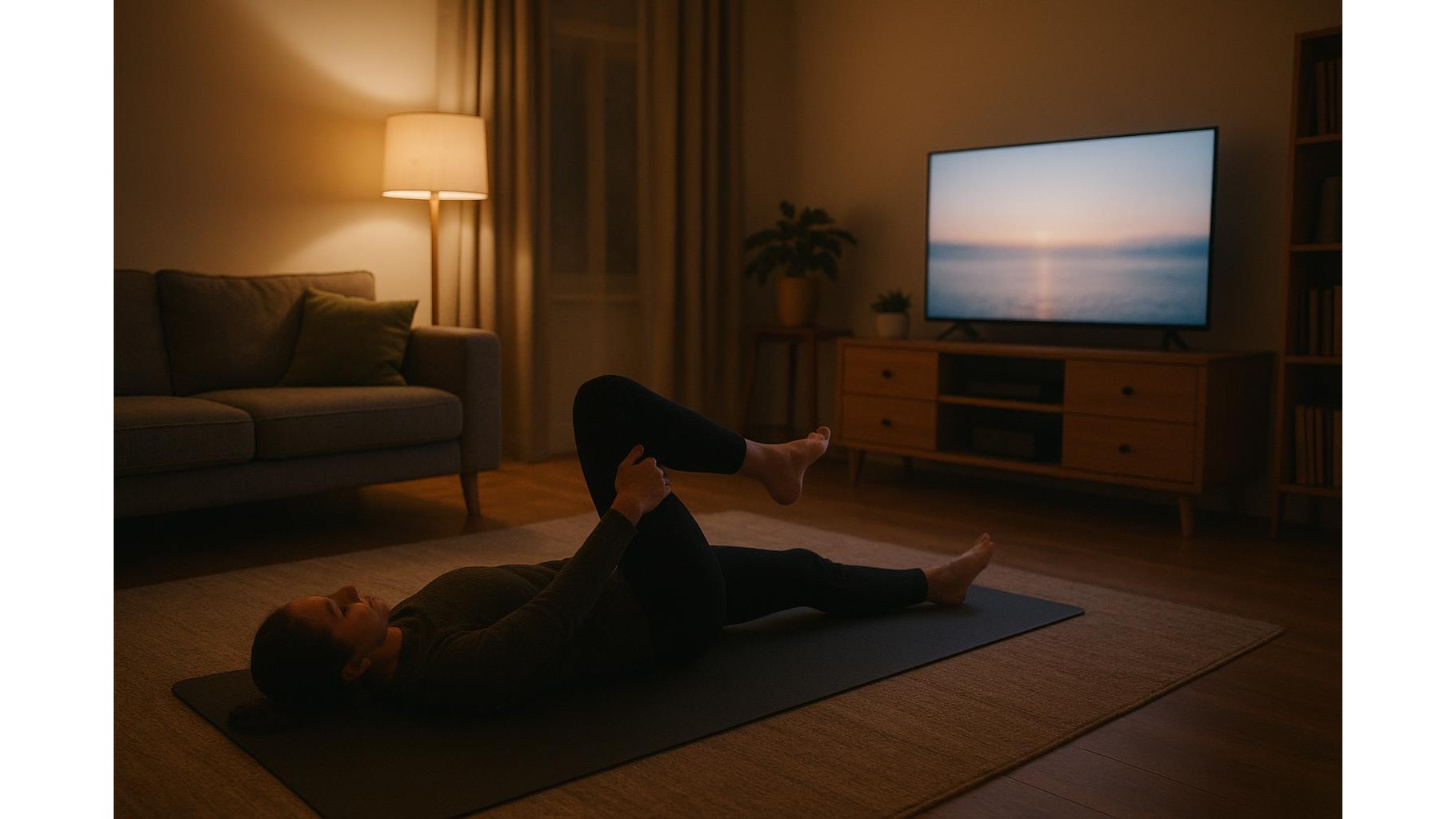
After a day of working at a desk and squeezing in home workouts, your body can feel oddly tight: the neck is compressed from screens, the hips are stiff from sitting, and the ankles lose mobility in shoes. Instead of scrolling on your phone while the TV plays in the background, you can turn that same TV time into a simple, feel-good evening mobility routine on the living-room floor. This step-by-step sequence takes around 15–20 minutes and focuses on decompressing the neck, opening the hips and freeing up the ankles so you move better in your next workout and feel looser before bed.
Set up your living-room floor for success
To make this TV-time stretch routine a habit, first set up a comfortable space. Lay out a cushioned exercise mat or folded blanket in front of the sofa so you can still see the screen without craning your neck. Keep a soft cushion or folded towel nearby to support your head during neck work and to pad your knees in hip stretches. If your living room floor is hard, extra padding helps you relax into each position instead of tensing against the surface. Dim the lights slightly, turn the TV volume down a notch and treat this as low-intensity, restorative work rather than another workout. The more inviting your space feels, the more likely you are to repeat this routine every evening.
Decompress your neck after a day of screens
Start with the neck, where many of us carry tension from laptops and phones. Lie on your back with knees bent, feet on the floor and the back of your head resting on the cushion. Gently tuck your chin as if making a small double chin, lengthening the back of the neck while keeping the head heavy on the floor. Hold this for 5 slow breaths. Next, keep the chin slightly tucked and slowly turn your head left and right, like you are saying “no” in slow motion, exploring a comfortable range. Follow up with small half-circles, ear towards shoulder, to loosen the sides of the neck and upper traps. Keep your shoulders heavy, breathing into any tight spots. These subtle neck mobility drills help counter the classic forward-head posture that builds up all day.
Open tight hips with floor-friendly stretches
Move on to your hips, which tighten from hours of sitting and can limit squats, lunges and deadlifts in your home gym. From lying on your back, cross your right ankle over your left knee for a figure-4 stretch and gently pull the left thigh towards your chest until you feel a stretch in the right glute and outer hip. Breathe here for 30–45 seconds per side. Then roll onto all fours and step your right foot outside your right hand into a low lunge, dropping the back knee to the floor. Rock gently forward and back to open the hip flexor of the back leg and the inner thigh of the front leg. Finish with a wide-knee child’s pose, knees apart and hips sinking towards your heels, to lengthen the lower back and hips together. Focus on slow, relaxed breathing so muscles can release.
Free up stiff ankles for better squats and balance
Stiff ankles are often overlooked, yet they affect everything from your squat depth to your balance in single-leg work. Sit on the floor with legs extended and slowly flex and point both feet, imagining pulling your toes towards your shins, then pushing them away like a gas pedal. Draw circles with your ankles in both directions, exploring the full range. Next, move into a half-kneeling position facing the TV, front foot flat on the floor. Keeping the heel down, gently drive your front knee forward over your toes and slightly to the outside, then back, for 10–15 smooth reps; this ankle dorsiflexion drill improves the range you need in squats and step-ups. If you struggle to keep your heel grounded, place a folded towel under it for support while you gradually increase mobility.
Blend the sequence into one flowing TV-time routine
To turn these stretches into a seamless evening mobility flow, link them in an order that feels natural. One simple structure: start lying on your back for neck decompression, transition into hip openers on your back, then roll onto all fours for lunges and child’s pose, and finish seated or half-kneeling for ankle work. Aim for 3–5 deep breaths in each position instead of counting seconds obsessively, letting the TV provide gentle background noise rather than your main focus. Over time, you can add light variations, like gentle thoracic rotations from all fours or a seated forward fold for hamstrings, but keep the core routine consistent. The goal is low-friction consistency, not intensity: your body should feel calmer and more open by the end, not exhausted.
Make it a sustainable part of your home fitness
Integrating a short mobility routine into TV time is one of the easiest ways to support your home gym training without adding another demanding session to your day. By regularly decompressing the neck, opening the hips and freeing stiff ankles, you improve movement quality in lifts, reduce niggling aches and make everyday tasks feel easier. Treat this as non-negotiable “maintenance” rather than an optional extra: keep your mat rolled out where you can see it, start your stretches when the episode begins and let the credits signal the end of your routine. With just 15 minutes most evenings, you build a flexible, resilient body that’s better prepared for both intense workouts and the simple demands of daily life.
Done consistently, this TV-time evening stretch routine can transform how your body feels from morning to night. Instead of collapsing on the sofa and waking up stiff, you’ll finish the day with a sense of ease through your neck, hips and ankles. That improved mobility carries directly into safer, stronger home workouts and a more comfortable, energetic everyday life.









