When you live in a small apartment, every square metre matters. Home rowers promise full-body cardio workouts without a treadmill-sized footprint, but not all “compact” designs are equal. The two main concepts are the traditional folding-rail rowing machine, where the rail pivots up or slides in, and the newer upright-folding rowing machine, which stores almost vertically. Understanding how each affects footprint, stability, noise, maintenance and user height range helps you pick a rower that really fits your home, not just the product page claims.
How compact are folding-rail and upright-folding rowers really?
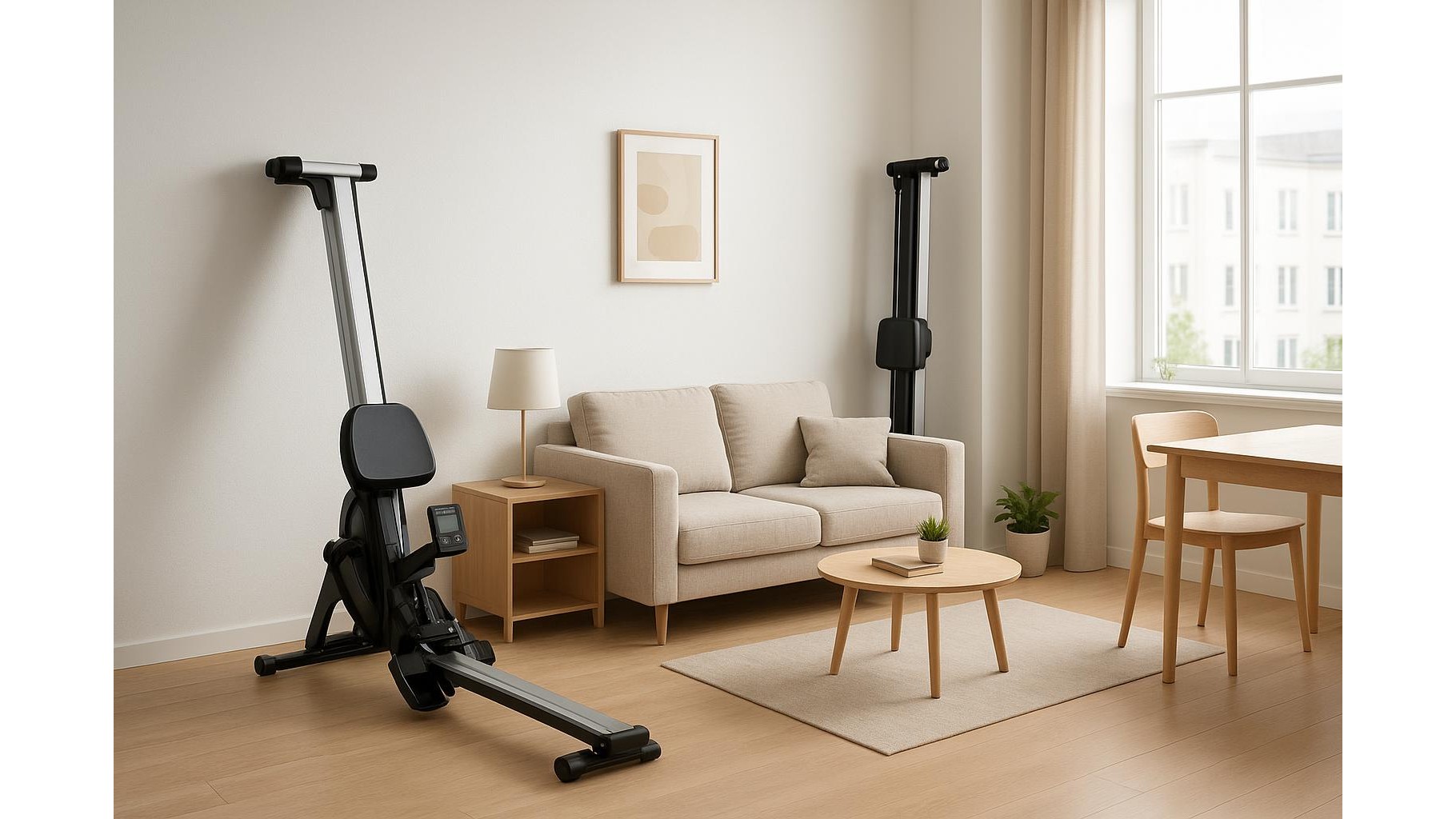
Both designs aim to shrink the storage footprint, but they do it differently. A typical folding-rail rowing machine hinges the rail up so the seat track stands at an angle, cutting the length by roughly a third to a half while keeping a relatively long base. This works well if you have free wall space but limited depth, such as alongside a sofa or in a hallway. An upright-folding rowing machine usually folds almost completely vertical, so the floor area when stored is closer to a bar stool than a bench. This is ideal if you want to tuck the rower into a corner or between pieces of furniture. However, the total height of an upright-folding rower can be considerable, so check ceiling clearance if you are in a loft or under a sloped roof.
Stability and feel during hard intervals
Compactness is useless if the machine wobbles. Traditional folding-rail models typically share their basic frame geometry with non-folding studio rowers, meaning a long base, lower centre of gravity and wide stabiliser feet. This usually gives a more planted feel during high-intensity intervals and heavy leg drive, especially for heavier users. Upright-folding rowers often rely on a shorter frame and more complex hinges near the front or centre of the machine. Good designs lock solidly in the open position, but cheaper frames can flex or creak when you push the pace. If you care about sprint workouts and stability, prioritise rowers with a robust locking system and a stated maximum user weight comfortably above your own.
Noise levels and apartment‑friendly operation
For small homes, noise is almost as important as size. Both folding-rail and upright-folding rowers can use magnetic, air or water resistance, and that choice affects sound much more than the folding style. Magnetic systems are generally the quietest, producing more of a soft hum that is less likely to bother neighbours. Air rowers can be noticeably louder, especially in echo‑y rooms. However, the frame also matters: some upright-folding designs use lighter tubing that can transmit vibration, while heavier folding-rail frames may feel and sound more solid. Look for models that highlight quiet drive, sealed bearings and magnetic resistance if you train late at night or share thin walls.
Maintenance, hinges and long‑term durability
Every folding mechanism adds moving parts that need to stay aligned. On a folding-rail rower, most of the stress is placed on the hinge or slider at the base of the rail. This is usually easy to inspect and occasionally tighten, and the rest of the frame remains close to a standard non-folding design, which is a plus for durability. Upright-folding machines sometimes split the frame into two major sections with multiple latching points, cable guides and gas struts or support arms. These make folding smoother, but they also introduce more points that can loosen or squeak over time. Whatever style you choose, plan for basic maintenance: wipe the rail, check bolts every few months, and follow the brand’s guidance on lubricating the seat rollers and chain or belt to keep the action smooth and quiet.
User height range and comfort in a compact frame
Compact design can limit who the rower fits. Rail length and seat travel are crucial if you are tall or have long legs. Many folding-rail rowers manage to keep a full‑length track even when folded, making them more suitable for users above 185 cm who need a complete leg extension at the catch. Some upright-folding models shorten the rail or raise the footrests to squeeze into a smaller footprint, which may feel cramped for taller athletes but perfectly adequate for shorter users. Always check the manufacturer’s recommended user height range and, if available, reviews from tall or petite users. Also consider seat height: a slightly higher seat can make it easier to get on and off in tight spaces, especially if the rower lives in a corner of the living room.
In summary, both folding-rail and upright-folding rowing machines can genuinely save space at home, but they do so in different ways. Folding-rail rowers usually offer a more traditional feel, strong stability and often better comfort for taller users, while still cutting length for storage. Upright-folding designs win when you need the smallest possible floor footprint and want to stand the rower neatly in a corner, accepting a taller stored height and potentially more complex hinges. Balance your priorities between space savings, noise levels, maintenance and how the frame fits your body. If you match the folding concept to your apartment layout and training style, a compact rower can become a daily, sustainable part of your home fitness routine.