Building a serious home gym starts with a solid Olympic plate set. With the right mix of weight increments, plate types and storage, you can progress safely, train all the main lifts and avoid wasting money on plates you will never use. This guide walks you through planning your first set so you buy once and keep building strength for years.
Set your strength goals and budget first
Before buying any Olympic weight plates, be clear on your training goals, current strength level and budget. If you focus on powerlifting (squat, bench, deadlift), you will prioritise heavier plates sooner. If you lean towards Hypertrophy and general fitness, you need a good spread of smaller increments for more precise progression. Many lifters underestimate how fast they will outgrow a light beginner set; aim for a total plate load that is at least equal to your current 5-rep max on deadlift, plus some headroom. Also remember to factor in the cost of a quality Olympic barbell and a stable rack or stands into your overall home gym budget.
Choose 2-inch Olympic plates over standard plates
For a serious home setup, always choose 2-inch Olympic plates over 1-inch standard plates. Olympic plates fit proper Olympic barbells, offer better long-term durability and are compatible with more equipment like loadable dumbbells and pulley systems. This standard also makes it easier to upgrade later with calibrated or bumper plates without replacing everything. Look for plates with clearly marked kilogram weights on both sides and a smooth 2-inch centre hole that slides easily but snugly onto your bar. Investing in Olympic plates from the start means your home gym will grow with you instead of needing a complete overhaul once you get stronger.
Plan smart weight increments for progression
A well-planned starter set focuses on smart weight increments instead of chasing the highest total weight number on the box. For most lifters, a practical beginner configuration is something like: 2×20 kg, 2×15 kg, 2×10 kg, 2×5 kg and pairs of 2.5 kg and 1.25 kg plates. This allows you to load up for heavy compound lifts while still making small jumps of 2.5–5 kg when needed. Prioritise multiple pairs of the lighter plates, as they are used across almost every exercise. Ensure your total plate weight, plus the barbell, covers your foreseeable strength gains for at least the next 12–18 months so you are not forced into another big purchase too soon.
Compare plate constructions: cast iron, rubber and bumpers
When building your starter set, you will mainly choose between cast iron plates, rubber-coated plates and bumper plates. Cast iron is typically the most affordable and compact, ideal if you lift inside a small room and use proper mats. Rubber-coated plates add protection for your floor and reduce noise, at the cost of being slightly bulkier. Full bumper plates are designed to be dropped and are best for Olympic lifting and CrossFit-style training, but they take up more space on the bar at higher loads. For serious home lifting in limited space, a mixed approach often works best: a core of sturdy iron or rubber plates for squats, bench and deadlifts, and a few bumper plates later if you move into dynamic lifts.
Think about storage, flooring and future expansion
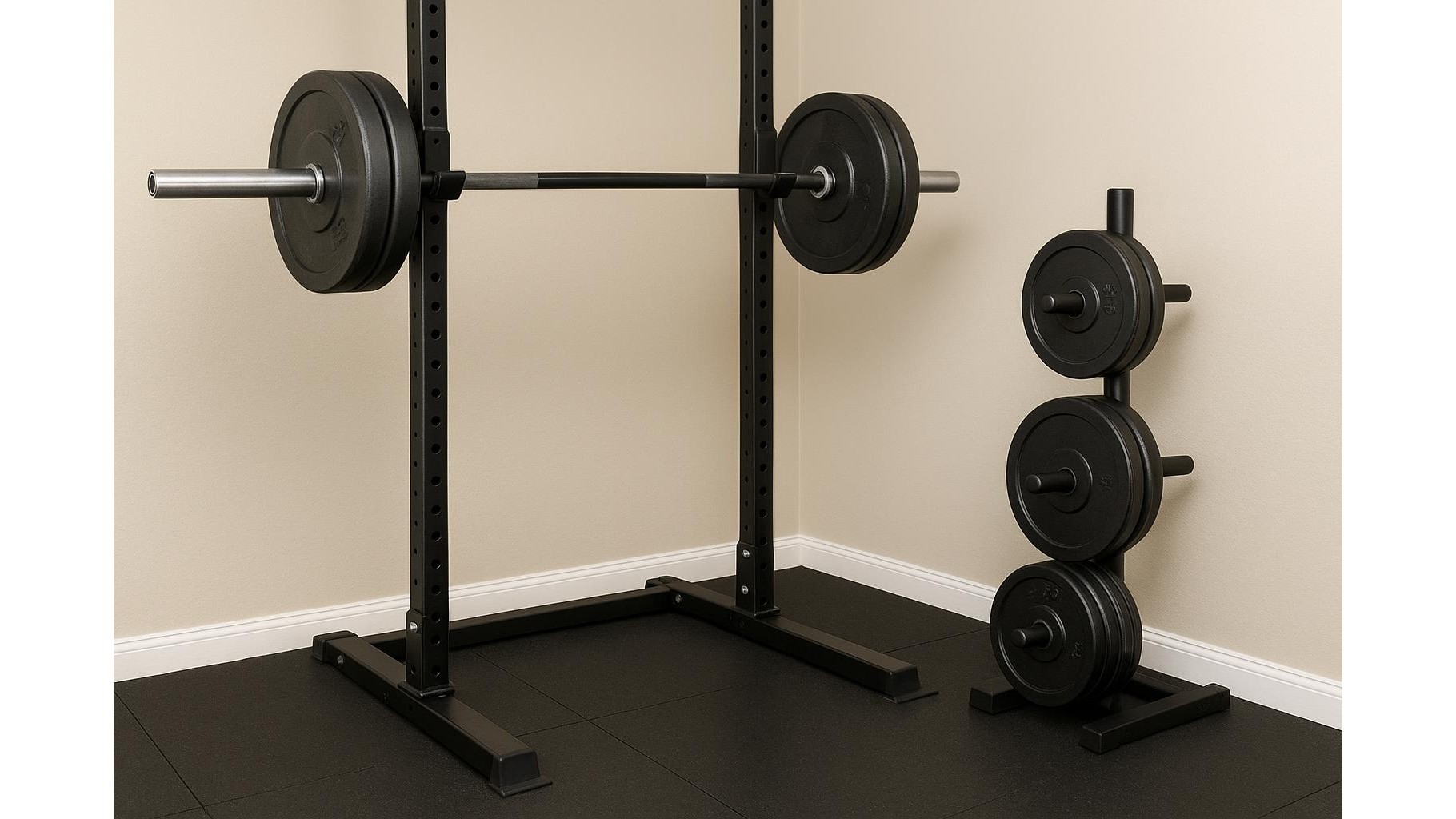
A proper plate storage solution and basic gym flooring are key parts of any serious home setup. Even a simple vertical plate tree or wall-mounted pegs keeps your plates organised, protects the centres from damage and makes it easier to change weights between sets. Heavy-duty rubber mats or lifting tiles under your rack and deadlift area protect both plates and subfloor, especially with cast iron. As you progress, you can expand your set with extra 20 kg or 25 kg plates, or add fractional plates (0.5–1 kg) for more precise strength gains. Starting with a well-thought-out base set means every future purchase is a targeted upgrade, not a replacement.
Putting together a starter Olympic plate set for home use is about planning, not guesswork. Decide on Olympic standards from the start, map out sensible weight increments, choose the plate construction that fits your style and space, and do not forget storage and flooring. With a balanced, expandable setup, you can train seriously, progress safely and avoid overspending while building strength at home.