
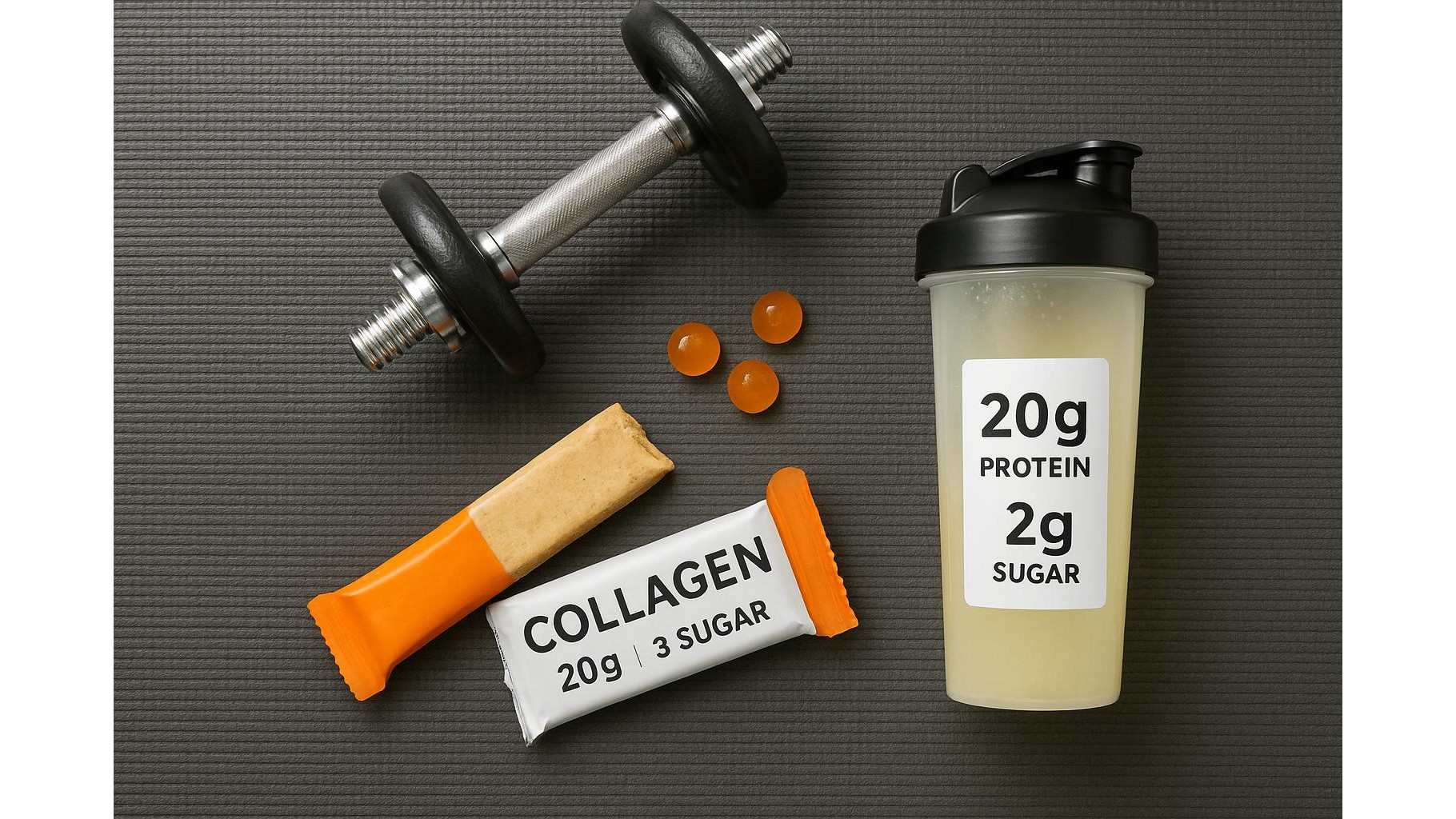
For home athletes who train hard but also sit many hours at a desk, joint comfort becomes a priority. Collagen protein snacks – especially bars and gummies – are widely marketed as a quick fix for knees, hips and shoulders. Yet not every colourful pack on the shelf delivers meaningful support. This guide explains how collagen works, what to look for on labels, and when bars and gummies can actually help your joint health strategy rather than just add sugar and calories.
How collagen supports joints and recovery
Collagen is the main structural protein in cartilage, tendons and ligaments. Unlike standard whey or plant protein, collagen is rich in amino acids such as glycine, proline and hydroxyproline, which are used to maintain connective tissues around your joints. Emerging studies suggest that daily collagen combined with light load‑bearing exercise may support cartilage metabolism and reduce joint discomfort over time. However, typical effective protocols use around 10–15 g of collagen peptides per day, often taken 30–60 minutes before training. Many snack products provide far less, so dosage is key if you want real benefits for your home workouts.
Reading the label: collagen dose, type and extras
When evaluating collagen bars and gummies, start with the protein line. Look for snacks that clearly state “collagen peptides” or “hydrolysed collagen” and list an actual gram amount, not just “with collagen”. For joint support, aim for products providing at least 5–10 g of collagen per serving if they are meant to contribute meaningfully to your daily intake. Check whether the source is bovine, marine or other – this matters if you have dietary or religious constraints. Useful co‑ingredients include vitamin C (supports collagen formation), some magnesium or manganese, and possibly small amounts of hyaluronic acid. Be cautious with proprietary blends where the total weight is shown but individual collagen content is hidden; this often means the dose is too low to move the needle for your joints.
Sugar, sweeteners and calories: avoiding candy in disguise
Many collagen gummies and flavoured bars are closer to sweets than to performance foods. For home athletes training mainly for health and body composition, excess sugar can easily cancel out the benefits of added protein. Choose products with a clear line for “of which sugars” and try to stay under roughly 5–8 g of sugar per serving, especially if you snack outside of workouts. Sugar‑free gummies often use polyols or high‑intensity sweeteners; this can reduce calories but may cause digestive discomfort for some people. Also check total calories per bar: a 250‑kcal bar might fit a post‑workout window but could be a poor choice as a casual evening snack. The goal is to get enough collagen protein without turning your joint supplement into a regular candy habit.
When to use bars and gummies versus powdered collagen
For consistent joint support, powdered collagen mixed into coffee, shakes or smoothies is usually the most cost‑effective and flexible option. You can easily reach the researched 10–15 g range and control additives. Collagen snacks make more sense as a convenience tool: a bar can double as a quick post‑workout protein source when you train in your home gym between meetings, while gummies may be a portable reminder to take collagen daily if you struggle with routine. Use bars mainly after strength or plyometric sessions, when connective tissue has been stressed, and keep gummies as a small top‑up rather than your primary source. Think of them as accessories in your overall nutrition plan, not the foundation.
Practical checklist for choosing effective collagen snacks
Before adding any collagen protein snack to your home gym routine, run through a quick checklist. First, confirm that the product states the exact collagen content per serving and that this fits into a daily target around 10–15 g from all sources. Second, assess the ingredient list: short, recognisable ingredients plus vitamin C are a positive sign; long lists of sugars, syrups and gums are red flags. Third, match the macro profile to your training goals – higher protein and moderate carbs if you need recovery fuel, or lower calories if body‑fat control is your priority. Finally, consider tolerance and timing: test new products on light training days to see how your digestion responds, and take them 30–60 minutes before or soon after key sessions to align with connective tissue repair.
Used strategically, collagen bars and gummies can support a broader plan for joint‑friendly home training, but only when chosen with a critical eye. Focus on collagen dose, sugar content, supporting nutrients and timing around your workouts, and treat snacks as a convenience layer on top of solid daily nutrition. This way you invest in products that genuinely help your joints, recovery and long‑term performance instead of simply buying expensive sweets with a wellness label.









