
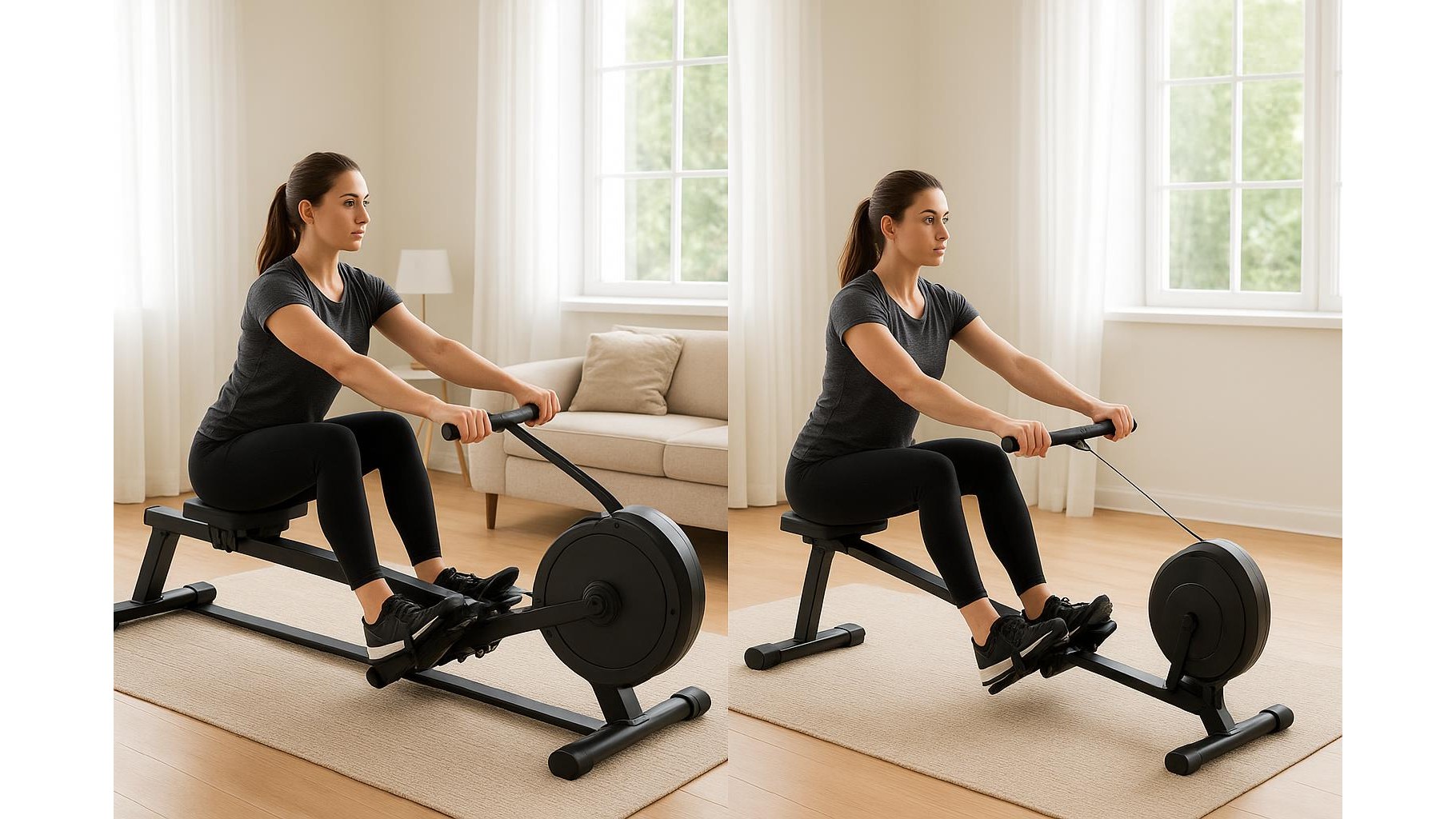
Choosing between a dual‑rail rowing machine and a single‑rail rowing machine can make a big difference to how stable, quiet and space‑efficient your home or garage gym feels. Beyond looks, the rail design affects how secure you feel at higher intensities, how much floor space you lose in the living room, and even how often you’ll be reaching for tools to keep things running smoothly. This guide breaks down the key differences so you can match the right design to your training style and your home.
Stability and rowing feel
Dual‑rail rowers place the seat on two parallel tracks, which naturally increases lateral stability. This is especially noticeable for taller or heavier users, or if you like powerful strokes and higher ratings: the seat tends to rock less side‑to‑side, making the stroke feel very planted. Single‑rail rowers, where the seat runs on a single central beam, can be just as safe, but the feeling is usually a little narrower and more agile. Lighter users and beginners may not notice much difference, but if you share the rower with a strong rower or use it for intense intervals, the extra width and rigidity of a dual‑rail frame can feel more confidence‑inspiring.
Footprint and storage in a living room or garage gym
When it comes to footprint, single‑rail designs usually win. With one central beam and a compact seat carriage, many single‑rail machines take up less width and can be easier to weave between furniture in a small flat. Some models also stand upright after training, which is ideal behind a door or in a corner. Dual‑rail machines are generally wider and sometimes slightly longer, so you’ll need more clear floor space and a bit more care when positioning them alongside racks or benches in a garage gym. However, the wider base often means more generous foot platforms and a roomier feel, which can be worth the extra few centimetres of space if your training area allows it.
Noise levels and neighbour‑friendly training
Noise on any rower mainly comes from the resistance system (air, water, magnetic), but the rail design does play a supporting role. Dual‑rail machines often use multiple seat rollers on each side, spreading the load and helping to reduce rattling or flex noises when you push hard. The broader frame can dampen vibration, which is helpful if your rower lives on an upper floor. Single‑rail models can be very quiet too, especially when paired with magnetic resistance, but aggressive sprint sessions may produce more noticeable creaks if the frame flexes slightly. For late‑night or early‑morning workouts near bedrooms, focus on resistance type first, then favour the stiffer, better‑braced frame in either category.
Maintenance, durability and long‑term care
All rowing machines need some basic maintenance: keeping rails clean, checking bolts and occasionally replacing seat rollers. Dual‑rail machines have more surface area to wipe down and may use extra rollers, but those rollers often carry less load individually, which can improve durability over time. The wide stance also reduces side‑loading on the bearings if your technique is not perfectly straight. Single‑rail rowers have fewer parts on show and can be quicker to clean, but all the load is channelled through that one central track and its rollers. If multiple people use the rower daily, invest in a model with robust components and easy‑to‑source spares, regardless of rail design, and build a quick monthly check‑over into your routine.
Which design suits your training style?
If you prioritise maximum stability, share the machine with heavier or more powerful rowers, or simply prefer a wide, grounded feeling under you, a dual‑rail rowing machine is likely to feel more secure and confidence‑inspiring. It pairs well with high‑intensity intervals, longer steady‑state work and mixed‑ability households. If, instead, you need a compact footprint, plan to move or store the machine often, or are equipping a modest living room space, a single‑rail rower usually offers the slimmer silhouette and easier storage you’re after. In both cases, remember that resistance type, build quality and ergonomics matter just as much as the rail layout.
Ultimately, the choice between dual‑rail vs single‑rail rowing machines comes down to where you train and how you row. Dual‑rail frames trade a slightly larger footprint for rock‑solid stability and a planted feel that shines in intense sessions. Single‑rail designs win on manoeuvrability and space‑saving, with a more minimalist look that suits small flats and multi‑use rooms. Consider your body size, noise tolerance, storage options and how often you’ll use the rower, then choose the design that will make it easiest to sit down, strap in and row consistently.









