
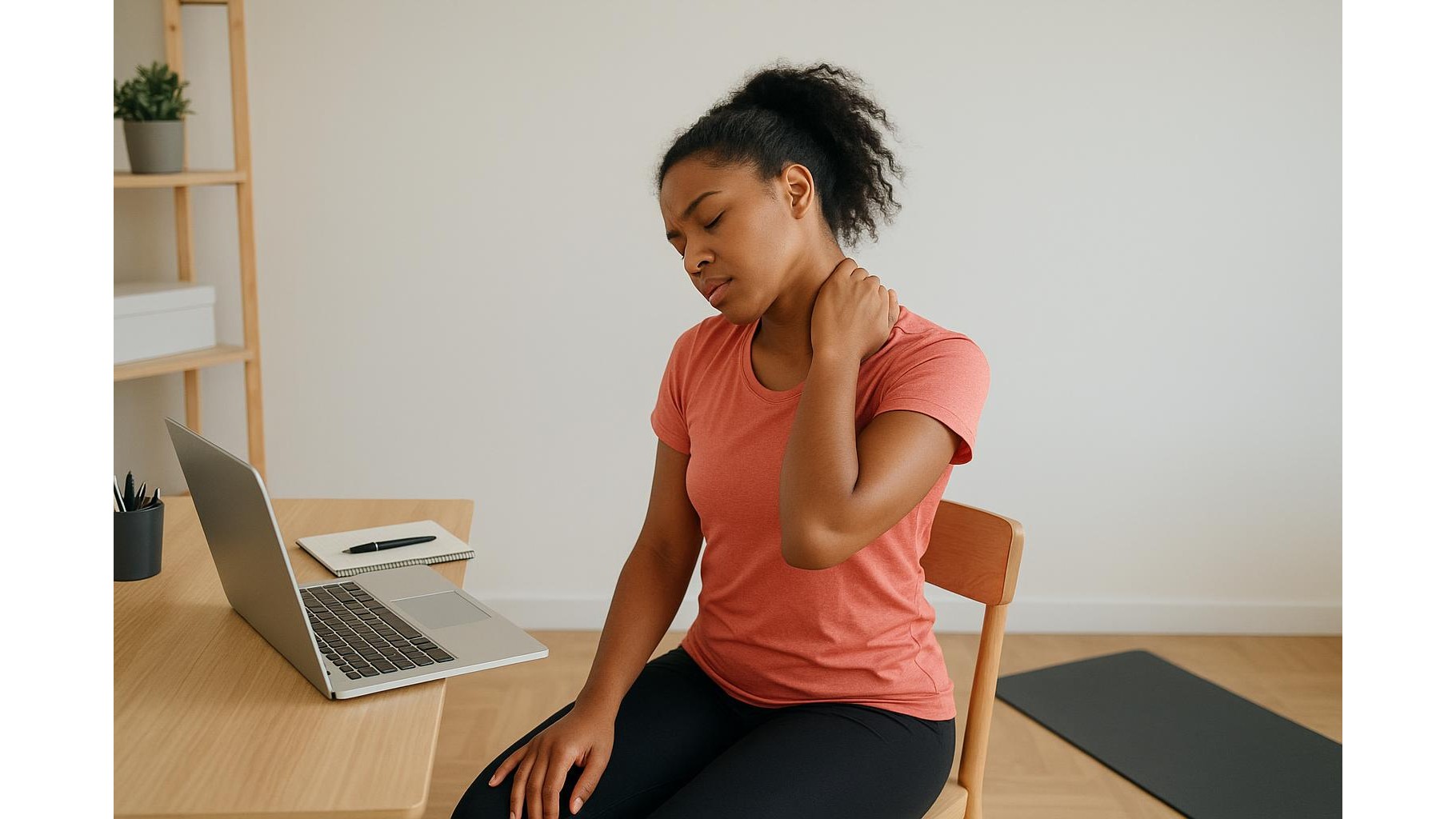
If you spend your day glued to a chair and then jump straight into your home workout, you are probably training on top of tight neck, shoulders and hips. This simple, equipment-free routine uses only your chair and a wall to release tension and restore basic mobility, so you can lift, run or ride with less stiffness and a lower risk of pain.
Reset your posture before you train
Before grabbing weights, take three minutes to reset your posture. Sit tall at the front of your chair with feet flat and hip-width apart. Imagine a string pulling the crown of your head up, lengthening your spine. Gently tuck your chin back to create a double-chin effect and feel the back of your neck grow long. Roll your shoulders up, back and down, then let your arms hang heavy by your sides. Take 5 slow breaths into your lower ribs, expanding them sideways. This simple sequence counteracts the hunched, rounded position of long calls, opening the chest and waking up your core muscles so your body is better aligned for your session.
Chair-based self-massage for the neck
All-day meetings often leave the neck and upper traps tight. Stay seated on your chair and place your right hand on the left side of your neck, just above your shoulder. Using your fingertips, gently knead the muscle in small circles, moving from the base of the skull down toward the shoulder. Apply comfortable pressure, pausing and breathing on any tender spots. Next, sit on your right hand to pin the upper trap, tilt your left ear toward your left shoulder, and slowly rotate your head left and right. This adds a gentle stretch to your self-massage. Swap sides and repeat. Two to three minutes here can ease headaches, improve shoulder mobility and make overhead pressing or rowing feel smoother.
Open your chest and shoulders against the wall
For tight chest and rounded shoulders, move to a clear wall. Stand with your back against it, heels a few centimetres away, and gently press your lower ribs and back of your head into the wall. Raise your arms into a “goalpost” position with elbows at shoulder height and wrists against the wall. Slowly slide your arms up as far as you can without arching your back, then slide them down, as if making a snow angel. Perform 8–10 slow reps. This wall glide strengthens the mid-back and opens the front of the shoulders. To intensify the stretch, turn side-on to the wall, place your palm at shoulder height, gently rotate your chest away and hold 20–30 seconds per side, breathing slowly.
Unlock hip flexors and glutes from your chair
Hours of sitting lock up the hip flexors and leave the glutes sleepy, which can irritate your lower back when you train. Start with a seated figure-four stretch: sit tall, cross your right ankle over your left knee, and gently hinge forward at the hips until you feel a stretch in your right glute. Hold 30–45 seconds, breathing into the tight area, then switch sides. Next, stand facing your chair, place your right foot on the seat and gently lunge forward, keeping your torso upright to stretch the front of your left hip. Lightly squeeze your left glute to enhance the stretch. Hold 30 seconds, then change legs. These simple moves restore hip extension and activate your posterior chain before squats, deadlifts or cycling.
Wall-assisted spine and shoulder mobility
The wall is a powerful tool for spinal mobility. Stand side-on to the wall with your right shoulder closest and feet about hip-width apart. Reach both arms straight in front of you at shoulder height, palms together. Slowly rotate your left arm out and around, opening your chest and reaching back toward the wall behind you while your hips stay still. Follow your hand with your eyes. Pause, breathe, then return to the start. Perform 6–8 reps per side. This improves thoracic rotation, crucial for pressing, pulling and running mechanics. Then, face the wall, place your hands on it at shoulder height and walk your feet back into a hip hinge, letting your chest sink toward the floor while keeping your ribs in. Hold 20–30 seconds to open your lats and shoulders.
By adding this short, chair-and-wall self-massage and mobility routine before your home workouts, you offset the stiffening effects of back-to-back meetings. In under ten minutes, you can ease neck and shoulder tension, open your chest, and unlock your hips so that your lifts, runs and rides feel smoother and safer. Build this habit into your pre-training ritual and your body will start each session from a more aligned, relaxed and responsive baseline.









