Training at home often means moving between tiles, wood floors and exercise mats in the same session. The right pair of home gym socks can give you enough grip and cushioning to train safely and comfortably without dedicated indoor shoes. In this guide we explore what to look for in non-slip socks for mixed surfaces, how to balance support and hygiene, and how to match different grip patterns to your favourite workouts.
Why grip socks beat bare feet on mixed floors
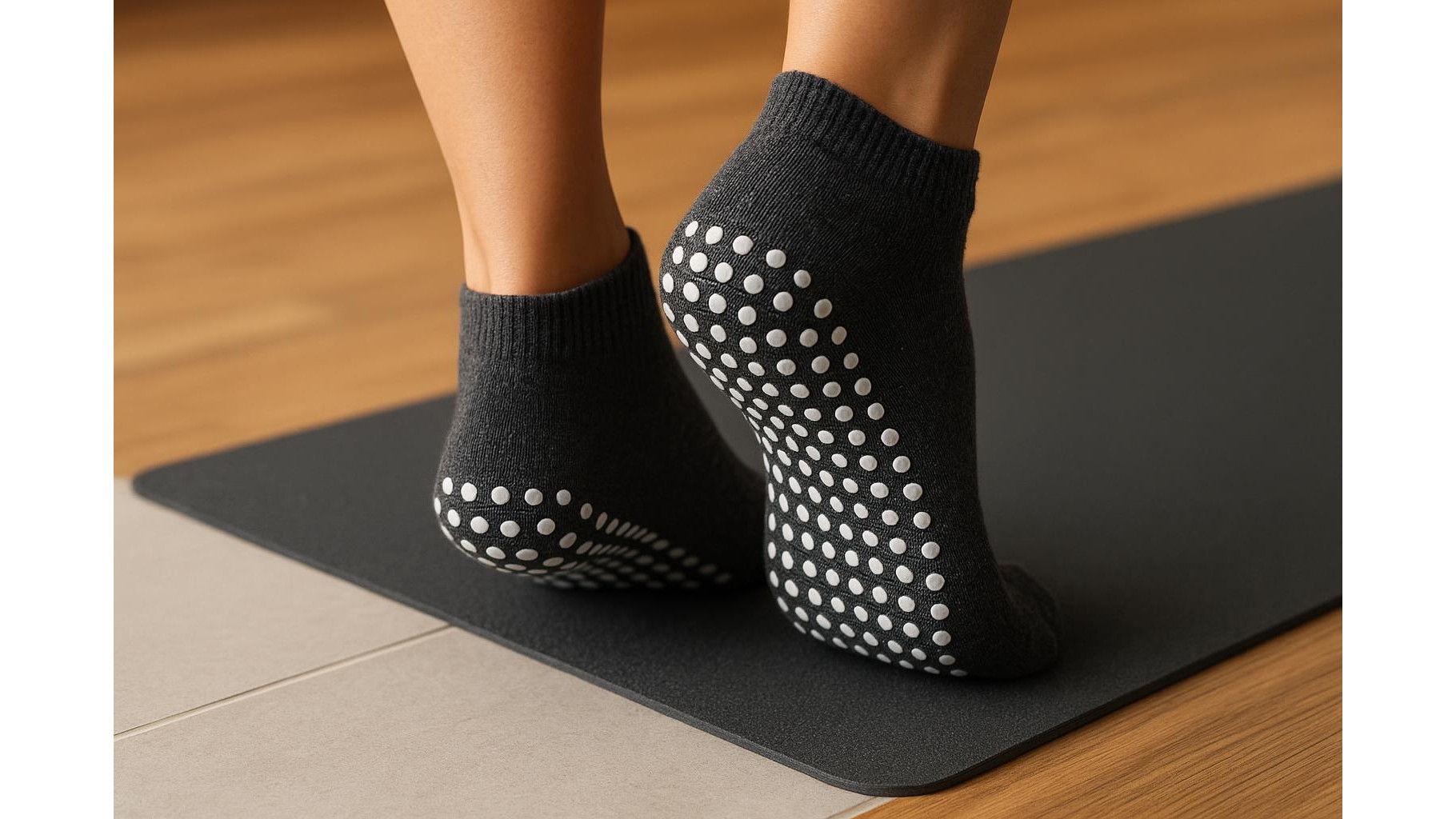
Many people love the natural feel of barefoot training, but at home you rarely have a single perfect surface. Ceramic tiles can be cold and slippery, laminate and wood can make you slide during lunges, while soft foam mats can bunch up underfoot. Quality grip socks for home workouts use rubberised dots or patterned soles to increase friction on smooth floors while still letting your toes move naturally. They reduce the risk of slipping in dynamic moves like mountain climbers or burpees, yet feel lighter and less restrictive than training shoes, which is ideal for yoga, Pilates and low‑impact strength work.
Best grip patterns for tiles, wood and mats
When choosing non-slip socks for a mixed home gym, focus on how the grip layout matches your movements. For tiles and polished wood, you want full‑length coverage under the heel and forefoot so you stay stable during squats, lunges and planks. On soft exercise mats, smaller but more numerous grip dots help the fabric flex with the mat instead of catching in one spot. Look for socks with side grips around the outer edge of the foot if you do lateral work like skaters or side lunges. Avoid socks with very thick, blocky rubber that can feel unstable on foam; instead choose a low‑profile silicone pattern that keeps consistent contact whether you are on the floor or on a mat.
Cushioning, arch support and breathability
Good home gym socks need enough cushioning to replace the comfort of indoor shoes, especially on hard tiles. Targeted padding under the heel and ball of the foot absorbs impact during light plyometrics or step‑ups, while a compression band around the midfoot supports the arch in standing poses and loaded carries. However, too much bulk can reduce ground feel and make balance work harder, particularly on unstable mats. Aim for a medium‑thickness knit in technical fibres that wick sweat and dry quickly, with mesh zones over the instep to keep feet cool. If you tend to overheat, avoid heavy cotton blends and choose moisture‑managing synthetics or bamboo‑rich fabrics instead.
Toe style, fit and hygiene considerations
Toe design has a big impact on both stability and hygiene. Closed‑toe grip socks feel familiar and work well for strength and cardio sessions, keeping the whole foot covered when you move from floor to mat. Five‑toe socks give each toe its own pocket, improving splay and balance in yoga and Pilates, and helping reduce sweat build‑up between the toes. Whatever style you choose, the fit should be snug, not tight: loose socks twist underfoot and make even the best grips useless. For hygiene, especially if you share mats or train in multi‑use rooms, choose machine‑washable socks and wash them after every intense session. Antimicrobial yarns and quick‑dry fabrics help keep odour under control between washes.
How many pairs you really need for a home gym
To build a practical home gym wardrobe without overbuying, think in terms of use cases rather than trends. Most people can cover their needs with two or three pairs: a lightweight grip sock for yoga, Pilates and mobility work on mats; a more cushioned pair for strength and interval sessions on tiles or wood; and optionally a toe‑separated model if you focus on balance and foot strength. Rotating pairs helps them dry fully and preserves the grip material, which can wear down if used and washed daily. Store them with your bands or yoga blocks so you remember to put them on before stepping onto cold floors, and replace them once the grip dots start to flatten or peel away.
Choosing the right home gym socks for mixed floors comes down to matching grip pattern, cushioning level and fit to your specific space and training style. Look for full‑coverage non‑slip soles if you train on tiles and wood, balanced padding for comfort without losing ground feel, and breathable, easy‑care fabrics for hygiene. With a small rotation of well‑chosen grip socks you can move confidently between tiles, wooden floors and exercise mats, keeping your training safe, comfortable and shoe‑free.